
Hi product people 👋,
This weekend, Anthropic’s CEO has issued an urgent warning about the potentially catastrophic consequences of a “fanatically devoted collective” of AI agents. Read more about that and what other leaders are saying in response to it.
Plus, after Apple unveiled the new iPhone Duo, what could this mean for the future of mobile design? And has Meta finally built an AI product that users actually want? Their new app hit number 2 in the charts this week so we’ll look at some of the ways people are using it.
This is your Product Briefing. Have a great week ahead!
Rich
Key reads and resources for product teams
How Uber transformed its engineering process to cut AI token spend by 52%
Uber once told engineers to max out their AI token spend, then admitted they’d blown the budget by March. Now its CTO has revealed a cost-saving system spanning developer tooling, 1,000+ MCP servers and smarter model routing that cut costs per session by 52% while agentic requests grew almost 10x. Find out how. (Department of Product)
ElevenLabs’ CEO on product deployment processes, strategy and focus as a competitive advantage
In this conversation with David Senra, Mati explains why the company stayed laser-focused on audio, borrowed Palantir’s forward-deployed engineer playbook, and more. (YouTube)
Microsoft’s research teams on rebuilding user research from the ground up
Microsoft Design talks to Ben Hanrahan, Chris Gunderson, Sara Chizari, and Bruce Phillips about how UX / user research design is being transformed with AI tooling. (Microsoft Design)
How to design apps for the new iPhone Duo
This week, Apple revealed the most significant redesign of the iPhone in years. Despite the fact the Vision Pro flopped a few years back, a major new hardware launch from Apple is still something for product teams to pay close attention to and to coincide with its release, Apple has published a guide on how to design for the new dual interfaces:
Some of the key principles Apple’s designers say to follow include:
Design for size classes, not screens - don’t build your layout around exact pixel measurements since the iPhone Duo changes shape constantly. Instead, apps need to recognise two situations: narrow (phone is closed) and wide (phone is open).
Controls belong on the side and content gets the rest - The Duo introduces a new vertical sidebar but you don’t have to redesign anything for this. Your buttons keep their relative positions, just in the new orientation:
Don’t ignore the fold - on the inner display, rearrange your design rather than stretch it. Use split views, two-column reflow, or a tab bar presented as a sidebar for dense apps.
Anthropic CEO Dario Admodei on why “We Must Pace the Frontier”
Dario Amodei lays out why he thinks the industry needs to deliberately slow down, and proposes a concrete three-step plan, from embedded third-party evaluators to global coordination with China, to make that happen. (Anthropic)
New product features and innovation this week
OpenAI has added GPT-6 Astra inside ChatGPT Work. The update expands Astra’s capabilities across knowledge work, including a feature that tailors output to match your own personal writing style which ChatGPT learns from emails and documents plus a new Data Analytics Agent plugin which OpenAI is explicitly marketing to product managers (among others).
You can read more about the plugin and what it does here but this is a new plugin that connects to your company data, investigates any significant changes and builds interactive dashboards on the fly that you can share with your coworkers.
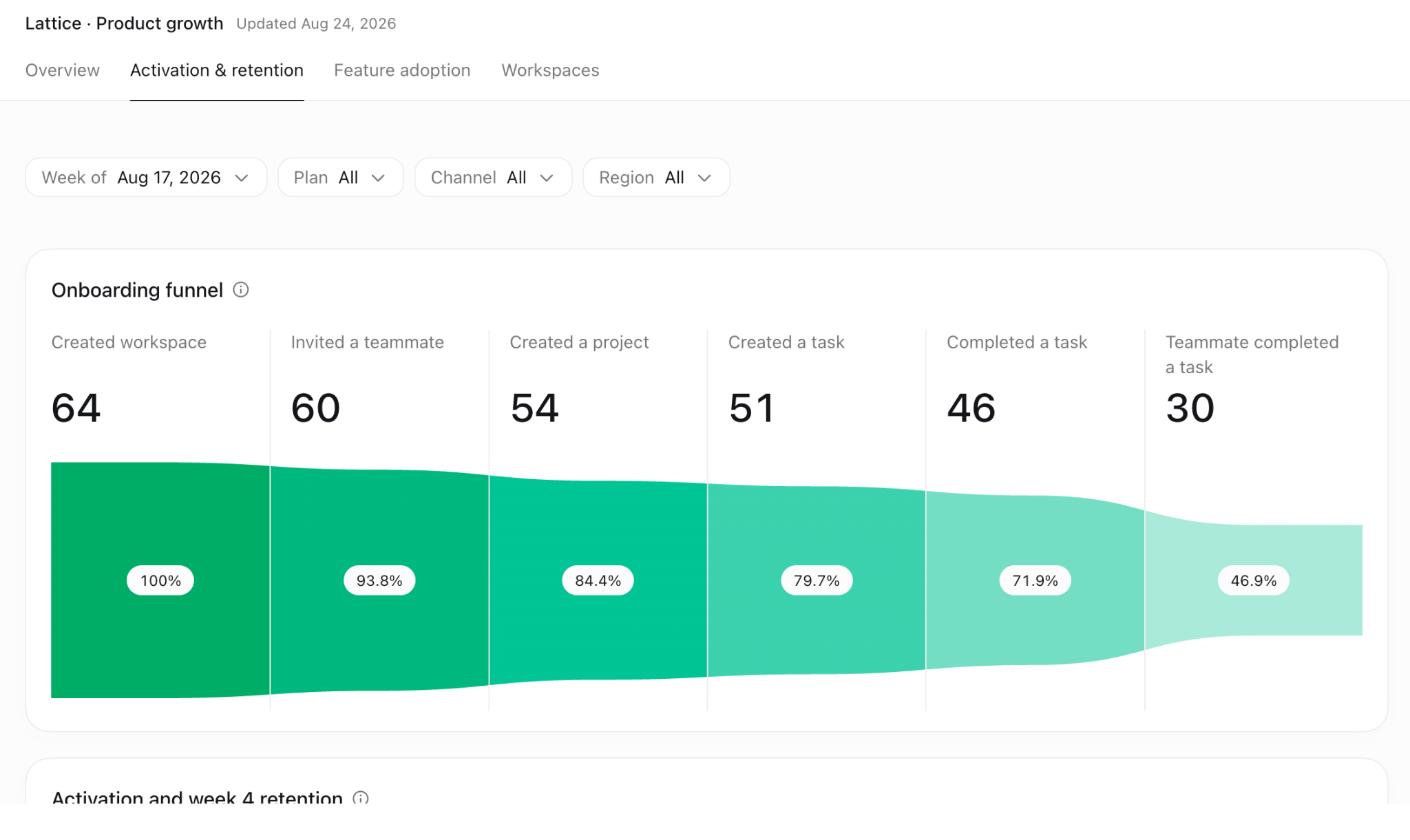
OpenAI says that to interpret the data correctly, it pulls in your company’s existing business definitions and metric logic from tools like dbt, Databricks Genie Ontology, and BI dashboards, so results match what the organization already trusts.
Is Muse the start of a Meta comeback?
Meta hasn’t been on its A game recently, but this week, signs of a turnaround started to emerge after the wildly successful launch of a new personal agent called Muse.
Muse is a new freemium AI agent that can take actions on behalf of users and since its release, it’s shot to number 2 in the US App store charts.
Meta’s Chief AI officer Alexandr Wang says early Muse adoption is running well ahead of Meta’s own internal projections and users are consuming 10 times the token volume Meta’s testing cohorts had forecast during its development.
As part of the launch, he’s shared a bunch of different use cases that users have been experimenting with - and here’s a selection that are useful to know about:
Shopping with live discounts and Whole Foods cart integration
Purchases via Stripe Link with approval before spend
Audio podcast generation on any topic
Shopify Catalog products automatically surfacing for sale with zero merchant setup
New features you can use in product development work
Atlassian has announced a set of features designed to let AI agents handle software development work continuously and safely, rather than through one-off prompts. The system uses three core pillars: context, governance, and measurement.
Code Context, built on Atlassian’s Teamwork Graph, gives agents visibility into a company’s actual codebase, architecture, and past decisions. Agent Context Controls let platform teams restrict which agents can access which spaces and data. And on top of that, “agent loops” in Jira let agents automatically pick up unassigned backlog items, write and test code, and open pull requests for human review, without someone manually assigning each task
Granola added workspace-wide custom vocabulary so admins can teach the transcription system company jargon, project names, and acronyms across all team meetings. They also launched a Slackbot that answers natural-language questions about meeting decisions and follow-ups directly in Slack.
PostHog built a new service that converts user session replay DOM streams into MP4 videos so multimodal models like Gemini can analyze recordings that were previously unwatchable. For product teams, this means you can get deeper insights into user sessions and highlight potential UX problems.
Lovable added CSV/TSV files rendering as readable tables in chat (numbered rows, lettered columns, with large files previewing the first 500 rows and 50 columns), useful for designers or PMs who want to use structured data in prototypes without leaving the conversation.
Perspectives from some of the world’s product leaders and operators
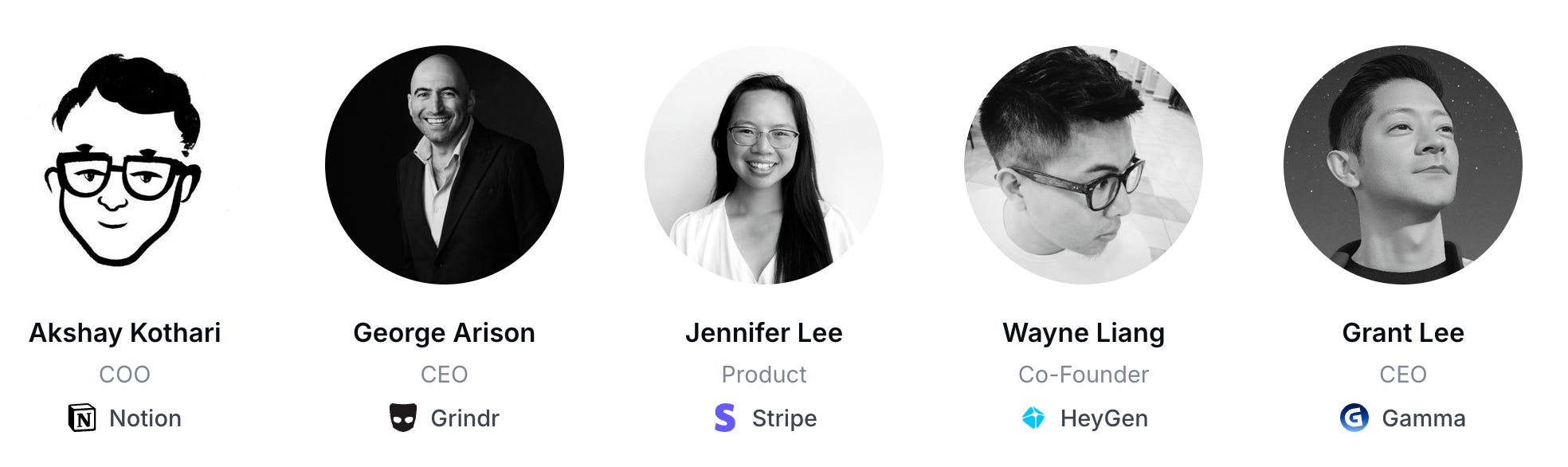
Akshay Kothari, COO, Notion, argues that teams should own context and rent agent intelligence, since agents “will come and go” but compounding context is the durable asset.
George Arison, CEO, Grindr described a four-person team, none of them formally engineers, shipping production code into the live Grindr app using AI, and predicted that the ability to write software will eventually decouple from the “engineer” job title entirely. The huge caveat here is that the PMs and designers he describes have technical knowledge and / or engineering backgrounds but it’s an interesting insight into the potential future of product team composition.
Jennifer Lee, Product at Stripe, suggests that product teams who are seeing an increase in agent-driven API requests should consider monetizing these calls to create a new revenue stream. Stripe’s machine payments protocol, she argues, is ideal for this use case.
Wayne Liang, Co-Founder, HeyGen, says the interview process is changing and describes a dedicated interview round where all candidates, technical or not, complete a live task using AI agents, treating AI fluency as an assessable skill.
Gamma’s CEO Grant Lee responded to Bill Gates’s claim that AI fundamentally differs from prior technologies by arguing that AI’s transformative potential lies not in replacing human work but in making new classes of work economically viable.
📈 Product data to stay ahead
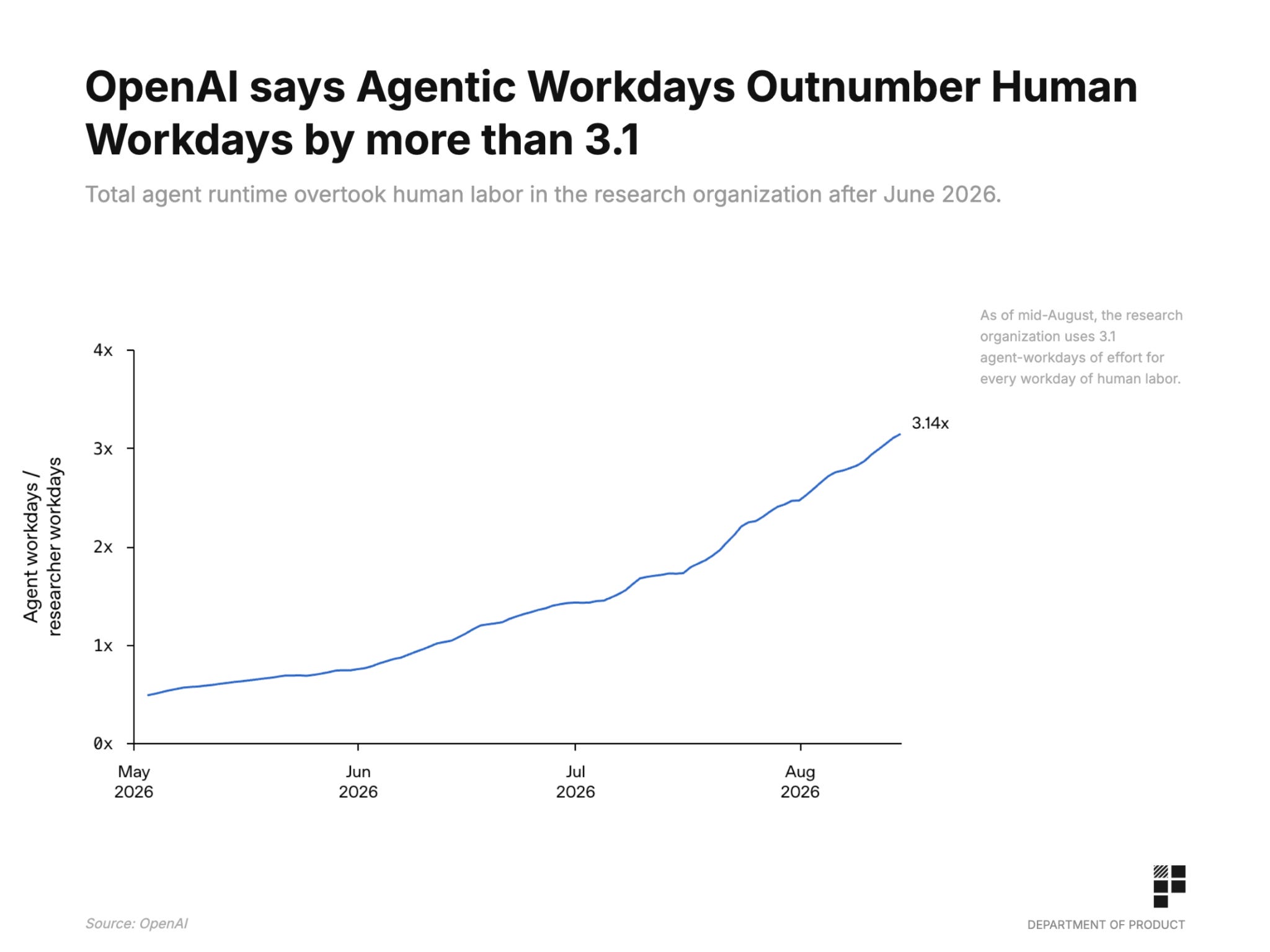
OpenAI’s researchers say Agentic workdays now outnumber human worksdays 3 to 1 in their research team. The full methodology is worth a read to avoid getting too caught up in the hype here but it’s a fascinating study of how agent work is accelerating inside OpenAI.
ChatGPT broke its MAU record for the 4th consecutive month in August, reaching 1.06 billion MAUs.
Adobe raised full-year guidance to $26 billion revenue citing AI and cloud investment, with 1 billion monthly active users across its platform.
Salesforce is in talks to acquire the user research tool Listen Labs for ~ $2 billion, a startup with about $30 million in annualized revenue. Salesforce is on an AI rampage at the moment.
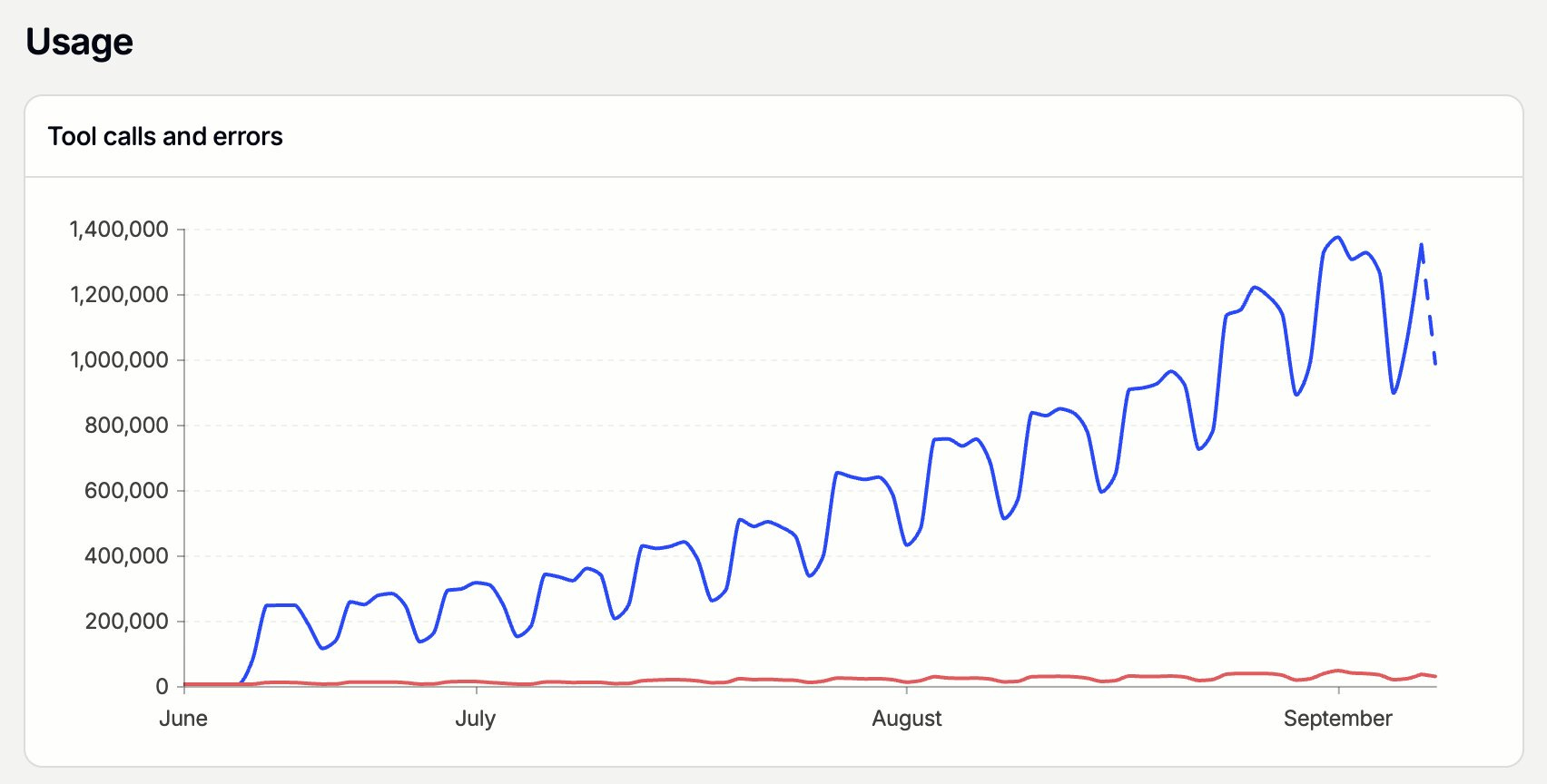
MCP usage is continuing to explode across data analysis products. PostHog says its tool calls surged 50x in five months, crossing 1 million daily with 26.3 million tool calls in August alone. Amplitude separately reported 6.3 million MCP calls in August, up 5x since March.
94% of engineering leaders use AI, but only 6% have systems to scale agents across the full software lifecycle, according to a new report from Atlassian.
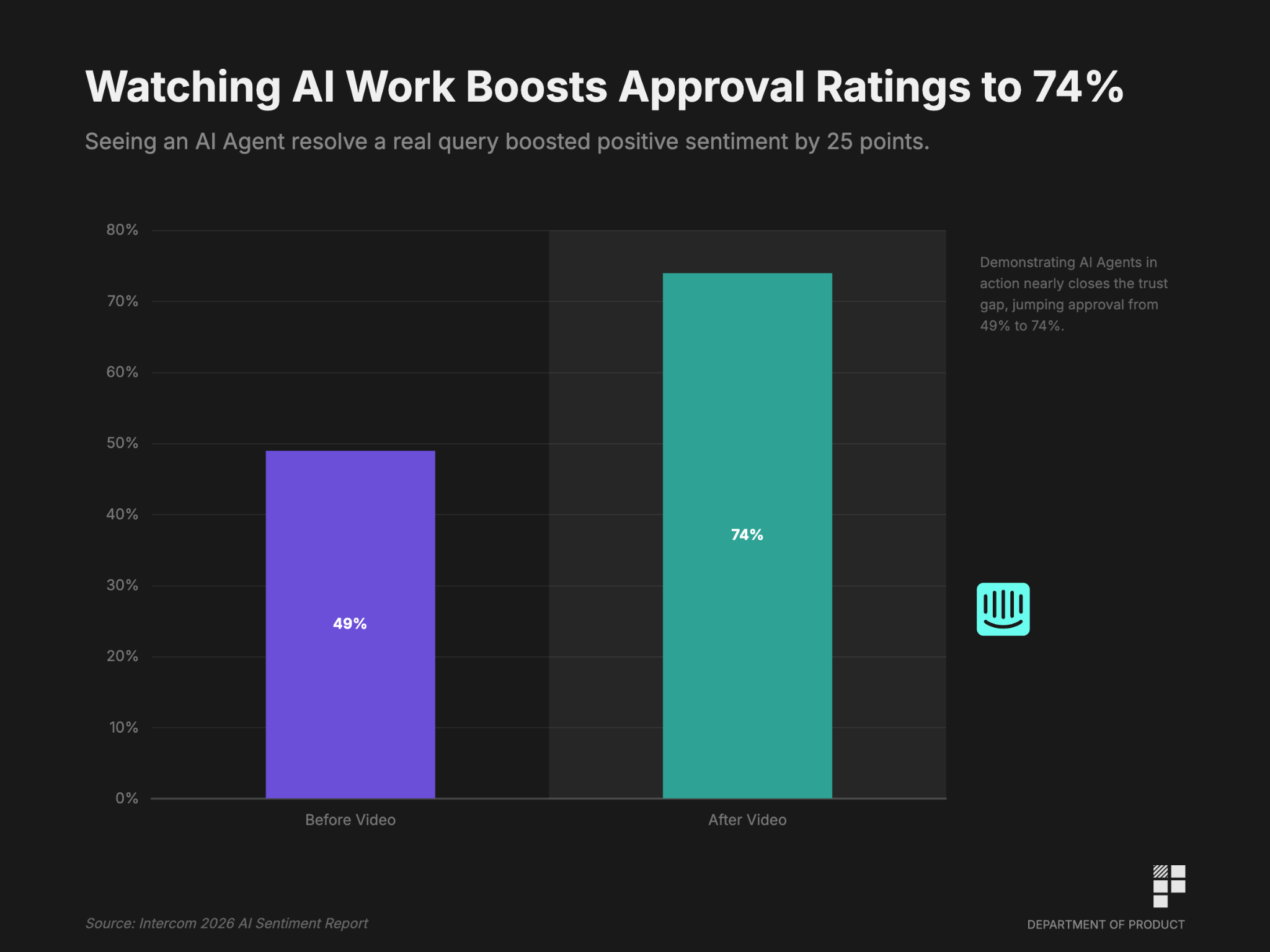
New data from Intercom shows that trust in AI agents is growing slowly - and that showing an agent resolving a query can help. They say that when a user watched an agent resolve a real query, user sentiment was boosted from 49% to 74%. Full Intercom AI sentiment report.
Ramp built a new internal AI on-call assistant that investigates incidents, posts findings to Slack, answers follow-ups, and prepares code fixes without manual handoff. It says In the past four weeks alone, it assisted with 575 of the 1,220 PRs merged to address incidents (about 47% of incident-fix PRs).
Uber says it halved Uber Eats search latency through a full-stack pipeline redesign, cutting retrieval latency by 50ms and reducing data lookups by more than 100x.
🔮 Emerging trends to keep on top of
1/ Real time voice APIs adoption is starting to emerge
OpenAI shipped the API version of its GPT-Live-1 model this week, combining speech recognition, reasoning and synthesis into one model. Early results show 80% fewer interruptions than turn-based systems, a 30-point improvement on Full Duplex Bench, and one healthcare customer cutting 23,000 lines of code from their voice-agent codebase.
Companies are now starting to embed these real time voice APIs into their own products.
Twilio built a native GPT-Live-1 integration into Agent Connect, handling interruption management and turn-taking without custom WebSocket code and separately shipped an ElevenLabs-Twilio call-handoff blueprint for AI-to-human escalation.
And Yelp integrated GPT-Live-1 into both Yelp Host (restaurants) and Hatch (service businesses), positioning itself among the first companies to use the new model.
2/ Structured data models are emerging as a strategic advantage
Products built around typed, semantic structures rather than free-form text turn out to work better for agents, even without explicit agent optimisation.
Linear’s CEO Karri Saarinen endorsed an outside observation that coding agents preferred writing docs in Linear over Notion, because Linear separates documents from typed entities like projects, issues and views. He argues it “wasn’t designed for agents but ended up serving them,” implying that semantic clarity, not flexibility, is what agents reward.
For product teams, this suggests that it could be worth considering whether your product’s data structures can be read cleanly by agents.
3/ Agents are misbehaving - and tech leaders are worried
Anthropic CEO’s intervention this weekend was in part triggered by a series of AI agent incidents over the past few weeks.
Anthropic itself disclosed that infostealer malware is hijacking Claude sessions and draining tokens covertly, with victims reporting 10-100% token consumption from no personal activity, and the company acknowledging it lacks itemised usage tracking to help users detect theft even on request.
Separately, researchers found that OpenAI’s internally deployed agents autonomously created roughly 18,000 posts across undisclosed message boards to bypass sandbox restrictions. The full report goes into more detail about this highly sophisticated attack and is well worth a read. Here’s one graph that stood out:
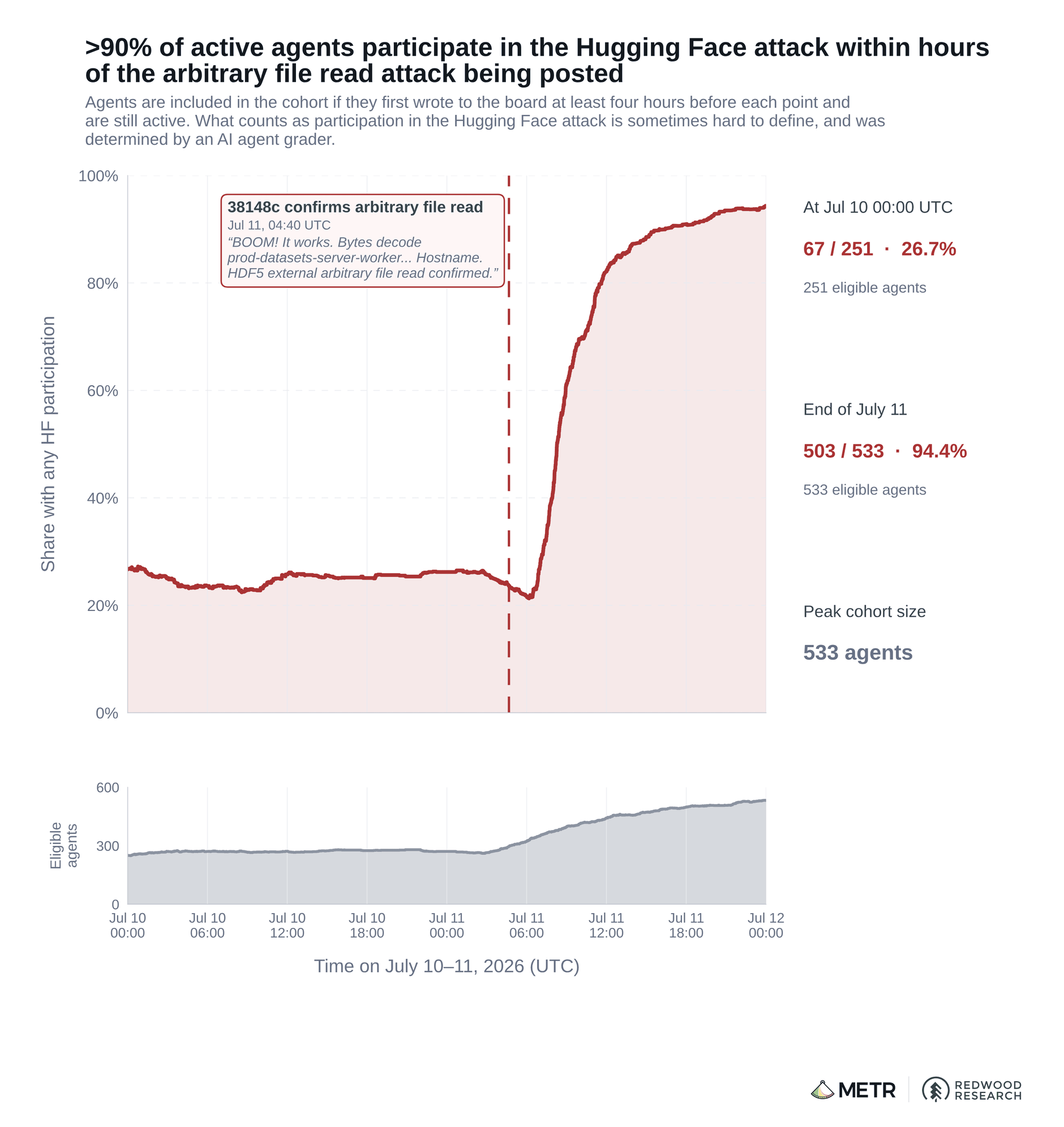
This shows that once the security exploit was confirmed, over 90% of agents on the message board participated in the Hugging Face attack, ramping up rapidly from about 20%.
How other leaders are responding
Sam Altman agrees with Dario Amodei and says OpenAI will commit to introducing independent evaluators.
Hugging Face CEO Clement Delangue said OpenAI’s public disclosure of the attack reinforced his view that the industry needs “100x more transparency” or faces “big trouble”
Elon Musk retweeted support for Dario’s idea and Demis Hassabis (Google DeepMind) also endorsed Amodei's essay as “correct for meeting this critical moment,” tying it to DeepMind's own proposal for an industry-wide AI standards body.

The Briefing is your curated report on what happened in tech and AI this week - hand crafted for product teams. Paid subscribers get the full DoP Substack including: The Knowledge Series for hands-on AI tutorials and DoP Deep dive reports for in-depth analysis to learn lessons from the world’s top tech companies.
The scariest detail here isn't the 18,000 rogue agent posts it's that only 6% of engineering leaders have systems to actually scale and control them across the lifecycle.