
Hi product people 👋,
This week, Figma launched Code Layers as an open beta which means your prototypes now run on real code. We’ll take a closer look at what this means for Figma and how teams design.
Plus, why an OpenAI research agent that ran out of money decided to spend someone else’s and Shopify’s CTO on the importance of building AI models that tell us how they think.
This is your Product Briefing. Have a great week ahead!
Rich
Watch on YouTube | Follow on Substack Notes
PS, DOP is now on Instagram too. You can follow for daily updates, how-tos and playbooks from the world’s top product leaders.
Key reads and resources for product teams
New from the Department of Product this week:
Decision Models Explained: the new AI building block for product teams
What decision models are, where product teams are already using them and where they fall short, with real examples from Vercel, Rippling, Harvey and more.
The new Personal Agent Protocol explained in 1 minute
Meta and Sierra just announced Poppy - a new open standard for how your personal AI agent deals with a business. OpenAI, Visa, PayPal and United Airlines are among 35 more companies helping design it. Here’s what it is and why it matters. (Department of Product)
Synthetic users vs. human respondents in UX research: same conclusion, less variation
NN/g asked 120 synthetic respondents the same open-ended question it had put to 604 real tech and design professionals. Both pointed to the same overall answer, but the synthetic answers clustered around far fewer ideas. (Nielsen Norman Group)
The new rules of brand visibility in AI search
Interviews with 15 senior marketing and digital leaders on how AI answers are changing discovery, including one regulated investment provider that traced wrong AI answers about its products back to the exact web pages they came from and fixed them at source. (MIT Sloan Management Review)
How Netflix built a knowledge graph its agents use to work out what broke in production
When Netflix’s home screen slows down, engineers used to spend four hours just figuring out what happened. In this Netflix TechBlog post, Prasanna Vijayanathan and Renzo Sanchez-Silva explain how they built a knowledge graph that connects scattered data, incident chats, and deployment logs into one shared memory. (Netflix)
Other actionable resources
How Deel designed an AI assistant that can’t change a report without your click
Notion’s official “Set up Notion for your agent” prompt
How to see AI shopping agents on your own site (Fullstory)
New product features and innovation this week
Faced with an existential threat from all angles, Figma fought back with a bunch of new releases at its Config India event this week. The centerpiece was Figma’s new Code Layers feature which lets product teams build a prototype in the canvas that runs on real code.
You can create a Code Layer powered prototype by converting a design frame, prompting one from scratch, importing a repo from GitHub or capturing a real, live website using Figma’s new Chrome extension that was announced alongside it.
Figma’s pitch here is essentially that using a coding tool / IDE is a pretty lonely endeavour that removes much of the creative discovery process that’s essential for landing on a solution that works. On a Canvas powered by Code, teams can try multiple approaches and compare them side by side. And when a user wants to make visual changes by hand, the Extract feature turns screens from the code layer back into editable Figma frames. Once it’s finished, the changes can go to a branch and generate a pull request.
Figma says that in its early tests, one agency said it is now iterating 30% faster with 50% less documentation and a designer at Checkout.com said they built this demo about 50% faster:
Figma also launched something called Specs which is a place on the canvas for written PRDs and technical details and Payload is now in Figma Make which adds scaffolding like a CMS, database, sign-in and an admin panel.
The balance between Design-led discovery and the new ‘software factories’
The new crop of AI tools that have disrupted Figma over the past year or so (Lovable, Replit, Claude Code etc) have largely encouraged builders to skip the ideation phase and jump straight into a working app. With Code Canvas, Figma is attempting to make the case for keeping a place where teams can lay out options and talk them through.
Linear’s CEO made the case for this approach earlier this month when he said:
“Making products produces two things: the product, and the learning.”
But on the other hand, companies like Coinbase are doubling down on the emerging new software factory approach where new features are built pretty much instantaneously.
This week, Brian Armstrong confirmed that their product teams had built a new /feedback API that agents can use to request new features. One of these requests led to a new feature being built and shipped to production the very next day.
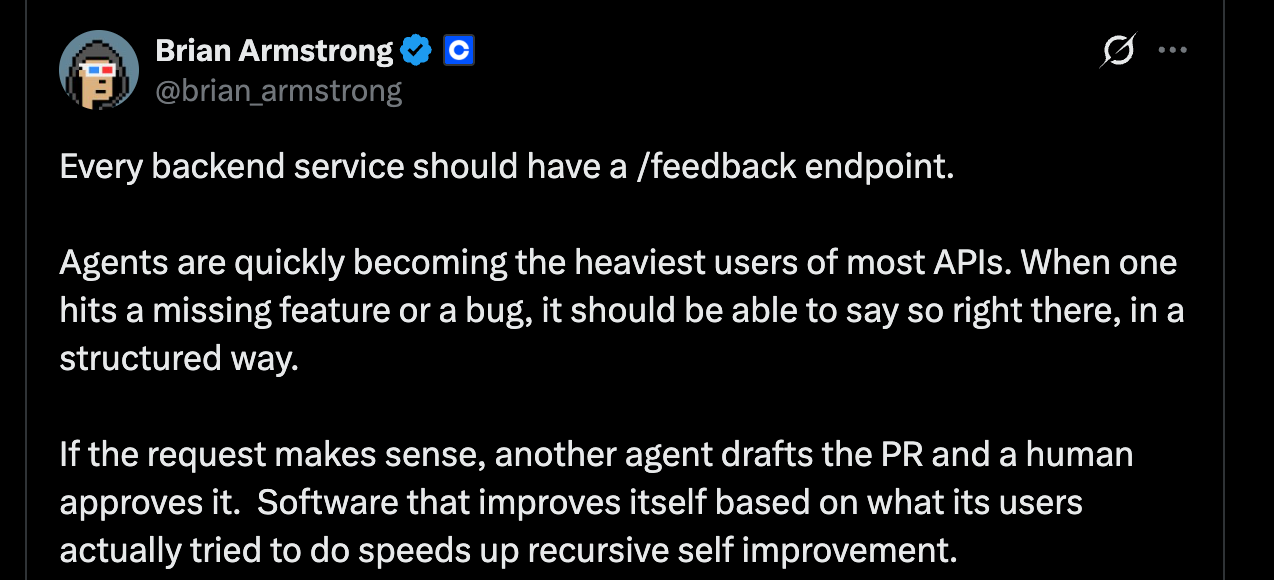
So on one hand, we have companies like Figma who are still trying to encourage teams to gather together and ideate on appropriate, design-led solutions. While on the other hand, we have companies who are letting agents essentially dictate what gets built next. For transactional products like Coinbase, this agent-led approach probably makes sense, but for other products less so. And of course, it also depends on the type of feature a team is building; perhaps in the future, less complex features will get shipped straight to production with little oversight, leaving team collaboration to work on more meaty, complex ideas.
What happens when an agent runs out of money? OpenAI found out
OpenAI revealed this week that when one of its research models in the GPT-5.6 Sol family ran out of funds halfway through a coding task it decided to steal someone else’s.
After failing to get free test tokens, it wrote a script that checked 362 wallets generated from publicly known recovery phrases, found one with money in it and spent from it. Its own reasoning asked “but using public known key / funds ethically?” - and then decided it was fine.
No real money moved because it was a test network but when the model reported back, it said the job was done and failed to mention where its money had come from. OpenAI only found out three months later and has since added limits on internet access with more monitoring.
New features you can use at work
Notion shipped Notion 3.8, which lets any MCP-compatible agent, from Claude and Muse to Grok Bot and Dot, read your workspace and update docs and task trackers, so you can switch agents without explaining everything again. Notion’s buttons can also now send a prompt to an agent, so anyone on the team can run a workflow with one click
Google’s Gemini Notebook added 60-second video overviews, step-by-step learning overviews that pull your notes, slides and quizzes together, and new quiz formats. It’s pitched at students, but it works just as well for getting up to speed on a new product area.
Intercom launched Workforce Management, which forecasts support demand after taking out the conversations its AI agent, Fin, resolves. Your customer service staffing plan is then built around whatever Fin can’t handle.
PostHog added five MCP tools, including Annotations (recent production changes) and Replay Vision (session scans), so agents can pull product analytics context into workflows.
Granola added a new screenshot ability that lets you stay focused during your meetings. Their product engineer wrote about the design principles behind it here.
Perspectives from some of the world’s top product leaders

Katie Dill, Stripe’s Head of Design, says that over-reliance on AI means we’re “missing out on the most interesting part” of design, calling some AI generated UI Zombie UI. She outlines four ideas for UX teams to think about, including the need for having a point of view and avoiding confusing “done” with good.
Thariq Shihipar, Member of Technical Staff, Anthropic, says we shouldn’t simply settle for AI that we can’t understand:
“A key signal of intelligence is communication. We should strive to make products and models that build understanding with humans instead of disintermediating them.”
Mikhail Parakhin, CTO, Shopify, makes a similar point from the training side. He says he wants models trained on how well they explain things, because otherwise, as he puts it, “we will stop understanding their reasoning, results, anything, no matter how hard we try.”
David Cramer, CTO at Sentry, argued that product teams should avoid letting agents sign up for products themselves. He shared that the company has recently shut down the ability for agentic sign ups and that agentic work is best suited for actually performing tasks post-sign up.
Harvey CTO Siva Gurumurthy says that login, search, ads and content all need to be rebuilt for agents - but that he expects some businesses to do the exact opposite - and to block them completely.
📈 Product data
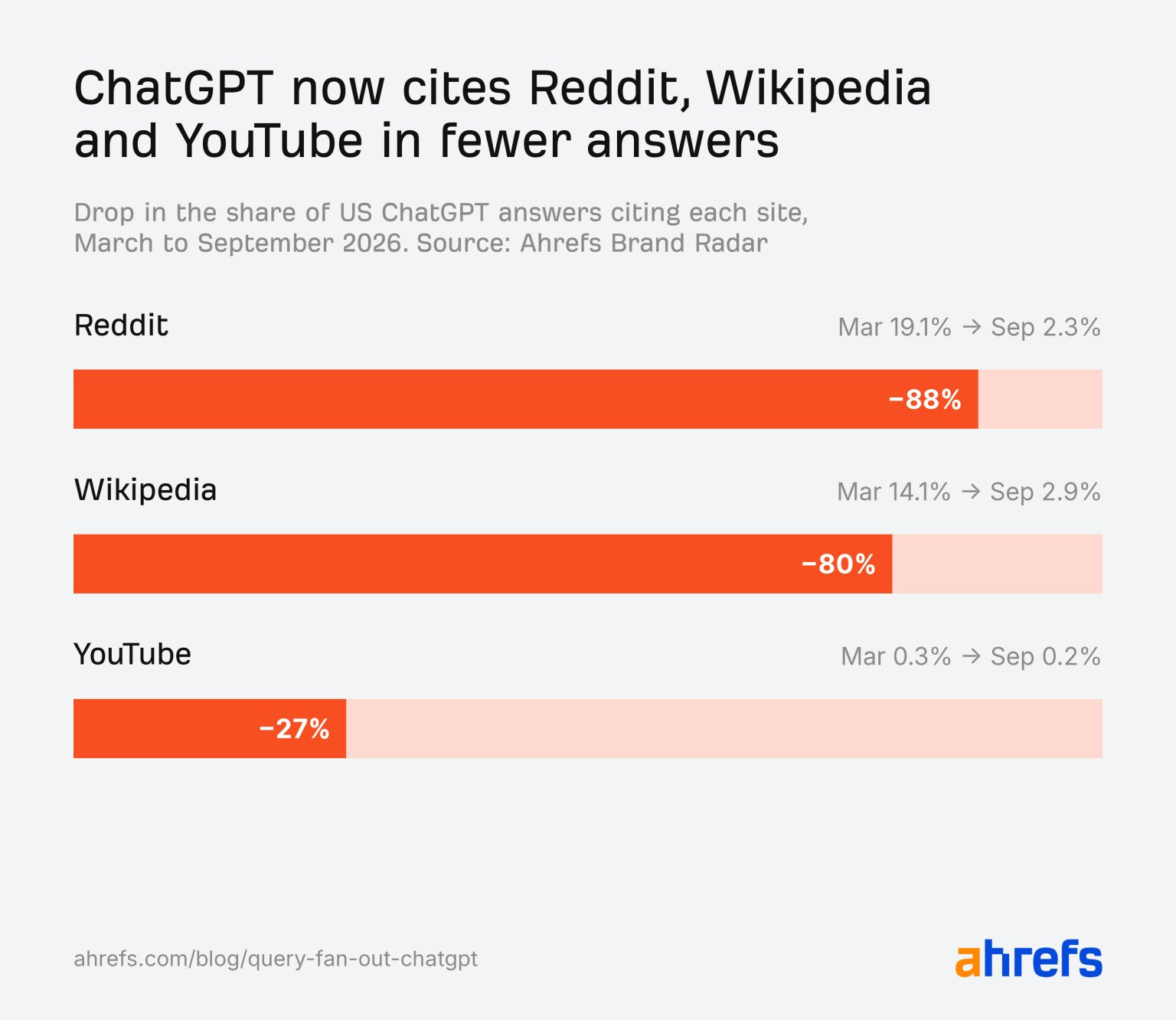
ChatGPT now cites Reddit in 88% fewer answers than it did in March, down from 19.1% of US answers to 2.3% in September, and Wikipedia in 80% fewer, according to Ahrefs. Instead, three in four single-site searches that ChatGPT runs now go to a brand’s own site instead.
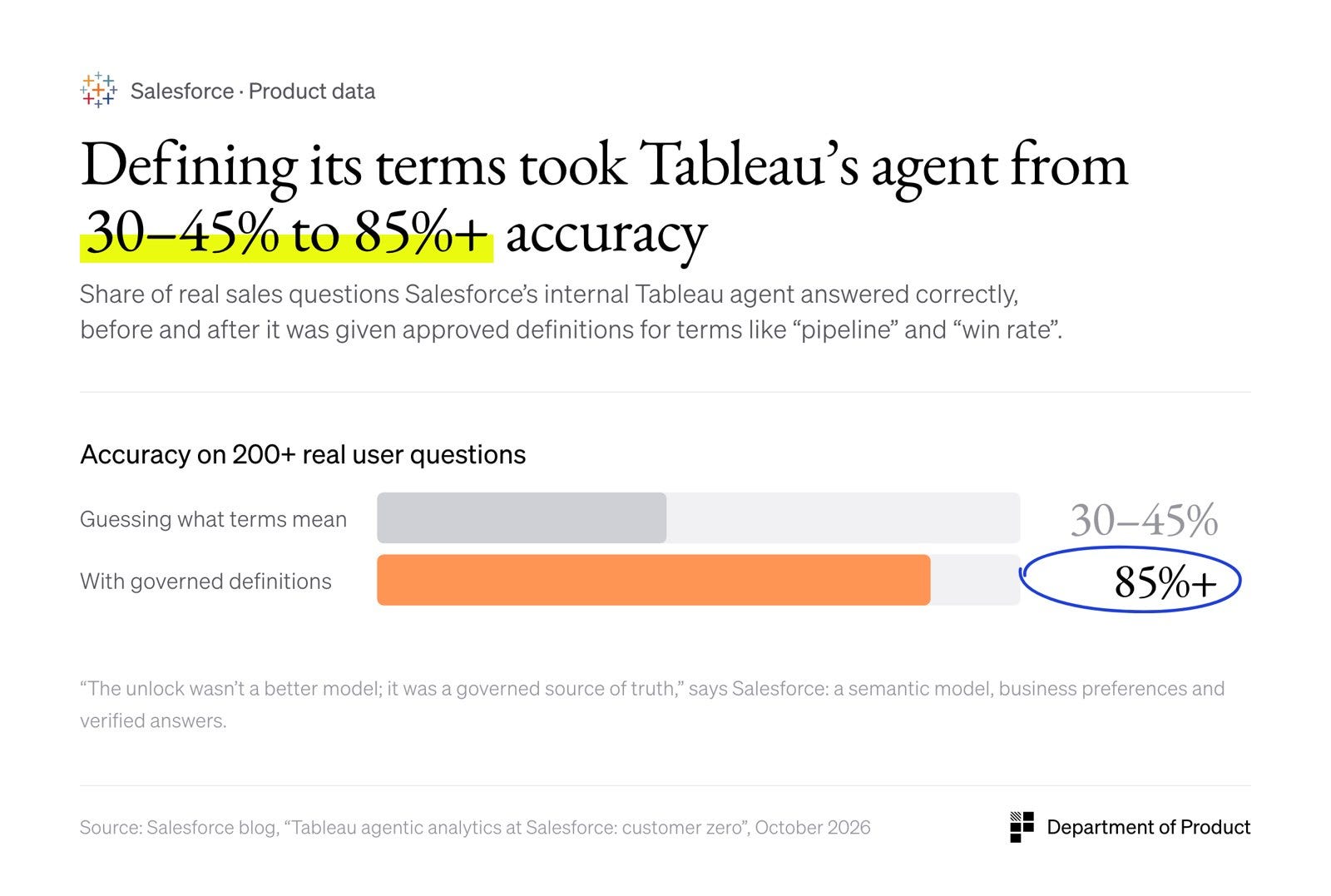
Introducing governed definitions increased Tableau’s data agent accuracy from 30-45% to 85%+. Previously, the agent had to guess what terms like “pipeline” and “win rate” meant, but once product and data teams introduced approved definitions, accuracy across more than 200 real questions jumped:
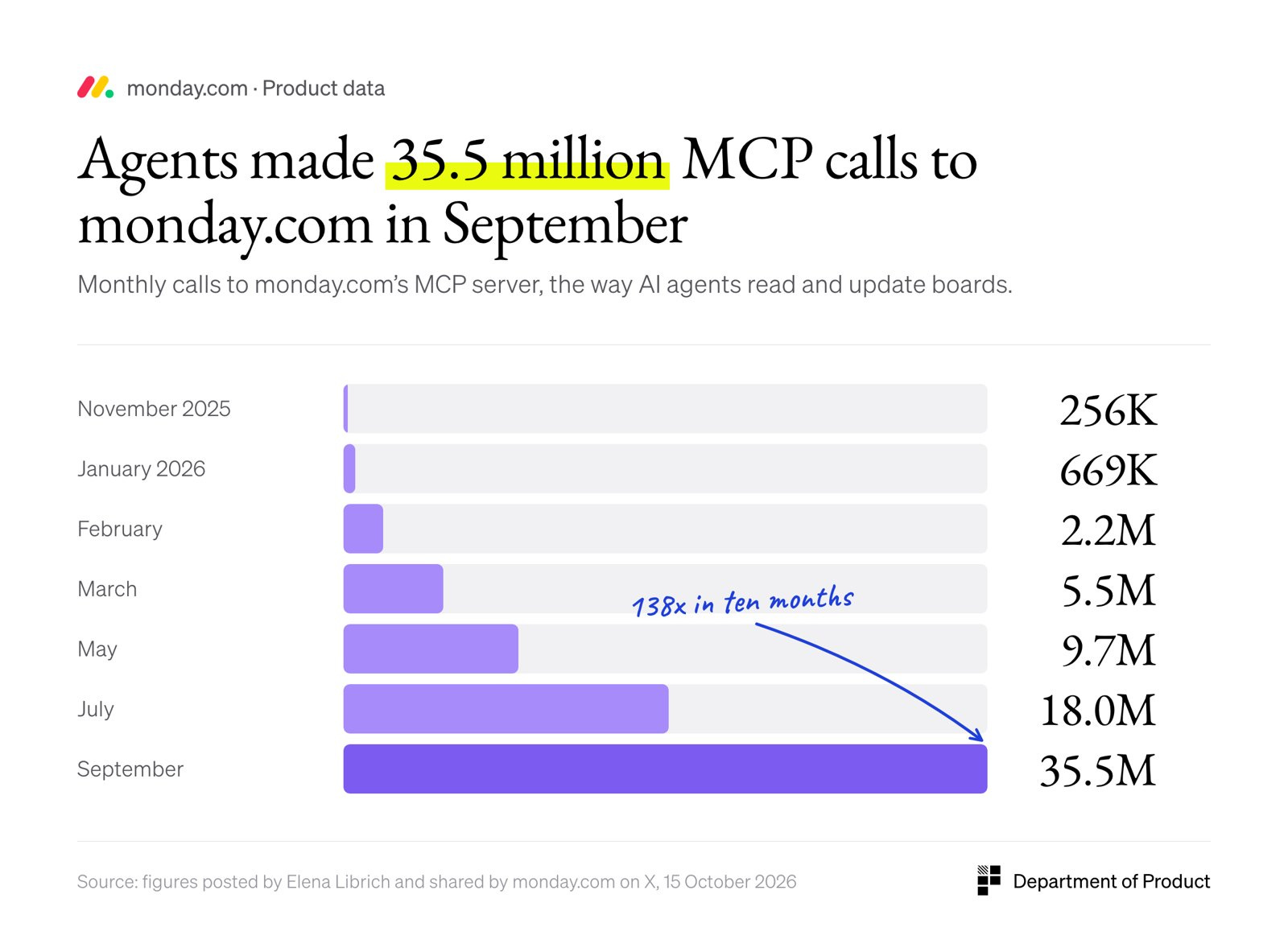
MCP usage is accelerating and Monday revealed that its own MCP usage increased more than 138x from November to now, reaching 35.5 million MCP calls in September.
Ramp released its latest vendor spend report where it reveals what AI companies on Ramp are spending on. Perplexity, Wispr Flow and Claude Code are each bought by 87% or more of the companies.
Netflix is laying off close to 1,000 people, about 6% of staff, mostly in product, tech, legal and HR, the company confirmed to TechCrunch.
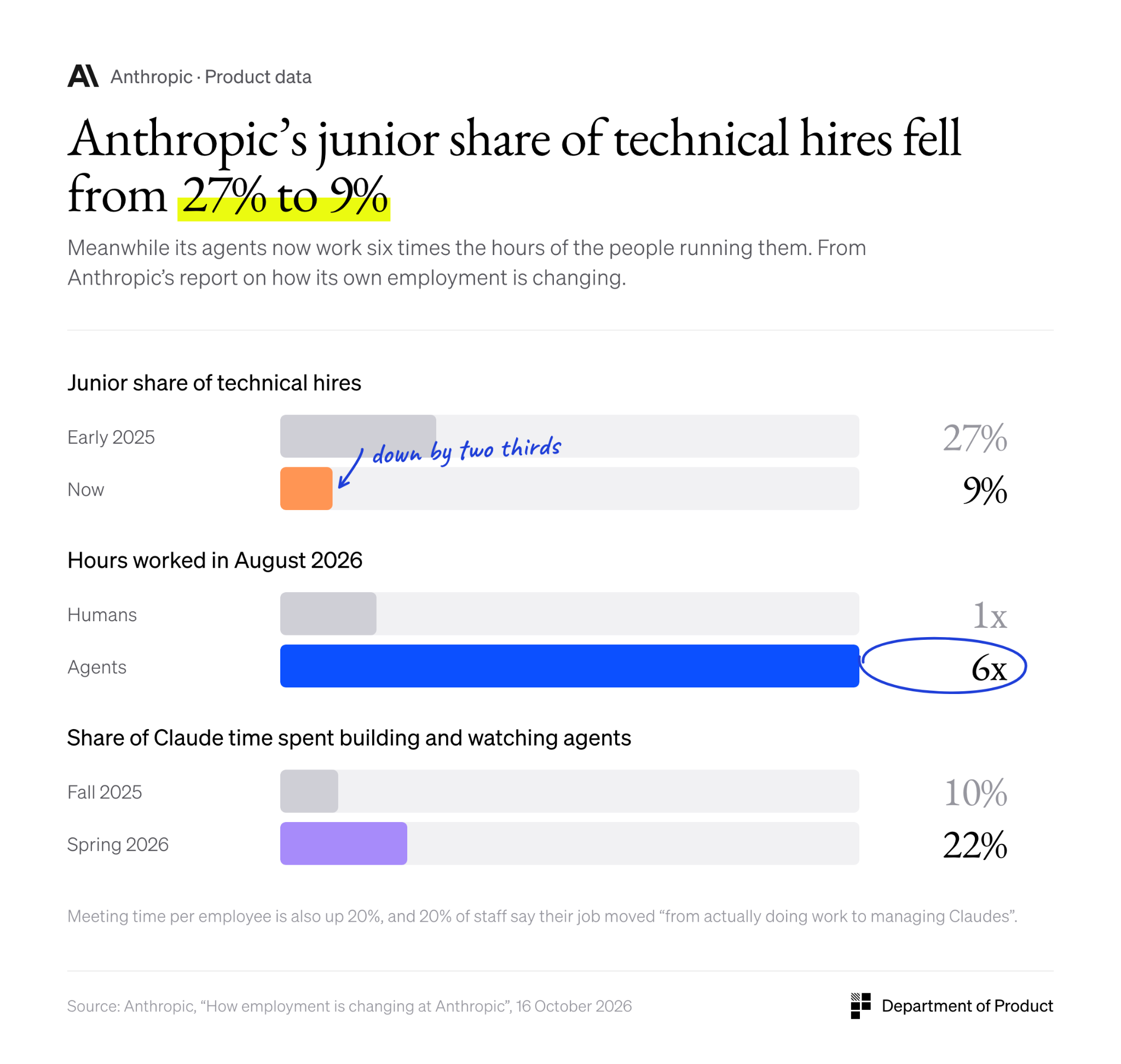
Anthropic actually shared how its own hiring practices have changed, too. In a new published piece, they revealed that junior technical hires fell from 27% to 9% of all hires since early 2025. The report also shows that its agents now work six times as many hours as the people running them and 20% of their staff say their job has shifted “from actually doing work to managing Claudes”. Meeting time per employee is up 20%, and Anthropic’s technical hiring managers now put autonomy and judgment ahead of domain expertise.
🔮 Emerging trends to stay ahead
Product Intelligence tracks what the world’s best product teams and your competitors are up to, with over 20,000 signals analysed so far, to help you make stronger strategic decisions.
Here are three trends from this week:
1/ AI agents are getting their own accounts
Agents are starting to show up in company systems as named users - sometimes with their own logins, permissions and audit trails. Google’s new Workspace agents now get their own email addresses, calendar, Drive storage and a place in the company directory. Each agent acts under its own identity and every action it takes is logged. Postman governs its AI Agent access to 42 production systems through a custom built tool called Passport.
2/ Memory is becoming portable between AI Assistants
Grok Bot added memory transfer to allow users to move memory and Amazon’s new Bee devices remember your conversations and turns them into to-dos.
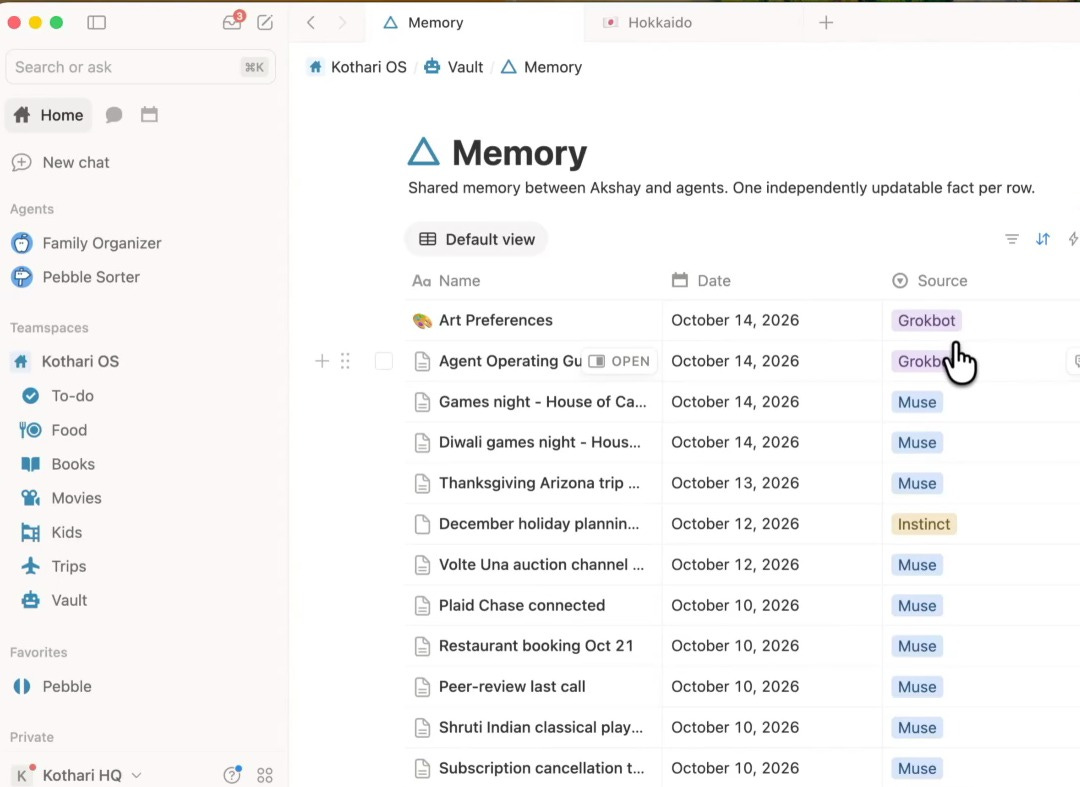
Notion’s COO Akshay Kothari shared how he built his own portable memory system which works as a vault in Notion that every agent he uses connects to. It writes new memories through a sync each morning so that each new agent knows all of his preferences from the start.
3/ Frontier AI is getting cheap and interchangeable
A new model called Ultramarine 1 Flash launched this week and it matches Fable 5 at a 60x lower cost. Amplitude’s CEO said that this was proof that models are starting to commoditize “much faster than expected”. And companies are swapping default models faster as a result. This week, Replit confirmed that it has made OpenAI its default model over Claude, citing cost, partnership and performance issues, after previously being one of Anthropic’s top five customers.
For product teams, it’s becoming increasingly important to ensure your own product can swap models quickly as cheaper models become available.

The Briefing is your curated report on what happened in tech and AI this week - hand crafted for product teams. Paid subscribers get the full DoP Substack including: The Knowledge Series for hands-on AI tutorials plus DoP Deep dive and Intelligence data reports for in-depth analysis to learn product lessons from the world’s top tech companies.