
🔒 The Knowledge Series breaks down emerging AI technologies with practical playbooks designed specifically for product teams. Get 100+ guides and practical tutorials covering everything from Claude Code and MCP to agentic workflows, vibe coding, and more.
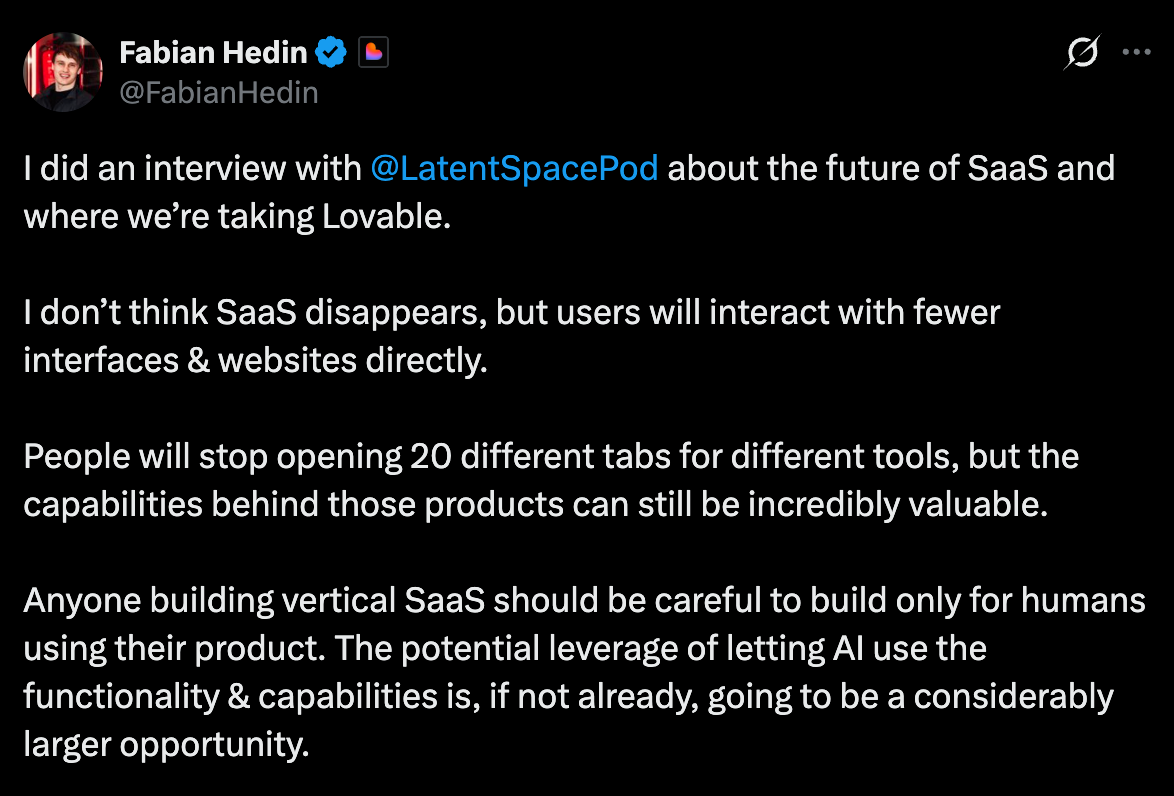
Lovable’s co-founder recently predicted that SaaS won’t disappear but users will interact with fewer interfaces and websites directly.
In the future, he argues, rather than opening up 20 different tabs, users will open fewer tabs, letting agents do the heavy lifting for them. Companies that don’t leverage the opportunities of making their products available to agents, he argues, are missing out on the “considerably larger” opportunity of building for both humans and agents:
Lovable’s co-founder isn’t alone in this view, either.
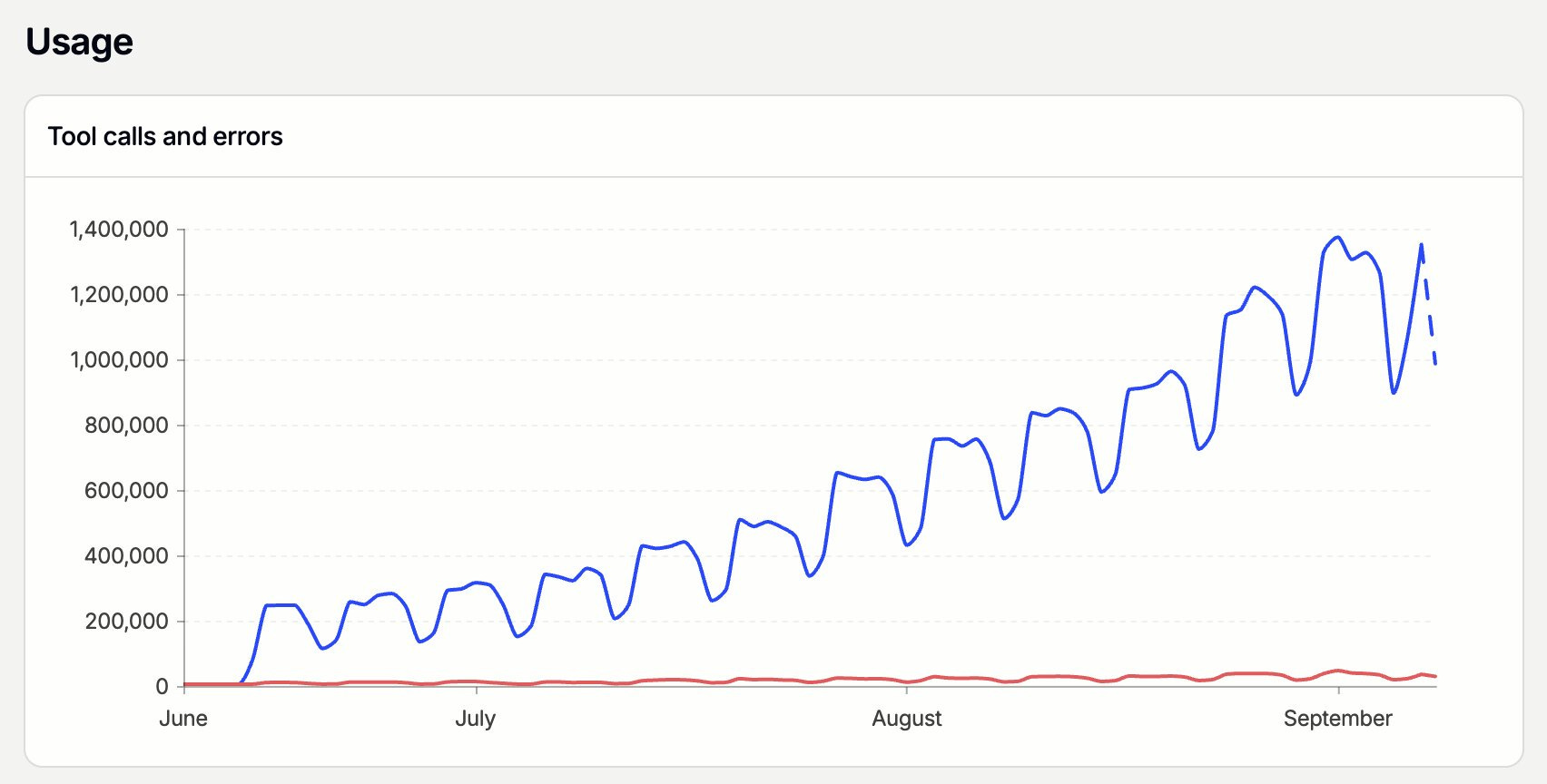
One of Anthropic’s lead engineers recently said making your product headless and charging for access is akin to publishing a “make a lot of money” button, Linear’s CEO announced that agent created MCP issues now outnumber human authored ones and SaaS companies like PostHog have reported a massive 50x increase in the number of headless MCP requests in just the past 6 months:
In this Knowledge Series, we’re going to unpack some of the core elements of headless product strategy design using real world examples from companies like Stripe, Google, Microsoft, Supabase and more to help.
From figuring out what tools to expose through to payments and security, if you’re curious about how to make your product agent-friendly and potentially generate more revenue by crafting a headless product strategy, this Knowledge Series should help.
Coming up:
Headless product strategy explained
How to develop a headless product strategy of your own - 5 key steps
Real world examples of headless product strategy in action from Rippling, Stripe, ElevenLabs and more
What the future of headless might look like and the potential impact of consumer agents like Grok Bot and Muse
30+ real MCP product launches from the past month you can use as inspiration
Headless product strategy explained
Designing a headless product strategy is the process of treating your capabilities, data and logic as the product - and the UI as one of many different consumption paths. These paths can be used by either humans or agents / machines:
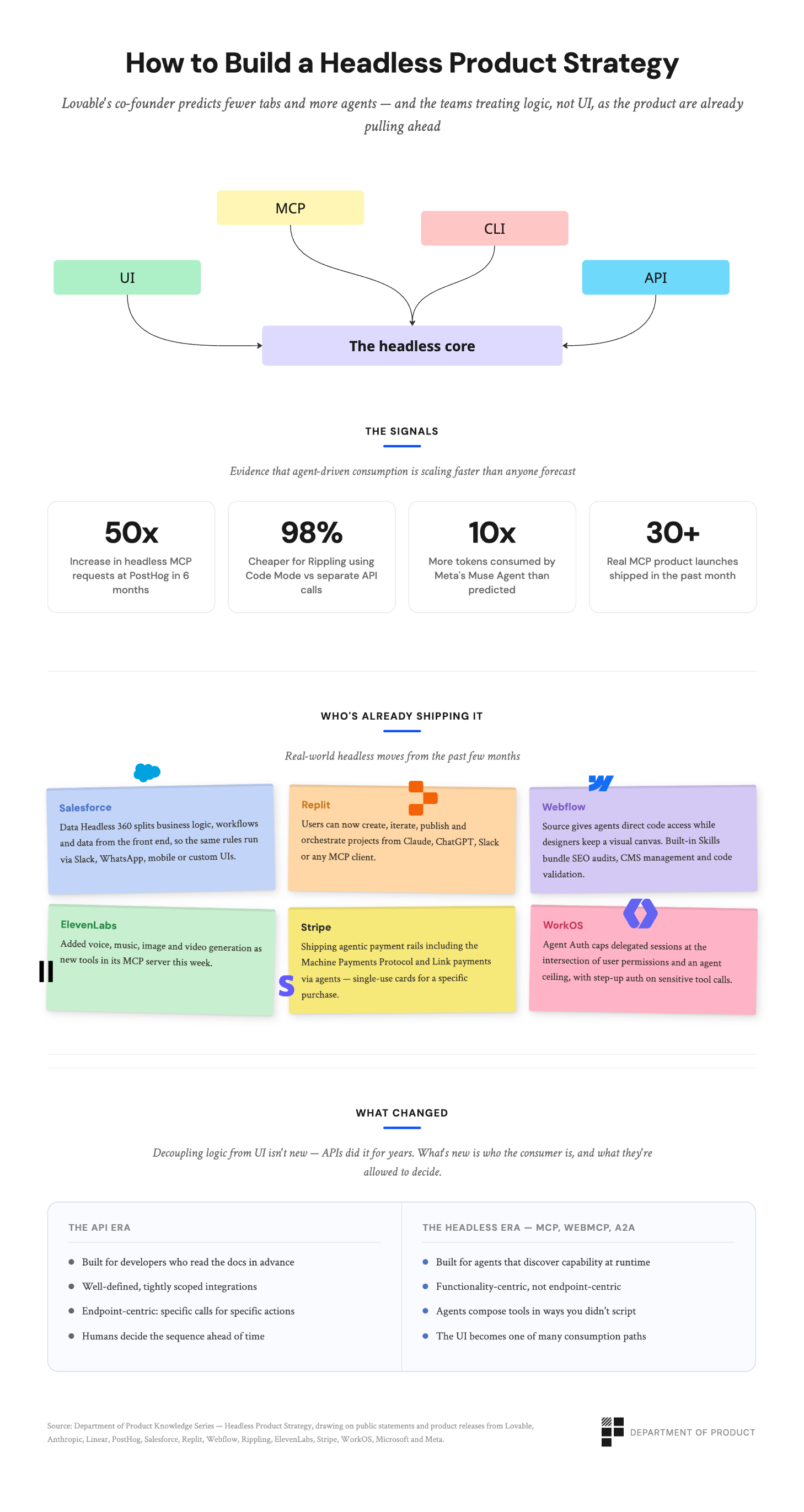
Decoupling a product’s core logic / value UI from the UI isn’t new, of course, since APIs have traditionally served this purpose very well up until now.
What is different with this latest version of headless product design is the end user and what they’re able to do.
APIs are mostly built for developers who would read your product’s API docs in advance and write well-defined, scoped integrations built for specific actions. With the new crop of headless standards like MCP, WebMCP, A2A and others, it is now less about endpoints and more about the functionality that an agent has access to, to use in ways that they wish.
For product teams, figuring out how to navigate through these new standards to design a coherent strategy can be pretty difficult but since plenty of world leading teams have recently shipped new headless capabilities in the past few months, there’s a growing set of case studies for us to use as inspiration.
How to develop a headless product strategy of your own; key steps and considerations
Based on the current technical capabilities and recent releases from the past few weeks, here’s a collection of some of the key steps and considerations to work through when building a headless product strategy of your own.
Separate your product from your interface and identify high value use cases - separate your real value (logic, workflows, data) from the UI.
Expose it in a shape an agent can actually use - don’t just replicate APIs; define clean entities and a small, discoverable MCP/CLI/API surface that agents can reason about.