
🔒DoP Deep goes deeper into the concepts and ideas that are covered in the Weekly Briefing to help you learn lessons from the experiences of top tech companies. If you’d like to upgrade to receive these in-depth pieces of analysis you can upgrade below. New reports are added every month.
It was not so long ago that Uber became a case study in the perils of tokenmaxxing, encouraging its engineers to maximise their spend so much that their CTO later admitted that they’d already burned through their AI budget in March of this year.
Since then, the tide has turned aggressively away from tokenmaxxing, with companies now flexing their ability to deploy tactics that reduce wasteful token spend.
Uber’s CTO recently revealed that the company had designed a new sophisticated cost saving model which spans across the entire product development process, including developer tooling, 1,000+ MCP servers and third party SaaS integrations.
Their CEO was understandably very keen to flex their cost savings:
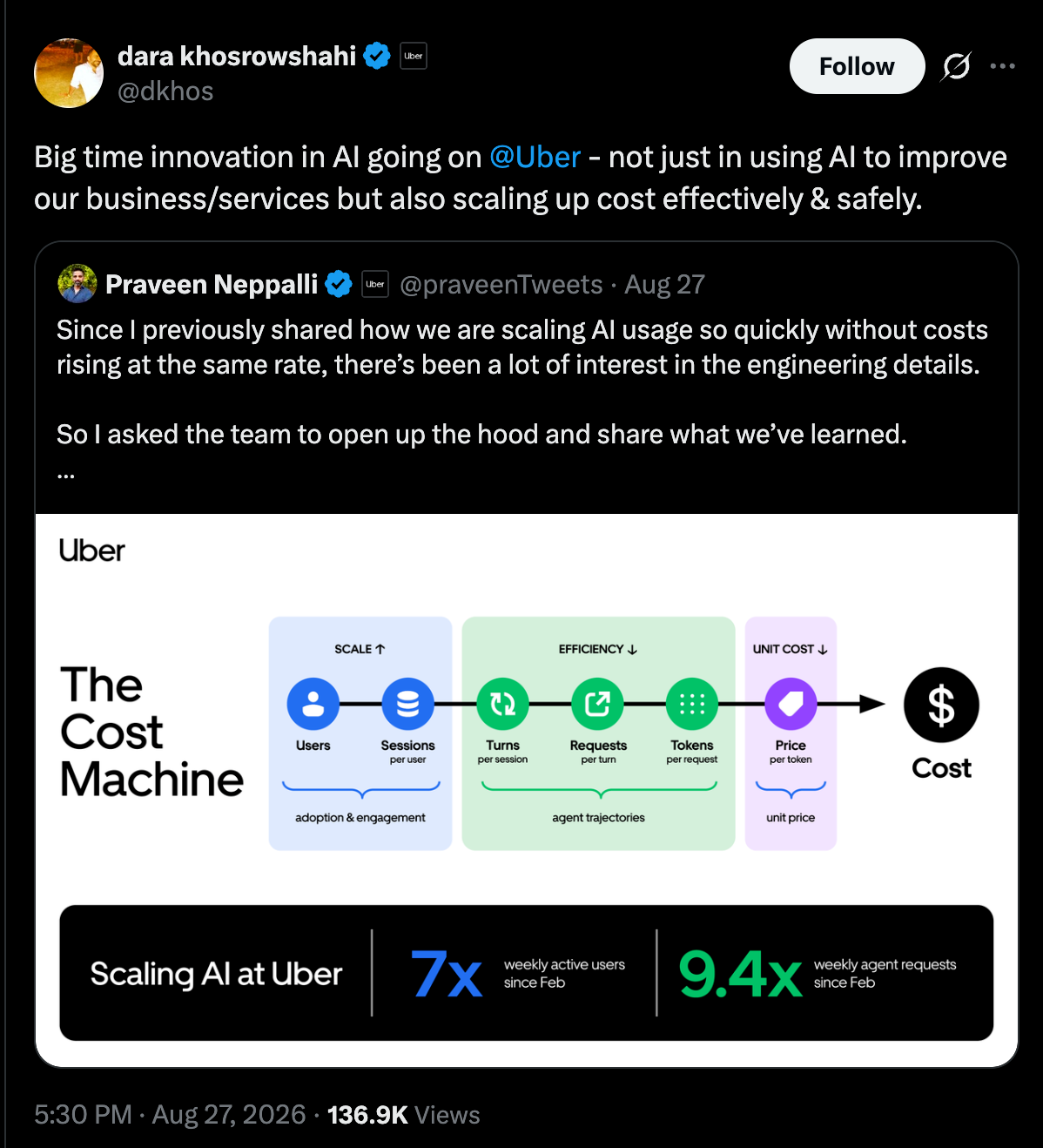
The result of their efforts was an almost 10x increase in agentic requests from February to August with total spend staying the same and in some cases, costs fell up to 52%.
And Uber isn’t alone in this shift. This past week, Spotify’s Principal Product Manager confirmed that it has managed to reduce its Claude Code costs up to 90% and third parties like Ramp, Rippling and others are scrambling to release tools that teams can use to manage AI spend internally.
In this Deep Dive, we’re going to unpack how Uber transformed its engineering / product development processes to drastically reduce its AI token spend, together with case studies from other companies and new tools, tactics and processes you can use in your own company.
If you’ve been having conversations internally about how to manage AI token spend recently then this Deep Dive should hopefully help you to navigate those conversations with the new data, tools and examples you can use to get up to speed quickly.
Coming up:
How Uber transformed its product development and engineering processes to cut AI token spend massively
Other case studies in token cost saving from Spotify, Stripe, Granola and more
The latest tools you can use to monitor and reduce AI token spend in your own company
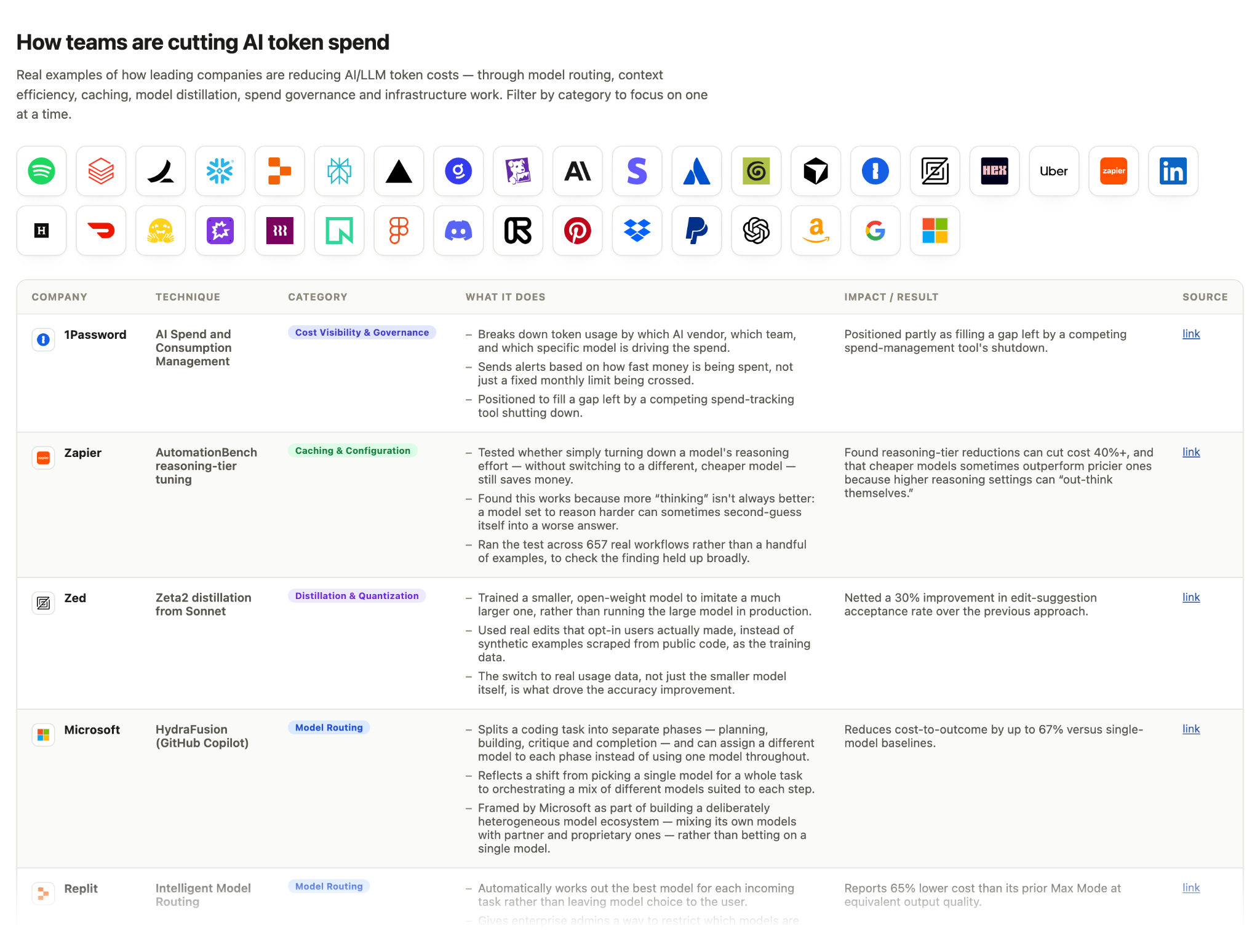

How Uber transformed engineering processes to cut AI token spend massively
Uber systematically transformed several specific parts of its engineering set up and product development process to optimize cost as much as possible.
Here’s a snapshot of some of the core capabilities of this new cost cutting set up:
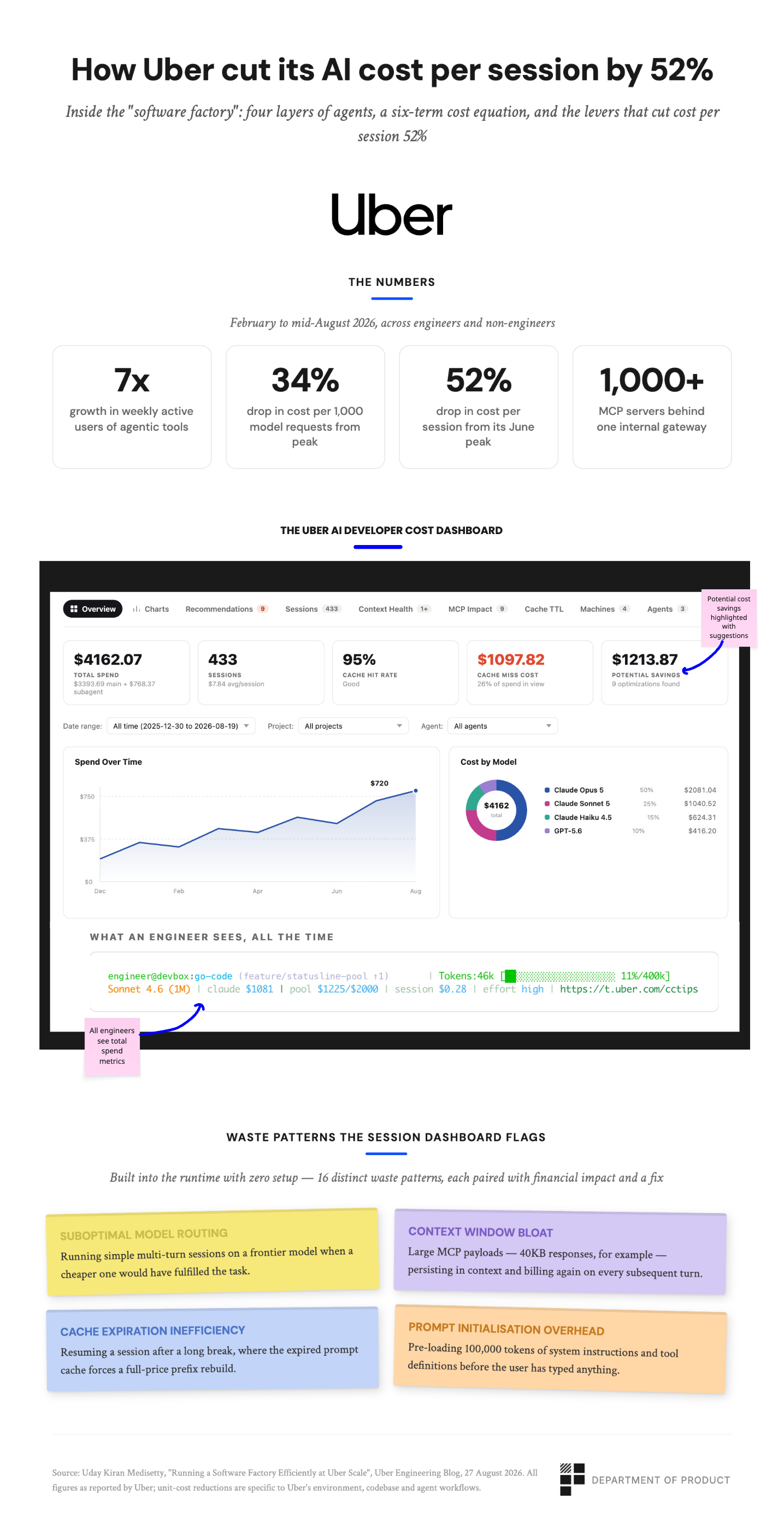
As you can see, one of the core parts of Uber’s new cost-cutting development process is a personal dashboard that engineers can see at any time that explains how much has been spent - together with a total of potential cost savings and suggested improvements to implement those savings.
The 6 parts of Uber’s cost saving engineering set up and other examples from Spotify, Stripe and more
To help make sense of what Uber did, we’re going to break it down into six core parts.
1. They designed a bespoke equation to balance adoption and cost
Before even starting on any cost saving tactics, Uber built a cost equation which breaks down the various elements of AI usage - and attempts to balance AI adoption (which Uber is keen to grow) and AI cost (which it wants to shrink).