
Hi product people 👋,
This week, OpenAI unveiled its answer to Meta’s Muse and Grok Bots with Dots. We’ll take a closer look at what they can do and how this fits into the wider trend of ambient agents.
Plus, why one leader hates AI generated decks and how companies are evolving their UX beyond traditional chat boxes.
This is your Product Briefing. Have a great week ahead!
Rich
Key reads and resources for product teams
New from the Department of Product Substack this week:
How Stripe built an internal prototyping tool that’s created 12,000 prototypes so far
Stripe’s new internal tool prototyping has quietly changed how a quarter of the company works. Designers skip engineering queues, finance teams turn spreadsheets into clickable dashboards, and sales builds its own ROI calculators. In this week’s Deep Dive, I break down exactly how this works, the tech stack behind it, and how to build your own version. (Department of Product)
How Uber centralised AI agent integrations with an MCP Gateway
Uber’s gateway hosts over 800 MCP servers and 5,000+ tools, with an AutoCrawler that turns existing service definitions into agent tools. Useful for any team deciding how to expose internal services to agents without hand-building every connector. (Uber)
The growing premium of Originality in product design
Scott Belsky argues that as mimicry gets easier, human flaws, taste, and real creative risk become the new premium goods. Worth a read if you’re wondering what AI can’t replicate. (Adobe Design)
Why AI is coming for middle management - and what to do about it
Cloudflare’s CEO lays out his case for why AI is coming for middle management - and what you can do about it. (The Verge)
The mental shifts leaders need as AI accelerates the pace of business
Only 25% of CHROs trust their leaders to perform well in an AI-driven world, and just 12% of leaders say they’re skilled at navigating emotions at work. HBR examines the mental shifts required to navigate the speed of AI-induced business change. (Harvard Business Review)
OpenAI’s Codex product leader on the One True SaaS Layout

New product features and innovation this week
This week, OpenAI launched its take on always-on ambient bots that can get stuff done on your behalf, with the unveiling of Dots. Dots are persistent agents powered by GPT-6 Astra that each get their own cloud computer and connect to more than 4,000 different apps through plugins that can be used from ChatGPT, Slack or Teams.
Dots works through layers, which means you can give your Dot the context it needs and it retains it across all of the apps you’ve enabled. When a Dot is idle and not doing anything it does “proactive research”, using read-only access to your connected apps, meaning it call look for opportunities to help without being able to take actions like sending messages.
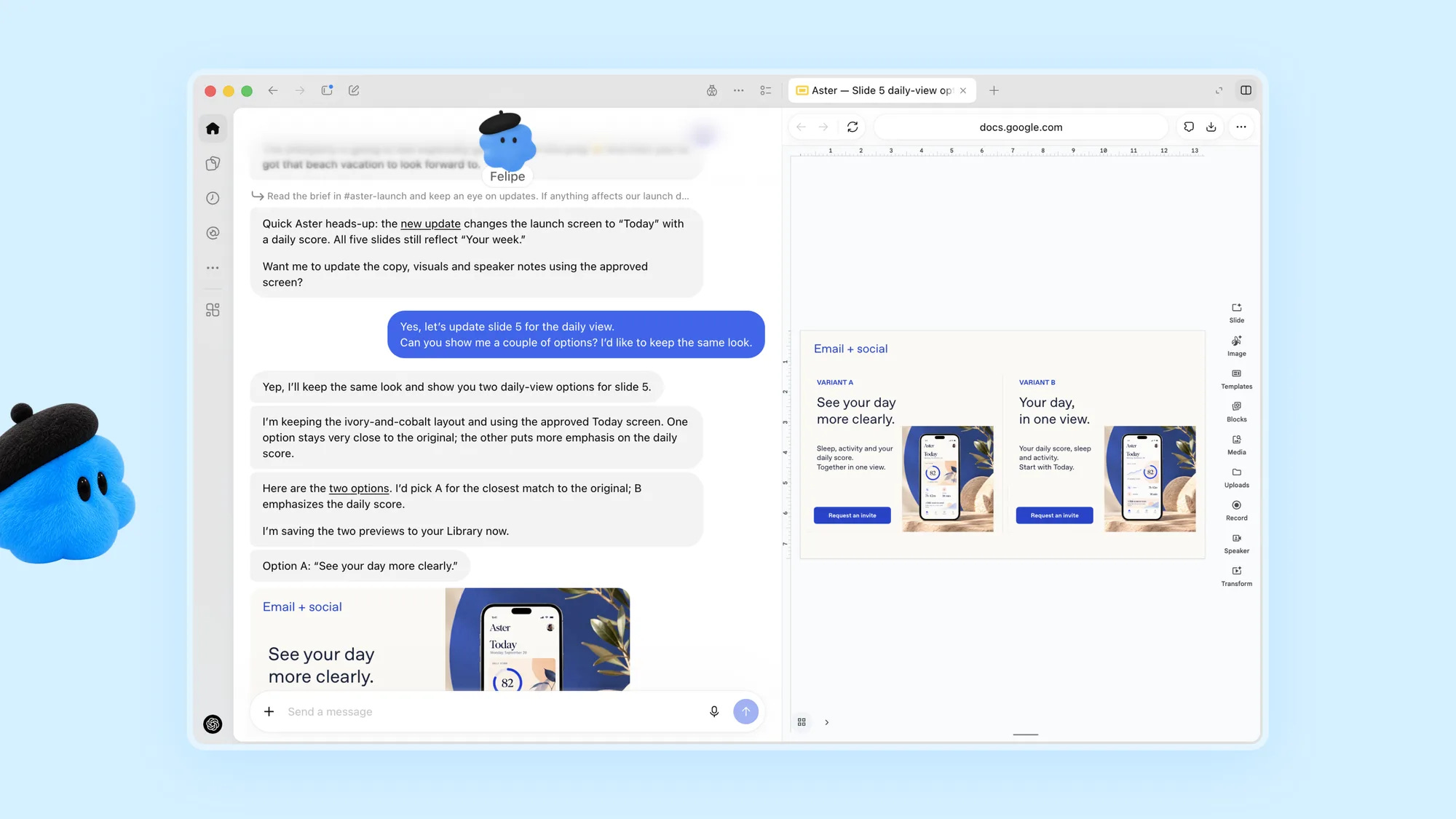
For actual work, it then uses an “auto-review” system that checks planned actions against your instructions and custom rules and makes decisions about what it can do autonomously and what needs your permission.
Like Meta’s Muse, Dots have been anthropomorphised into cute, furry little creatures, which means we’re now in the strange stage of the AI hype cycle where AI agents are simultaneously predicted to destroy humanity by building bioweapons, destroying digital infrastructure, and doing all sorts of other things we can’t yet comprehend and also help us with editing Google Docs in the shape of a furry blue blob wearing a beret.
For product teams, this idea of always-on, ambient assistants that surface actions for approval in the background is a growing trend that’s worth keeping an eye on. Recent other examples include DoorDash agents that automatically restock food in offices, Atlassian’s vulnerability scanner and Cursor agents that auto-flag bugs.
Dots in action
Here’s a full demo of Dots in action from OpenAI engineer Holly Li:
Sam Altman also shared his own personal Dots set up which you can see here.
Other items from OpenAI’s demo day worth knowing about
Aside from Dots, the company also revealed a new B2B marketplace, with launch partners including Notion, Glean, ElevenLabs, Figma and more. For enterprise companies, the marketplace means that they can automatically redirect their existing budgets towards these third parties without having to go through a separate procurement process.
OpenAI also launched Space - a new collaborative doc space for people and agents, which looks a lot like Notion or Google with agents as a user.
New features you can use at work
Synthesia has launched conversational surveys that bring your surveys to life through an avatar which asks users questions conversationally, rather than through static forms, which could be helpful if you’re looking for ways to make your surveys more engaging.
Replit shipped interactive charts in Agent chat, alongside a harness that lets the model route itself. Users ask for a visualisation and get a shareable chart inline. The Agent’s core model now picks its subagent tier and effort per task, and Replit claims it beats a sidekick architecture by 11 and 16 points on DeepSWE and Terminal-Bench. Cursor shipped a similar /visualize command that renders charts and diagrams inline in the Agents Window.
Google’s Design tool, Stitch, gained a new CLI that lets you connect coding agents to generate design systems.
Linear’s coding agent now auto-routes across models from OpenAI, Anthropic and open-source providers. It can be assigned from Linear issues or from Slack with @linear, and Loops run scheduled or triggered work such as bug fixes, documentation and clean-up.
Figma’s Dev Mode is now available in Codex with a plugin and MCP support. The plugin shows what is ready for development, letting you compare local builds with production.
New in Product Intelligence - Visual Search
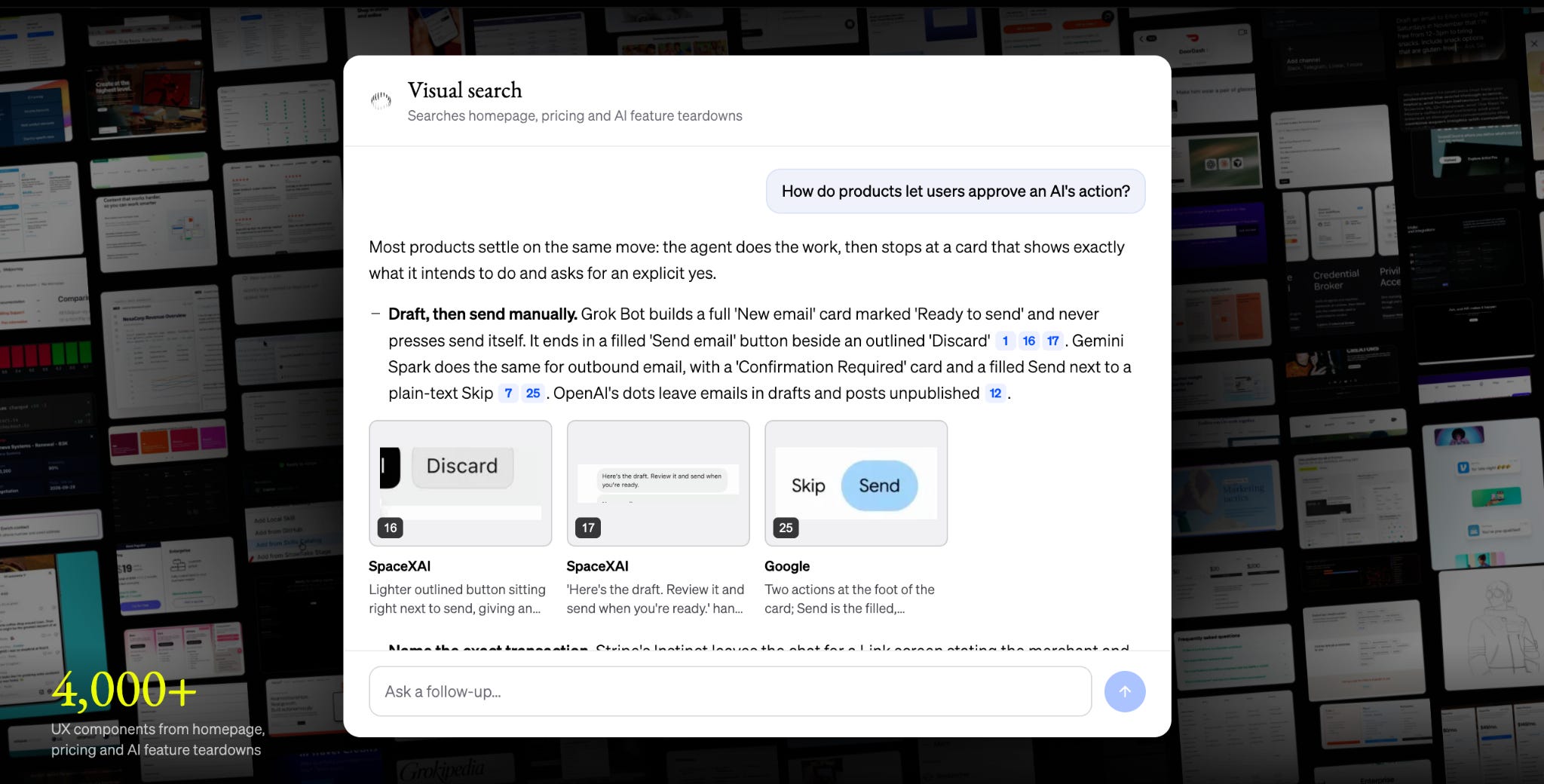
Visual search is a new feature which scans the latest components from features and designs from the world’s leading companies and lets you ask hyper-specific questions like “How do AI agents ask for permission” to use in your product’s design.
Perspectives from the world’s leading product leaders
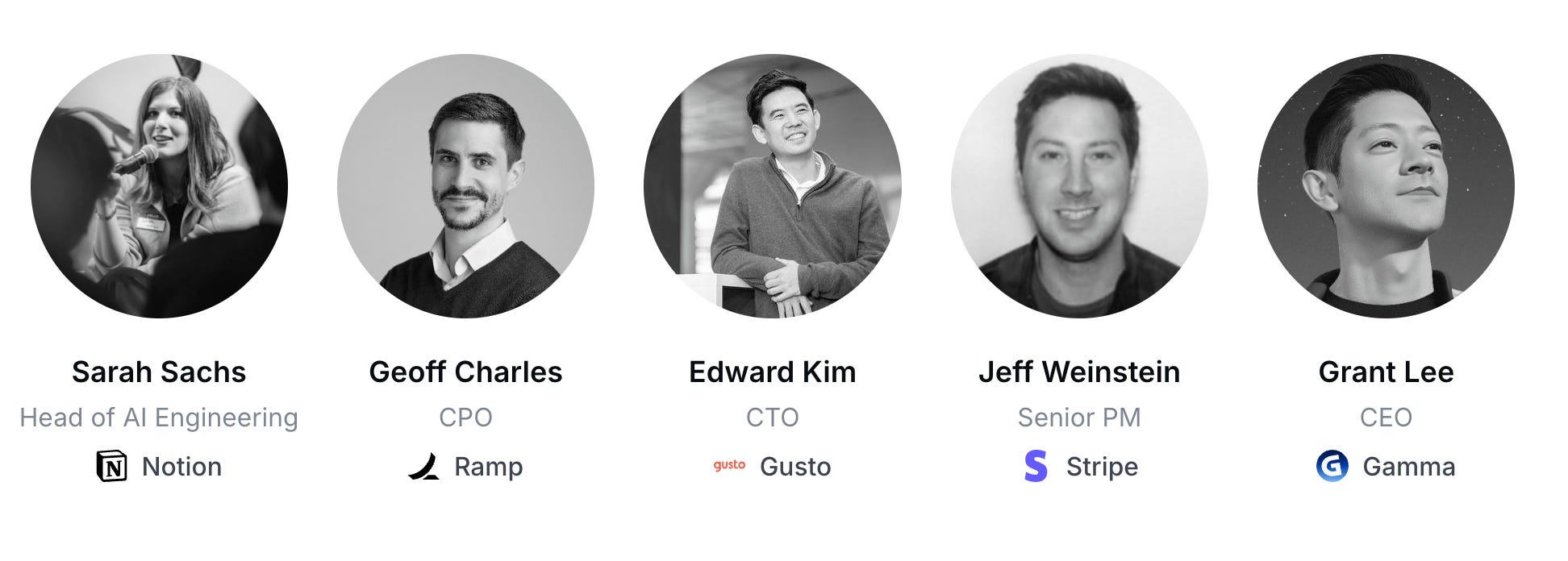
Sarah Sachs, Head of AI Engineering, Notion, re-emphasised her view that token usage is a vanity metric. She says the real work is cutting latency and cost through precise tool definitions and model routing, and that success means growing ARR while dropping down the token leaderboard.
Geoff Charles, CPO, Ramp, argues that coding is now cheap, so the bottlenecks to shipping are fragmented customer signals, slow decisions, manual QA and launch coordination. In other words, most of the things that PMs traditionally have to deal with.
Edward Kim, CTO, Gusto, argues AI needs enough business context to act rather than just answer. He says Business Compliance shipped in 6 months instead of 12+ because Gusto already detected when customers hire in new states.
Stripe’s Senior PM, Jeff Weinstein sees new consumer agents launching with different product focuses, singling out Pickle for group decisions and noting Link lets agents pay on a user’s behalf. He also says Stripe already suggests WebMCP is becoming an increasingly important protocol, saying agents are gaining traction on WebMCP checkout across Meta wearables, Kernel browsers, Cloudflare workers and Shopify.
Grant Lee, CEO, Gamma, says AI-generated decks are “slop filled with the average of every pitch deck it has seen” and that “AI can’t be held accountable”, so ideas must be human-owned.
📈 Product data
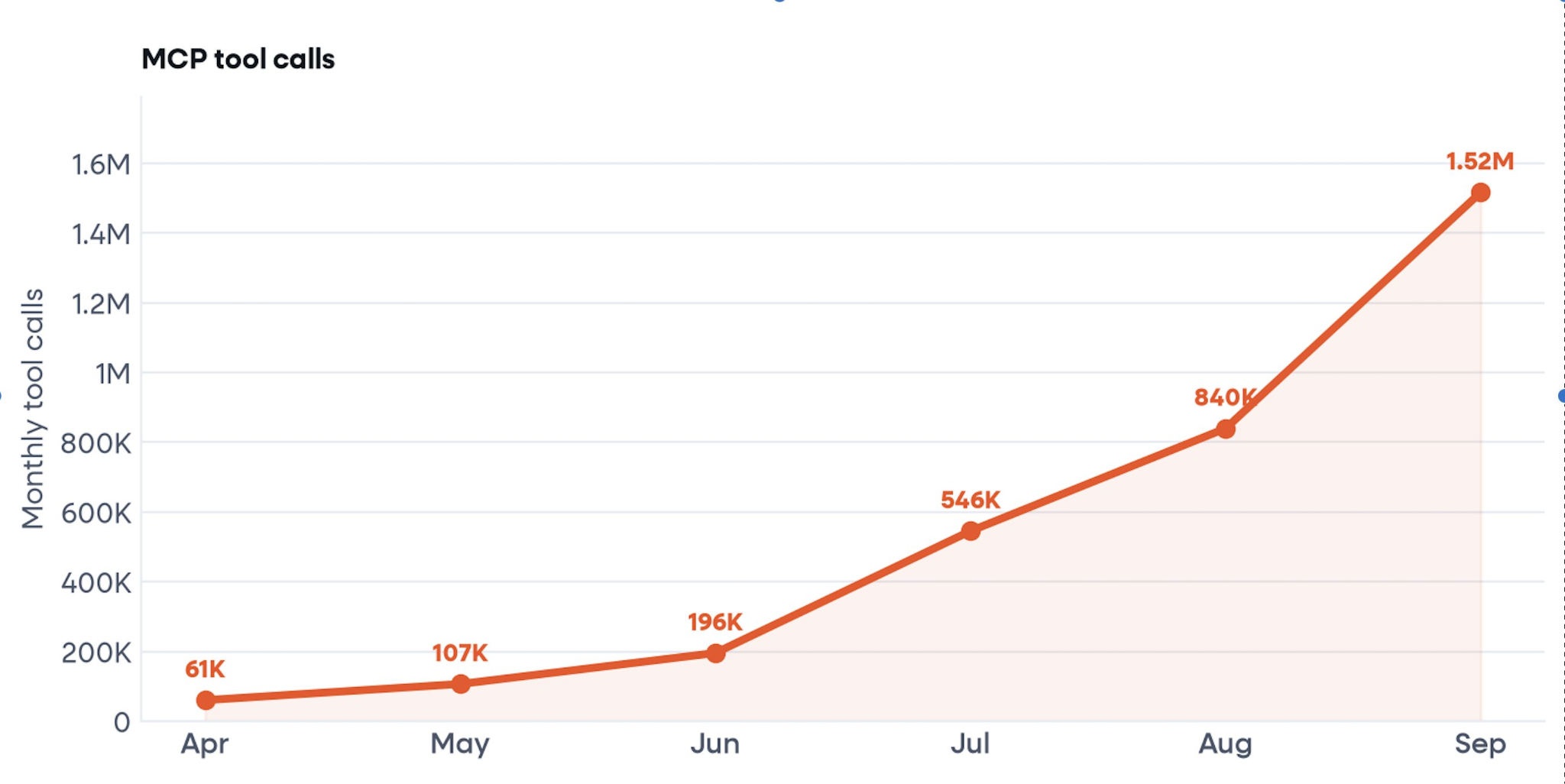
FullStory’s headless MCP volume grew 25x from April to September, as agents watch session replays instead of human analysts.
GPT-6.1 Sol scored 36.1% on AutomationBench at about $0.29 per task, versus about $0.88 for Opus 5.5 at the same score. Cheaper tiers are now close enough on agentic work to justify routing. But Google’s Gemini now leads the field, though, with an impressive 51.3%.
Deel says its internal Akai agent platform added more than $140M in ARR in 90 days by automating work equivalent to roughly 600 full-time employees, without adding headcount.
Meta’s Muse now has more than 3 million users who give the AI agent at least one prompt a week, according to internal data reviewed by The Information.
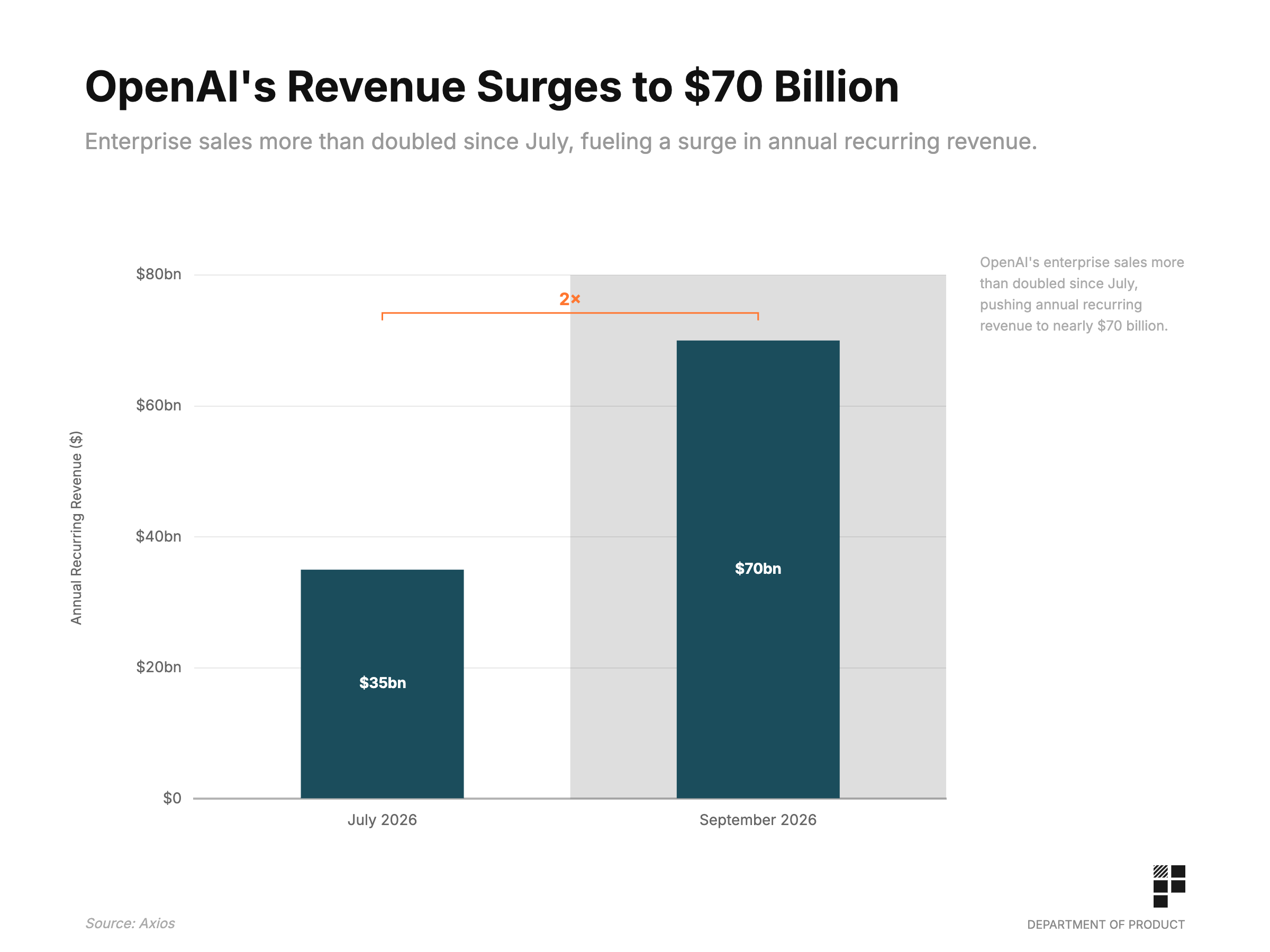
OpenAI says ARR is nearing $70 billion, with B2B revenue up 100%+ since July while Anthropic’s IPO prospectus, as reviewed by the Financial Times and Reuters, shows a 2025 operating loss above $8B on revenue of about $4.6B, Q2 2026 revenue of $11.5B, a $518B infrastructure plan, and nearly 25% of 2025 revenue from two customers.
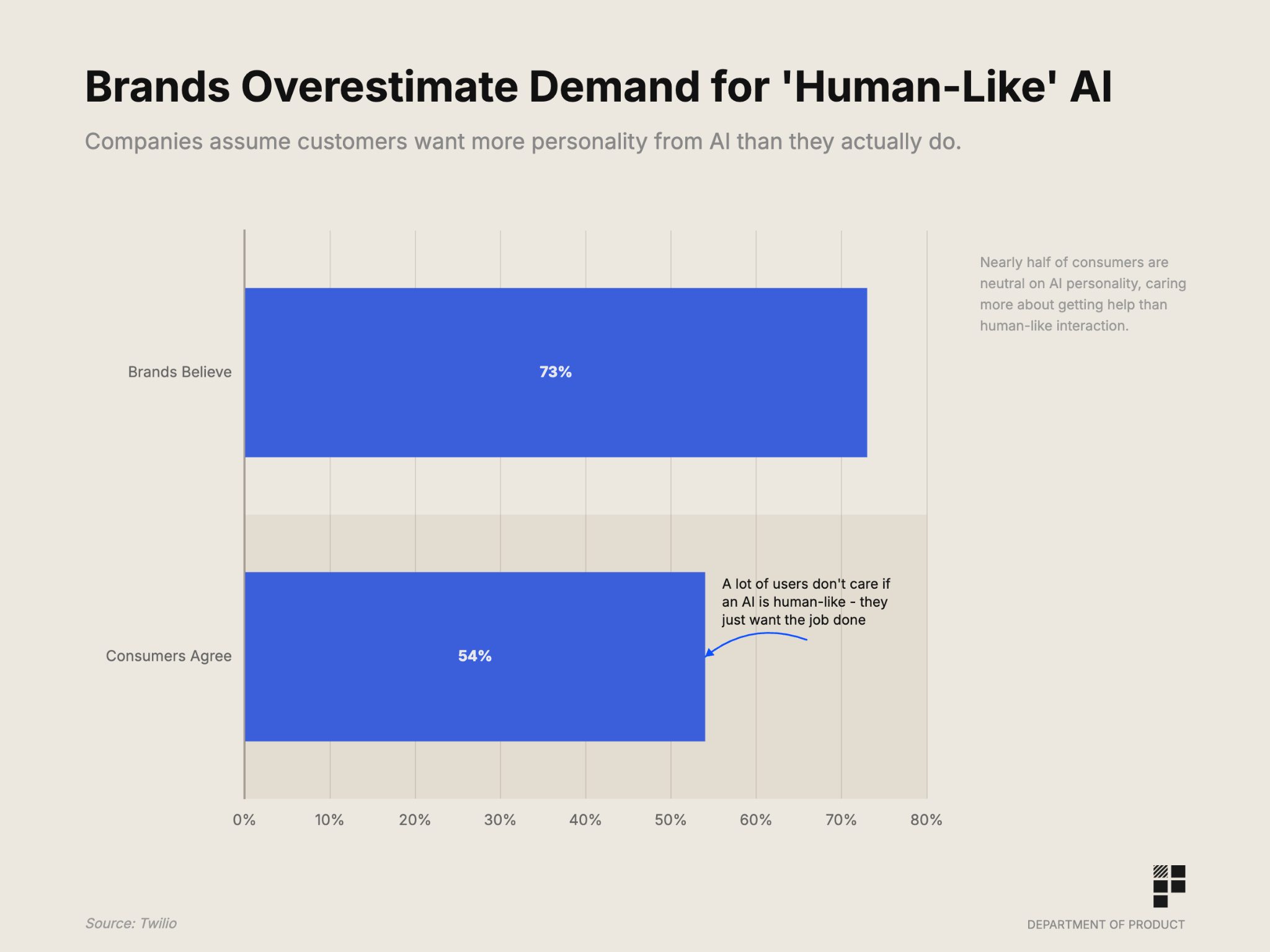
New research from Twilio shows that companies assume users want human-like AI when many users don’t care. A recent study showed 54% agreed that human-like personalities are important but nearly half don’’t care - they just want help.
MongoDB says its internal agent workspace Holly cut seller prep from 4-6 hours per account by 95%.
A new study finds short‑form video addiction steadily undermines adolescents’ ability to cope with everyday school challenges. Adding a doomscrolling video social feed to your product has real world implications.
🔮 Emerging trends to keep on top of
Based on analysis of over 5,000 signals powered by Product Intelligence, here are some emerging trends for product leaders and teams to watch.
1/ Agents are moving from on-demand to scheduled and proactive work
Agents are starting to act on a schedule without waiting for a prompt. OpenAI’s Dots are one example of this but other products shipped new features this week that demonstrate the same trend:
Perplexity’s Computer gained event-triggered and scheduled Automations across Slack, Gmail, Outlook and Linear and Monday.com added scheduling to Sidekick for recurring daily briefs and meeting prep. Klaviyo’s Composer now surfaces missed revenue unprompted and runs scheduled reports, while Grok Bot alerted a user mid-journey that a flight change left an Uber reservation outdated.
2/ Ecommerce and payments is being rebuilt for agent buyers
This week, Shopify added support for WebMCP checkout tools that let agents edit and Submit orders with buyer authorization. Shopify also announced that Shop Pay now works inside the viral payment agent, Instinct.
Stripe is building a new API that lets a business prove an agent is acting on behalf of a verified Link user and and DoorDash introduced a sneak preview of SMS as a new way to pay for orders, signalling SMS as another potential payment platform in the future.
3/ Interfaces are evolving beyond chat and page-based editing
As more products converge around the (rather dull) idea of an empty chat box as the default UX of choice, some product teams are starting to experiment with bolder ideas.
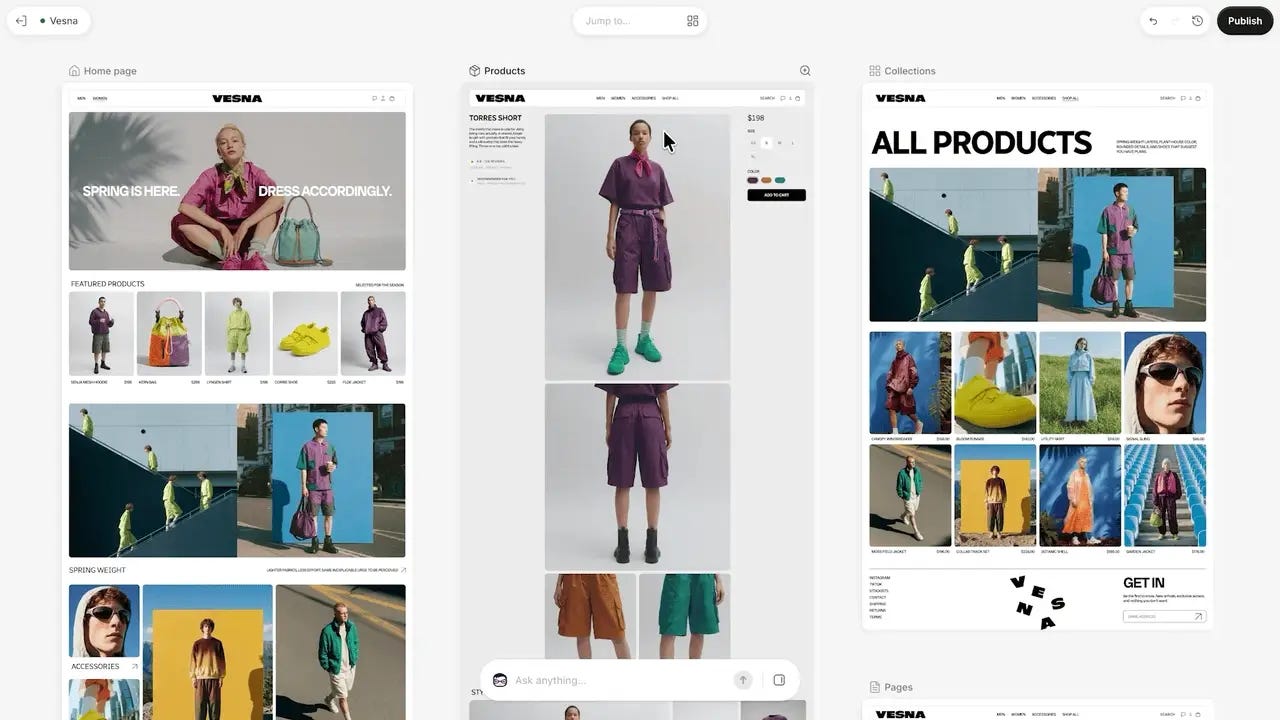
Shopify’s new Canvas feature lets users see all store pages on one infinite canvas that comes with an AI Sidekick in place to perform actions.
Runway introduced a new visual OS called “Project Continuum” built around real-time video interfaces and Airbnb decided to ditch the idea of a building a new chat interface, instead merging it with its existing search bar that can now understand conversations and voice requests.

The Briefing is your curated report on what happened in tech and AI this week - hand crafted for product teams. Paid subscribers get the full DoP Substack including: The Knowledge Series for hands-on AI tutorials plus DoP Deep dive and Intelligence reports for in-depth analysis to learn product lessons from the world’s top tech companies.
The Dots auto-review layer is the bit that stuck with me. Permission gates and "can this run without asking" are exactly the shape where a calibrated decision model beats a chatty LLM.
One caution: vendor demos won't set your thresholds for you. Pin those on your own traffic, and keep an escape option when confidence is middling. I run JevMade at https://jevmade.com collecting guides and experiments on this.
Ambient agents raise the stakes on permissions, since nobody is watching each action as it happens. Disclosure, I built https://www.allthingspm.app/, an AI PM course with chapters on agents and agent security for PMs working on this.