
Hi product people 👋,
This week, Shopify’s CEO argued that one of the biggest challenges for tech companies is dealing with what he calls “AI Slop Grenades”.
Plus, new UX patterns driven by new technologies are starting to emerge. We’ll take a look at some of them including real time voice collaboration with Gemini, personal agents that can renegotiate contracts on your behalf and Snap’s new vision for “anticipatory UX” in AR glasses.
This is your Product Briefing. Have a great week ahead!
Rich
Key reads and resources for product teams
New from the Department of Product Substack this week:
How to Develop a Headless Product Strategy
Lovable’s co-founder has a warning for product teams: stop building only for humans. He argues that companies that don’t make their products agent-friendly risk missing what he calls a considerably larger opportunity. In this Knowledge Series, I break down how to build a headless product strategy, with recent real world examples from Stripe, Rippling, Salesforce and Replit. (Department of Product)
How to use ChatGPT Work to build a semantic data layer
OpenAI’s data team explains how a semantic layer brings together key entities, metric definitions, filters, and known pitfalls (OpenAI)
233 real use cases for Meta’s Muse Agent
Meta’s personal Muse agent is having a moment. Here is a consolidated, filterable gallery of real world use cases including finance, lifestyle and productivity. (Muse Cases)
Tactics for making your company more powerful in 2026
In his latest essay, VC Paul Graham lays out the patterns behind outsized outcomes - owning the customer relationship, letting money (or tokens) flow through you, inducing network effects where none seem possible, and selling to startups before they’re big enough to matter to anyone else. (Paul Graham)
Putting the user back into AI evaluation
In this piece for Microsoft’s UX Research series, Christopher Monier, Chuck Kwong, and Wendy Wang - the researchers behind Copilot’s response-quality evaluation program - argue that machines can check accuracy, but only users can judge whether an answer actually mattered to them. (Microsoft)
New product features and innovation this week
Google has launched Gemini 3.8 Live and Extended Thinking - 2 new models that are designed to bring near real-time reasoning to conversational voice agents.
For product teams, this is clearly potentially very helpful for vanilla scenarios like troubleshooting, but over time it could introduce a new type of collaborative UX where human users work alongside agents in all sorts of creative ways that we can’t quite imagine just yet.
In this example, a user is learning programming in real time alongside agents powered by the model:
Anthropic has added Projects to Claude Code. After the change, a primary agent now manages memory and spawns subagents that keep working after you close your laptop, with proactive scheduling options.
Anthropic also shipped an update that merges Cowork and chat into one interface that auto-routes between quick answers and agentic work. As part of this Claude Design is now built in with Slides, Docs and Design. Head of Product Cat Wu said that users said they didn’t want to have to choose which product to use for individual tasks.
Snapchat launched what it calls SPECS Intelligence - an anticipatory assistant spanning iPhone, Mac, and AR glasses that surfaces relevant information without prompting. Snap is explicitly positioning against Siri and Google Assistant, with a privacy claim that personal content is not used to train models or serve ads:
Snap is describing this as a form of “anticipatory AI” that anticipates a user’s needs ahead of time and surfaces what’s relevant there and then. In a professional context, Snap says it can surface pre-meeting prep and help give you the context you need before meetings. This kind of UX has historically fallen pretty flat but it’ll be interesting to see how well it performs when it’s equipped with new frontier models.
And speaking of AI Assistants, this week Apple officially launched its new Siri - and for the first time in a long time (perhaps ever), Siri actually feels quite helpful, on a Mac at least. Apple has done an excellent job at integrating Siri into the Mac by making it the default for Spotlight with a degree of polish that should really have been there when Apple originally launched its first iteration of Apple Intelligence 2 years ago.
The relaunch adds personal context understanding, onscreen awareness, camera-based Visual Intelligence and a dedicated Siri app that syncs conversations across devices, including bill-splitting through Apple Cash and custom Wallet passes generated from whatever is in front of the camera.
Other updates worth knowing about
Atlassian integrated the BearQ testing agent into Jira, connecting test execution to work planning.
Pinterest is testing Restyle, letting users visualise furniture and decor in photos of their own rooms.
Linear has extended Loops beyond issues. Agents can now edit Linear documents directly, such as auto-updating a launch plan when project dates change, post tailored updates to Slack, and trigger on changes across initiatives, projects and cycles.
Notion added the ability to build agents that can delegate to sub-agents - each with isolated instructions, context and model.
Perspectives from world leading product leaders and operators
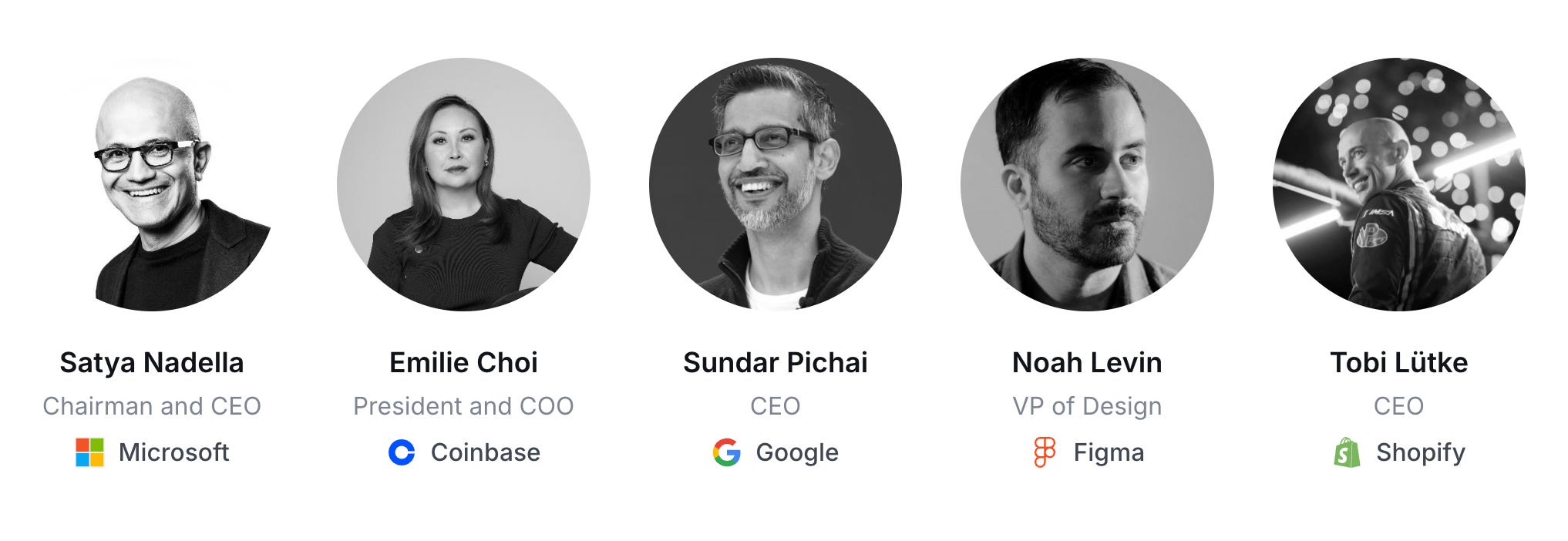
Microsoft’s CEO Satya Nadella argued superintelligence is only worth pursuing if it stays under human control and its benefits are diffused broadly, and said Microsoft will publish a Code of Conduct for its first-party MAI models for public consultation.
Emilie Choi, President and COO, Coinbase, says the company is pushing toward flatter, individual contributor-heavy teams to ship faster with AI, saying that the main challenge right now is to get the balance right between speed and craft quality.
Google’s Sundar Pichai used the week to restate four strategic pillars for the company’s AI work, health, disaster and weather resilience, learning, and economic opportunity, pointing to AlphaGenome’s genetic mapping work, WeatherNext 3 forecasting, and translation coverage now reaching nearly 300 languages as evidence the company is framing its AI investment as a public good alongside its commercial products
Noah Levin, VP of Design, Figma, has raised the risk of “cognitive surrender”, where the convenience of AI erodes the habits and judgment that made people good at the work in the first place. He frames it as a duality rather than a verdict, comparing it to the idea that “cars save lives, but also takes them”.
Shopify’s CEO says “AI slop grenades” are ruining workplace culture and productivity. A slop grenade is when you let AI produce the work and pass it on without adding any value (including checking it). He says that getting LLMs to produce wasteful emails that then require another LLM to condense and synthesis it is wasting people’s time at work.
📈 Product data
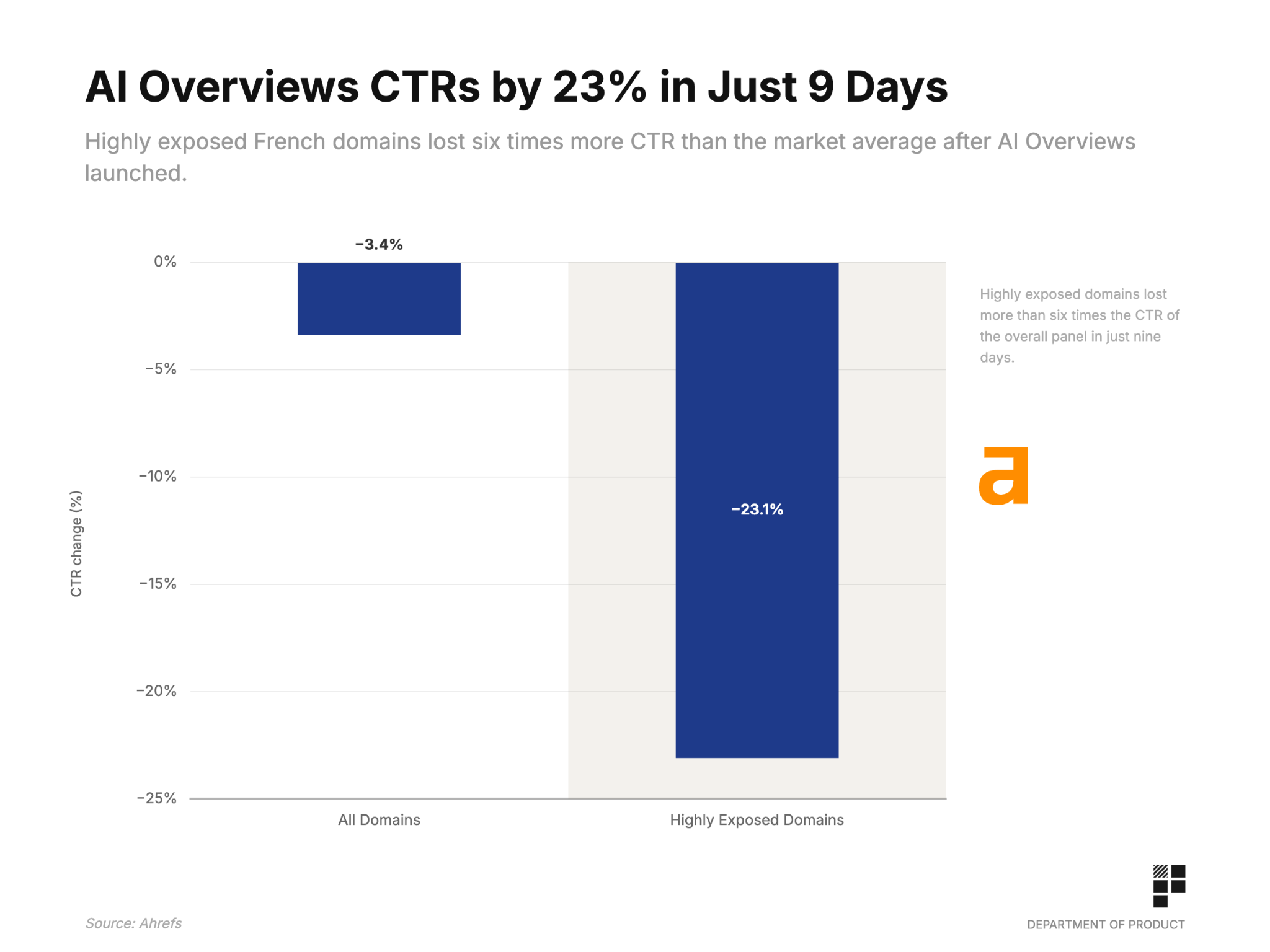
When AI Overviews launched in France in July, researchers had a rare opportunity to produce a clear before and after snapshot. They found that websites heavily exposed to AI Overviews lost 23.1% of their click-through rate in just nine days:
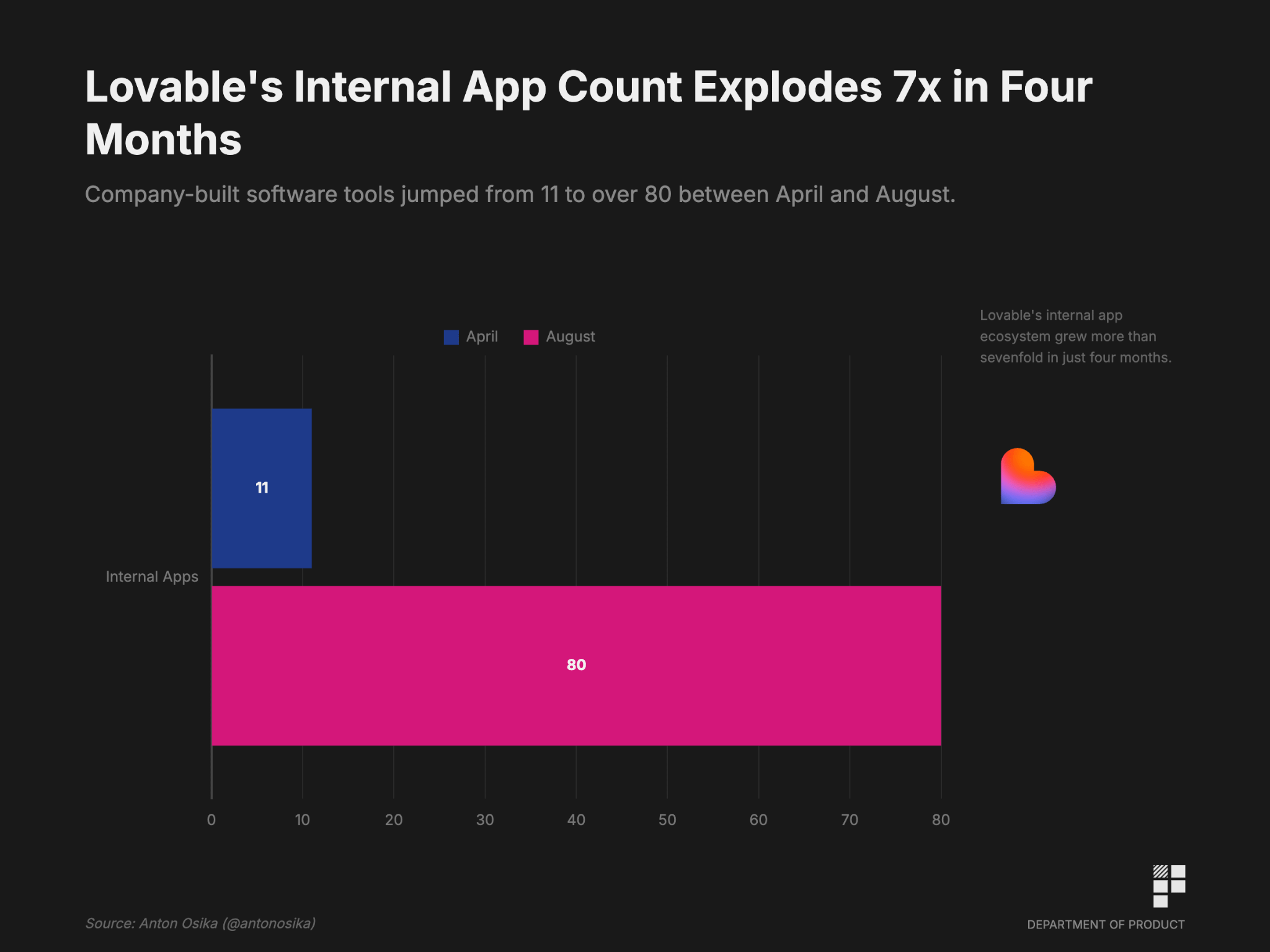
Lovable’s CEO says more of its own employees are vibe coding their own tools than ever. Its internal app ecosystem grew to 80+ apps across 17 departments by August, up from 11 in April. Clearly, Lovable has vested interest in promoting the idea of internally built vibe coded products but non-technical people building their own internal apps is still a clear theme.
OpenAI says 5 million sites have been created with ChatGPT Sites three months after launch.
LinkedIn says views of content classified as AI slop fell 40% after it shared reports with creators, and over 1 million members used its “Seems like AI slop” tool within two weeks of launch.
Airbnb says its new Insight Miner cut data investigation timelines from months to days and expanded it to dozens of teams across the company, to mostly non-technical users.
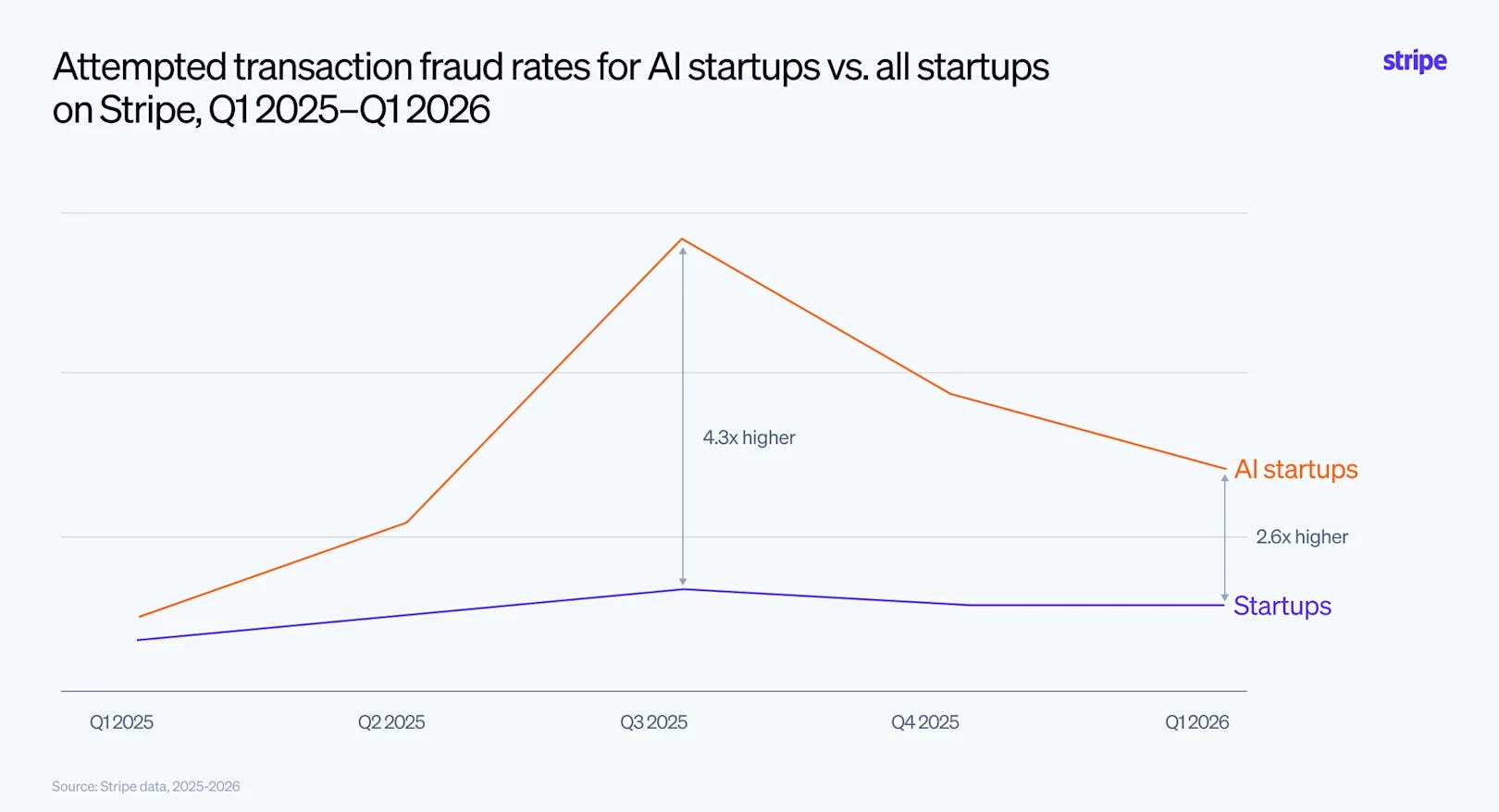
Stripe’s network data shows transaction fraud rates at AI startups were 4.3x higher than at startups overall in Q3 2025, falling to 2.6x by Q1 2026. Multi-account abuse across AI subscription companies rose 40% in six months:
Salesforce says Hunter, its new outbound sales agent, generated $500 million in pipeline last quarter.
Open weight models had a record day on Vercel’s AI Gateway report this week with 78.4% of token volume on Friday. Google’s share of Vercel gateway spend collapsed from 30% to 5%, with Gemini 3 Flash losing 95% of its token share since May.
GitHub’s COO shared research showing agent-generated pull requests have grown 9x in size over eight months, and says teams now need automated review, validation and rollback because manual review can no longer keep pace.
🔮Emerging new trends to keep on top of
1/ Vertical AI products powered by frontier labs are on the rise - and could threaten more SaaS verticals
Frontier labs are releasing vertical products designed to compete in specific industries. This week, OpenAI revealed Astra for Law which pairs a frontier model with a 230-million-URL legal index. Anthropic launched Claude for Financial Advisors with connectors to BlackRock, Addepar and Schwab, and Zendesk shipped Specialized Agents built for specific workflows. The pattern that’s emerging is a combination of frontier capability, plus a proprietary retrieval layer, plus vertical instructions, packaged up and sold as its own product.
For product teams operating in these domains, it’s unclear to what extent they might succeed.
2/ Personal and household agents are becoming a new category
Google Labs has launched CC, a family AI agent. It manages shared calendars, tasks and logistics for up to six household members, integrates with Gmail, Calendar, Tasks and Maps, and gives each member their own sharing controls.
Meta’s personal agent app Muse has officially reached #1 on the App Store one week after launch. A personal-agent app reaching consumer scale this fast is new territory. Their Chief AI Officer says Muse has already saved 100 people almost $10,000 by doing errands like cancelling contracts and renegotiating insurance policies:

For product teams, consumer agents that consolidate third party integrations into one surface makes headless integrations a priority - and threatens the traditional product UX paradigm. And aside from the UX implications, if agents are increasingly able to navigate the complexities of cancelling or renegotiating products, it could also impact retention and churn.
3/ MCP usage and headless use cases are soaring - and architecture is evolving to keep up
Anthropic’s Thariq Shihipar argues MCPs now outperform CLIs for most integration work because tool-calling has improved and MCP’s stateless design removes older constraints.
Amplitude reported 6.3 million tool calls in August alone, 5x the March volume, with product-data queries now the fastest-growing agent use case, and built a token-optimized MCP server in response. The company’s CEO even unveiled a dedicated headless product aptly named “Amplitude Headless”.
Ahrefs doubled its MCP quota across all pricing tiers after confirming that MCP is its fastest-growing product this year.
But As MCP volume increases, companies are struggling to handle it with new architectural constraints emerging. WorkOS published research showing tool definitions cost roughly 55,000 tokens per turn in a typical five-server setup, and that agent tool-selection accuracy degrades past thirty to fifty available tools, meaning every added tool taxes the selection quality of every existing one.

The Briefing is your curated report on what happened in tech and AI this week - hand crafted for product teams. Paid subscribers get the full DoP Substack including: The Knowledge Series for hands-on AI tutorials and DoP Deep dive reports for in-depth analysis to learn lessons from the world’s top tech companies.
The GitHub stat further down fits this too. Agent PRs getting 9x bigger in eight months is basically slop grenades aimed at whoever does code review.
Spot on analysis of why uncurated AI output ends up creating cognitive drag rather than actual productivity. The real leverage comes from using models as targeted thinking partners and structured memory extensions rather than automated text scattershot. Explored how to build effective second brain agent workflows here: https://gzambrano.substack.com/p/augmented-mind-llm-agents-second-brain