
Hi product people 👋,
This week, Stripe’s CEO made the case that personal agents will reward better products just as Sierra, Stripe, Meta and others all backed a new open protocol for how those agents deal with businesses on our behalf. We’ll take a closer look at each of these in more detail.
Plus, Anthropic’s Head of Product, Cat Wu shares her favorite way to get user feedback and why model pricing is now more complex than it seems.
This is your Product Briefing. Have a great week ahead!
Rich
Watch on YouTube | Follow on Substack Notes
Key reads and resources for product teams
New from the Department of Product this week:
The new UX of AI Agents
The chat box and sparkles emoji era of AI is over. In this Deep Dive, I break down 40+ real examples from 26 companies, including Shopify, Perplexity, Linear and Google, to map the 7 new UX patterns now defining how people work alongside AI agents.
The State of AI report 2026 vs what product teams actually shipped
This week, the latest 244 page State of AI report was published by Nathan Benaich at Air Street Capital. In this video, I explore some of the key data points highlighted in the report and compare them to what real product teams are actually shipping in the real world. (Department of Product)
How Pinterest built Metrics Board, an agent-ready semantic layer for metrics
Metrics Board cut metric creation from weeks to 1-2 hours, now routes over 98% of experimentation metrics and exposes certified definitions to analytics agents via MCP. Worth reading if you are about to point agents at your data and want them using the same definitions as your people. (Pinterest)
A free open source alternative to Adobe Creative Suite
A small team has just cloned Adobe’s Create Suite as free open source software. I guess the dark patterns they used for cancelling subscriptions really irked some independent creators and this is their retaliatory response 😅.
Other actionable resources
New product features and innovation this week
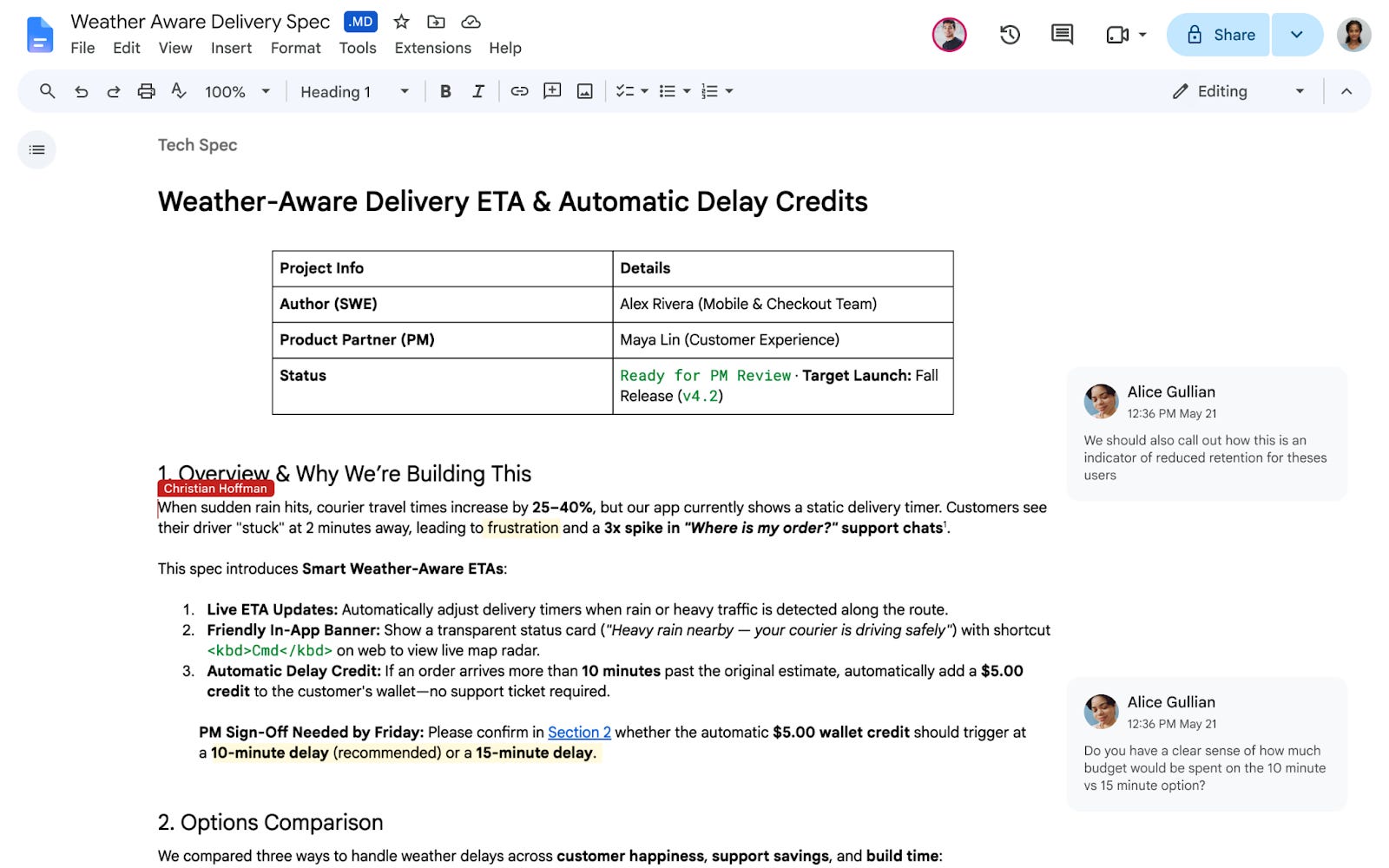
It’s taken a while but Google Drive and Docs can finally handle Markdown natively. Drive previews .md files, and Docs can open, edit and collaborate on them without converting them to Google Docs format, which removes a step for teams who already write specs in Markdown.
OpenAI is officially rolling out Intelligent UI to all ChatGPT users. The new UI turns answers into visual, interactive layouts and surfaces task-specific tools inside the conversation instead of another wall of text. This is part of a growing trend we’re seeing across different products. More on that later.
Another new protocol worth knowing about
Sierra, together with Meta, Stripe, Shopify, Walmart, Genesys, Instinct and Rocket, has launched the Personal Agent Protocol.
This is a new open standard for how personal agents interact with businesses on a customer’s behalf. A draft specification followed later in the week with 35 design partners, including OpenAI, setting out how agents identify themselves and get the customer’s permission before acting for them. Stripe is one of the founding partners. If Patrick Collison is right that agents will reward product quality, this is the plumbing that makes it possible.
New features you can use at work
Google released AI Edge Foresight, a meeting note-taker for macOS that runs entirely on your device with no cloud connection, which could be worth a look if your security team has been nervous about meeting bots. It’s being pitched as a Granola competitor and here’s a video of it in action:
Granola itself has also released some new updates. It now automatically captures screen shared content like slides, charts and designs during meetings and adds it to your notes, so you (and any agents you use) can refer back to what was on screen, not just what was said.
Atlassian has launched a new product called Strategy Collection, which connects company goals, funding, teams and the work itself, so when strategy changes, investment and delivery plans change with it. It also tracks when execution starts drifting away from what the business intended, which could be useful for things like roadmap review sessions.
Linear has added AI spend controls, with a credit usage explorer that lets admins set limits per workspace, user or loop and pauses usage when they’re hit.
Anthropic launched Claude Motion, which turns your ideas into animated explainer videos on Team and Enterprise plans, with an export to Runway when you want to edit and assemble the final cut. Handy for launch videos and feature walkthroughs if you want to get something out of the door quickly.
New in Product Intelligence - Strategy Thought Canvas
Thought Canvas is a new feature that gives you an infinite canvas for working through big product decisions.
You start with the question you’re trying to answer, like “Should we build our own MCP server?” and the canvas pulls in real world evidence from over 20,000 product signals so you can see what the world’s leading companies have actually done in similar situations.
From there, you can map out your options, stress test them with frameworks and export it to share with your team.
Perspectives from some of the world’s top product leaders

Patrick Collison, Co-Founder and CEO, Stripe says personal agents will reward genuine product quality over distribution tricks. He argues that when an agent researches every purchase, tactics that rely on inattentive buyers, like coupons, checkout upsells and forgotten subscriptions, work less well, so making the product better becomes a more effective strategy. He thinks information about product quality will become far more valuable, but says it all depends on agents staying on the consumer’s side:
Personal agents will, I think, act as a kind of structural subsidy for product quality. How would markets look different if individuals always spent at least 10 hours researching their purchases? On the margin, focusing on making a product better is, I think, going to become a more effective strategy for companies. This is good!
Cat Wu, Head of Product, Anthropic, shared her favourite PM use for Claude: asking who used a feature most last week, having it build a top 10 list as an artifact, then reaching out to book 15-minute chats. She calls it the fastest way to get user feedback.
Mike Knoop, Co-founder, Zapier outlined a framework that includes three layers for getting agents to find and adopt your product. This includes visibility in what models learn during training, published evaluation scores, and installable skills. It pairs well with Collison.
Spenser Skates, CEO, Amplitude, shared how the company flattened its management structure while growing: manager count fell from 158 to 135 over 18 months while individual contributors rose from 567 to 656, taking average span of control from 3.6 to 5 reports per manager.
Vanessa Lee, VP of Product, Shopify, thinks AI is making people appreciate imperfection and quirkiness more than ever. Her typos are no longer embarrassing, she says. Instead, they show that she actually wrote it.
📈 Product data
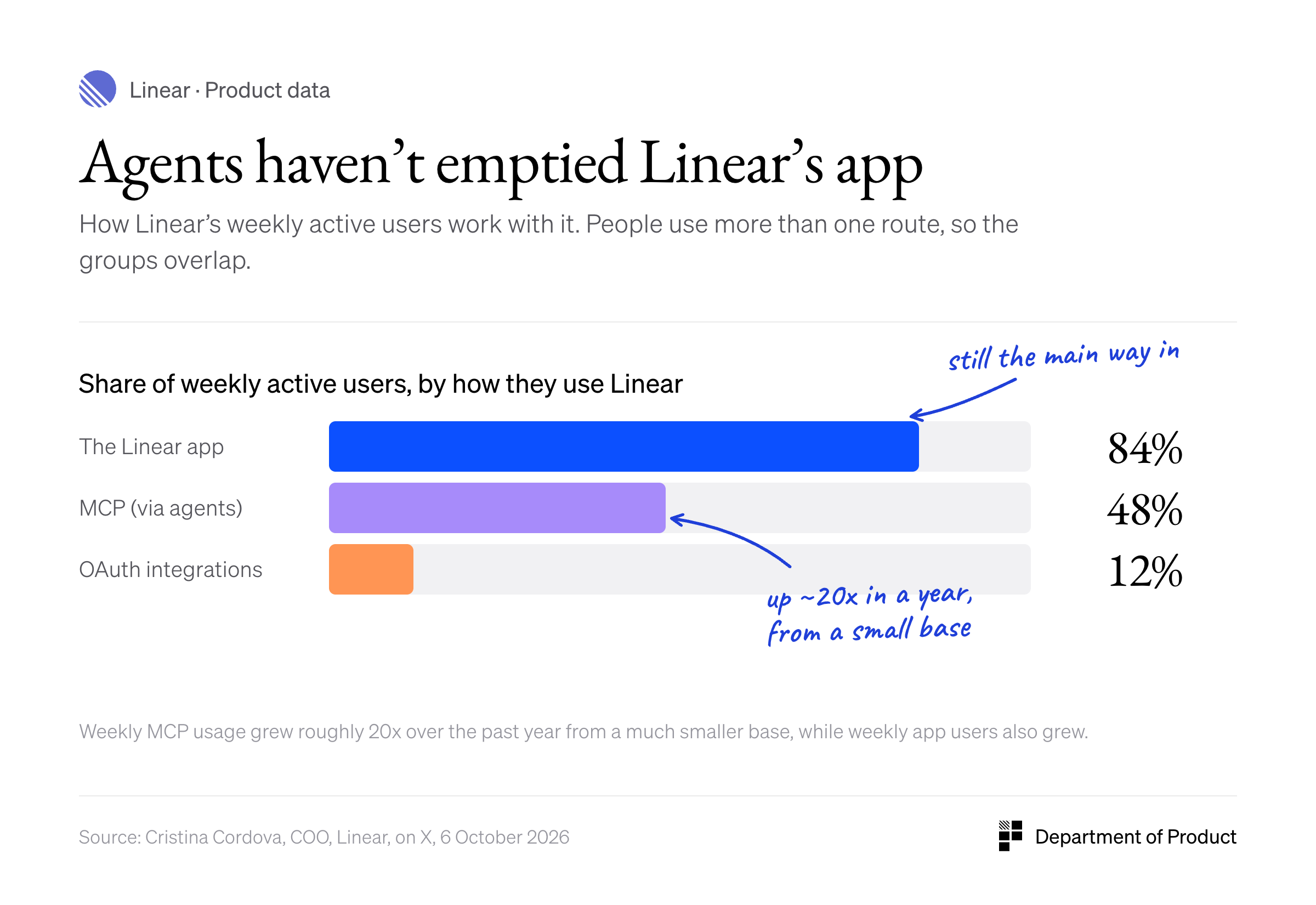
Cristina Cordova, COO, Linear, pushed back on the idea that agents hollow out products, sharing Linear’s engagement data. 84% of weekly active users use the app, 48% use MCP, and MCP usage grew roughly 20x in a year while app weekly users and paid seat utilisation also rose. Her test is whether human engagement and product centrality rise or fall as agent activity grows.
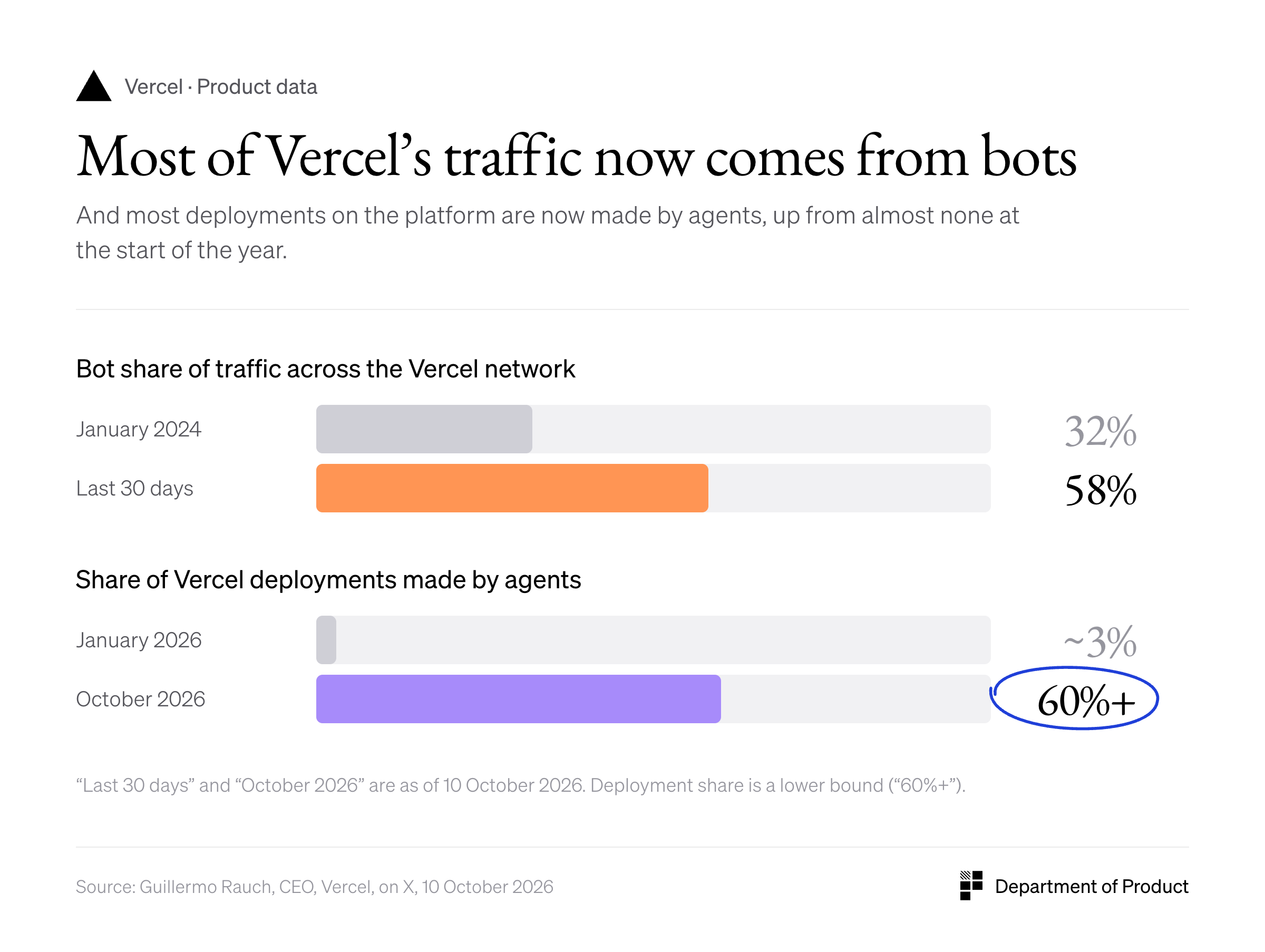
Vercel’s network is now 58.18% bot traffic over the last 30 days, up from 32% in January 2024, and agentic deployments exceed 60% of all deployments, up from about 3% in January 2026. Rauch predicts human “direct” traffic will become negligible within years.
OpenAI told investors its annualised revenue is approaching $50 billion, $20 billion below the $70 billion figure that came from comparing it with Anthropic, which counts cloud partner sales while OpenAI does not. The IPO once rumoured for 2026 is now pushed to early 2027.
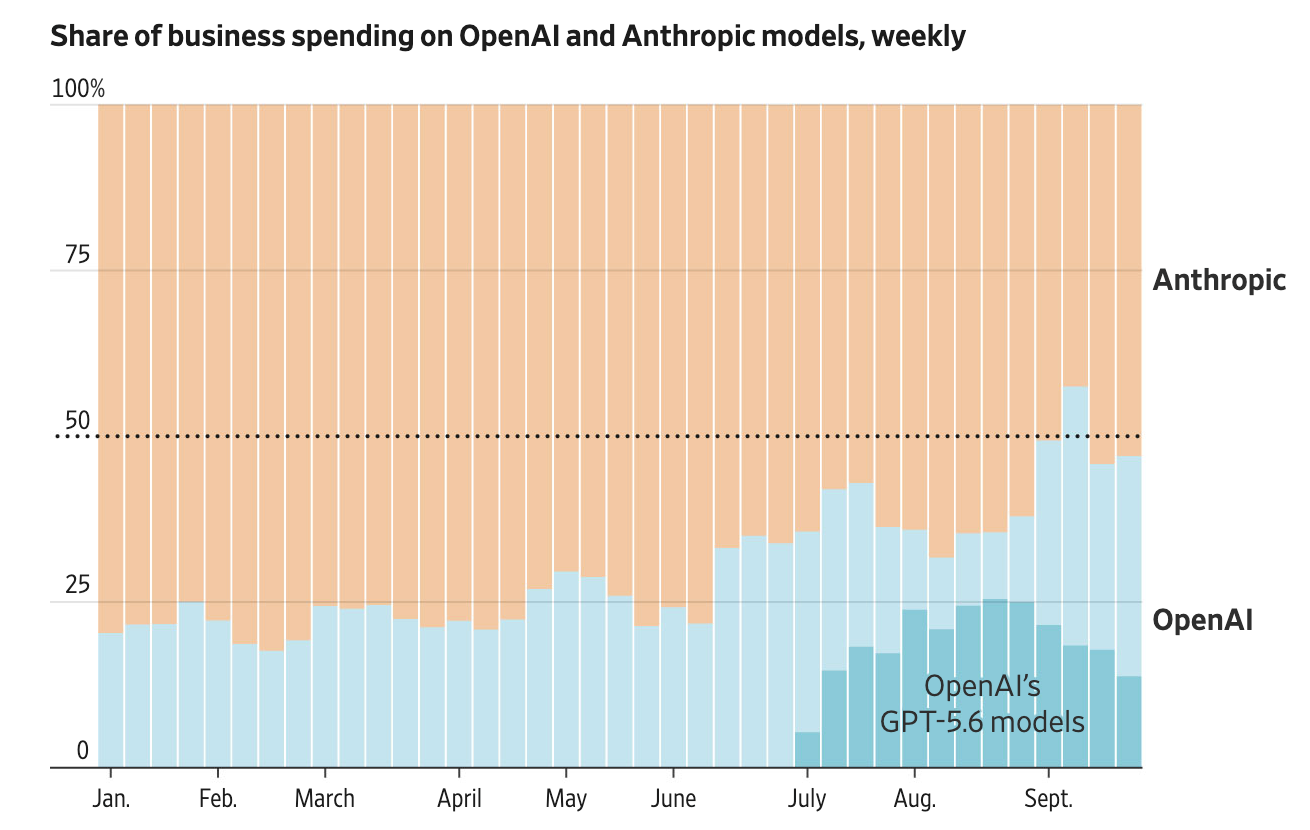
Anthropic’s share of business spending against OpenAI on OpenRouter fell from 75% in January 2026 to roughly 50% by September, according to data cited by the Wall Street Journal.
Meta and Microsoft are cutting employee Claude use, with Meta’s Claude Code users halved from about 60K to about 30K, according to The Information.
Gong’s analysis of 120 million sales calls found that 40% of buyers stay silent, and deals with 4+ speakers win 30% more often than single-speaker deals.
GitHub’s Git activity more than doubled between September 2025 and August 2026 to 473.3B events per month. GitHub has confirmed it is decoupling compute from storage to cope.
Microsoft found that lower priced models actually cost more on 32% of 6,800+ tasks, and only 11% of 396 surveyed businesses could forecast AI spend accurately.
Netflix is preparing layoffs of about 850 people, roughly 5% of staff.
🔮Emerging new trends
Product Intelligence tracks what the world’s best product teams are up to with over 20,000 signals analyzed so far.
Paid subscribers also get the new Trends supplement which has the full list of 10 trends as well as all of the underlying data:
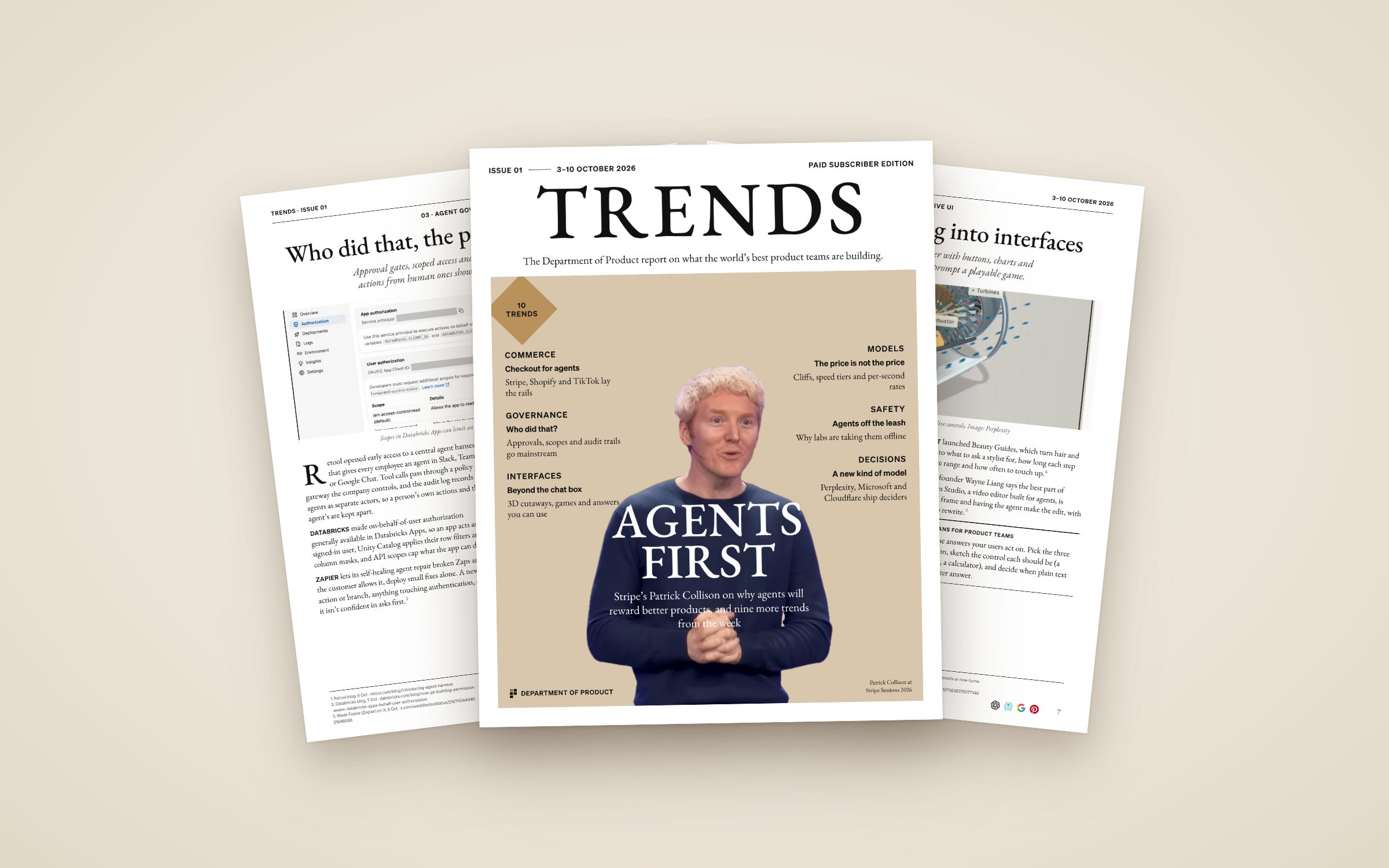
Here’s a sample of 3 trends from the supplement report:
1/ Companies are building governed metric layers for agents to query
Before agents can answer data questions, someone has to define what the numbers actually mean. And companies are increasingly building governed metric layers for agents to query.
Pinterest’s Metrics Board cut metric creation from weeks to 1-2 hours, and over 98% of experimentation metrics now route through it. Atlassian added governed metrics and lineage to Teamwork Graph, LinkedIn built a data context layer to help agents and analysts find the right datasets, and Notion’s Data Scout answers plain-English questions across Snowflake, Notion and Slack with sources shown.
2/ Answers are turning into interactive objects, from 3D cutaways to playable games
As we mentioned earlier when we looked at OpenAI’s new Intelligent UI, the output of an AI request is increasingly a thing you use, not text you read.
Perplexity Computer now renders inline 3D cutaways and animated widgets inside responses. Google’s Playground turns prompts into multiplayer games, with Unity Spark integration coming in closed beta. Pinterest’s Beauty Guides convert saved Pins into salon terminology, cost and maintenance details, and Monday.com’s Vibe agents generate infographics and slides from board data.
3/ Model pricing is splitting by speed, context length and confidence
Zapier’s Wade Foster flagged a pricing cliff in Anthropic’s latest Haiku 5.5 model. The new pricing is a 10x cut for requests under 100k input tokens, but a 5x rate jump above it. Vercel exposes OpenAI’s Ultrafast tier at 6x the standard rate, and its gateway now escalates low-confidence answers to a fallback model while billing both stages. SpaceXAI’s Video 1.5 Lite is priced by resolution, from $0.02 per second at 480p to $0.14 at 1080p.
In other words, the same model can now cost very different amounts depending on how you call it.
And for product teams building AI powered features, knowing these pricing quirks is becoming increasingly important.

The Briefing is your curated report on what happened in tech and AI this week - hand crafted for product teams. Paid subscribers get the full DoP Substack including: The Knowledge Series for hands-on AI tutorials plus DoP Deep dive and Intelligence data reports for in-depth analysis to learn product lessons from the world’s top tech companies.
Collison's caveat is the whole argument, and it is doing more work than the headline. "It all depends on agents staying on the consumer's side" is not a footnote — it is the condition on which the entire quality subsidy rests. If the agent is paid by the buyer, it researches every purchase and the coupon, the checkout upsell and the forgotten subscription stop working. But if the agent is paid by the seller, or by the platform, the same machinery becomes the most effective distribution trick ever built, because it now arrives with the authority of a personal advisor. That is why Knoop's three layers matter more than the headline: visibility in training, published evaluation scores, installable skills. Quality is not enough on its own — the agent has to be able to find it and verify it, which means the new distribution is not shelf space but legibility to machines. Your own data section makes the case that this is already happening: Vercel's network is 58% bot traffic, and Linear's MCP usage grew 20x in a year. The agents are already the customer. My question is about the information layer Collison says will become far more valuable: who certifies it? If quality information is the new advertising, the winners are not just the best products but the owners of the trusted score — the eval, the review, the metric layer. Pinterest's Metrics Board points the same way inside companies. So the investment question is not whether agents reward quality, but who owns the referee.
If an agent is doing the comparison shopping instead of a human, "quality" probably stops meaning a slick checkout flow and starts meaning clean structured data, predictable pricing, and documented edge cases an agent can actually parse. Six months from now the companies ahead might be the ones that look boring to a human but read perfectly to a machine. Has anyone seen early data on what agents actually weight when picking between near-identical products?