
Hi product people 👋,
This week saw the continued adoption of agentic payments with some interesting new features and examples of internal use cases from Coinbase, Stripe and others. We’ll take a closer look at some of the ones that matter.
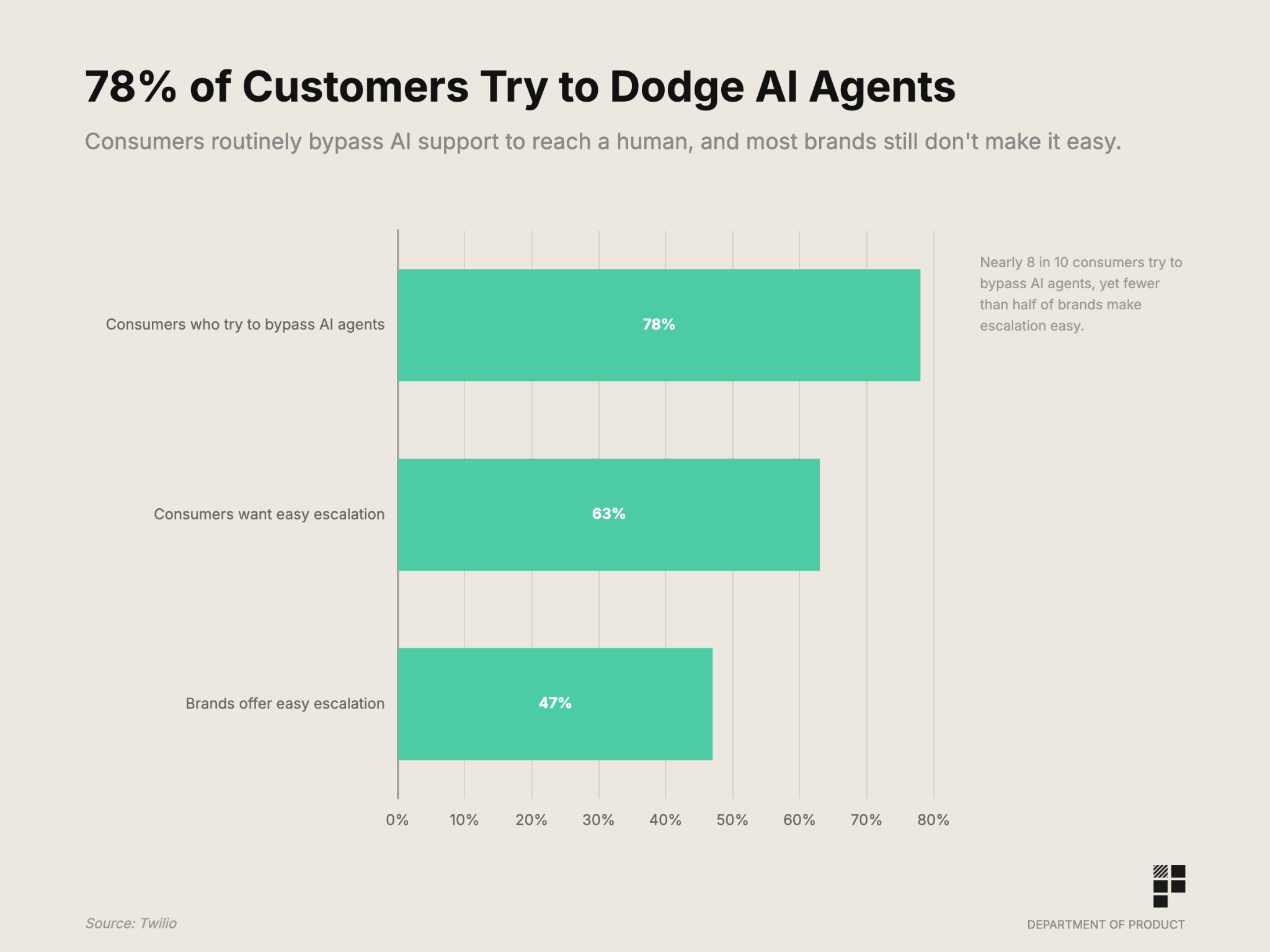
Plus, after Meta’s historic $18 billion settlement for addictive features, other companies roll out teen safety features and new data from Twilio shows that despite everyone’s best efforts, almost 80% of users still aren’t fully convinced by AI agents in customer support.
This is your Product Briefing. Have a great week ahead!
Rich
Key reads and resources for product teams
New on the Department of Product Substack this week:
How to use Computer Use AI abilities when building new features
Vanta’s CEO called it “one of our biggest requests”: an agent that visits a vendor’s website, takes screenshots, and builds a full compliance audit. It’s a glimpse of what Computer Use AI can now do inside real products, not just chatbots. Learn more about how Claude, Gemini and ChatGPT’s computer use abilities actually work, how they’re benchmarked, and where Linear, Google and Vanta are already shipping features with them. (Department of Product)
How Booking.com built “talk to your data”
In the traditional stack, the “interface” to data was either a dashboard or a SQL editor. Kostiantyn Okhrimenko at Booking.com Engineering breaks down how their team built real time data analysis by pairing Snowflake semantic layers with AI agents, letting anyone query data in plain English while keeping answers governed and trustworthy. (Booking)
Six principles for mastering Answer Engine Optimization (AEO)
Despite Reddit dominating search rankings, the internet’s most-cited search result gets rejected by LLMs as a source over 90% of the time. Ahref’s CMO shares six principles for answer engine optimization. (X)
How do you actually measure the impact of AI on design?
Figma’s design research team built their own AI tools to run 639 interviews, code 2 million words, and track three years of sentiment data on how AI is reshaping design work. The result is Figma’s 2026 AI report, which found collaboration impact nearly doubled in a single year. (Figma)
Why traditional product ceremonies still matter - a case study from Atlassian
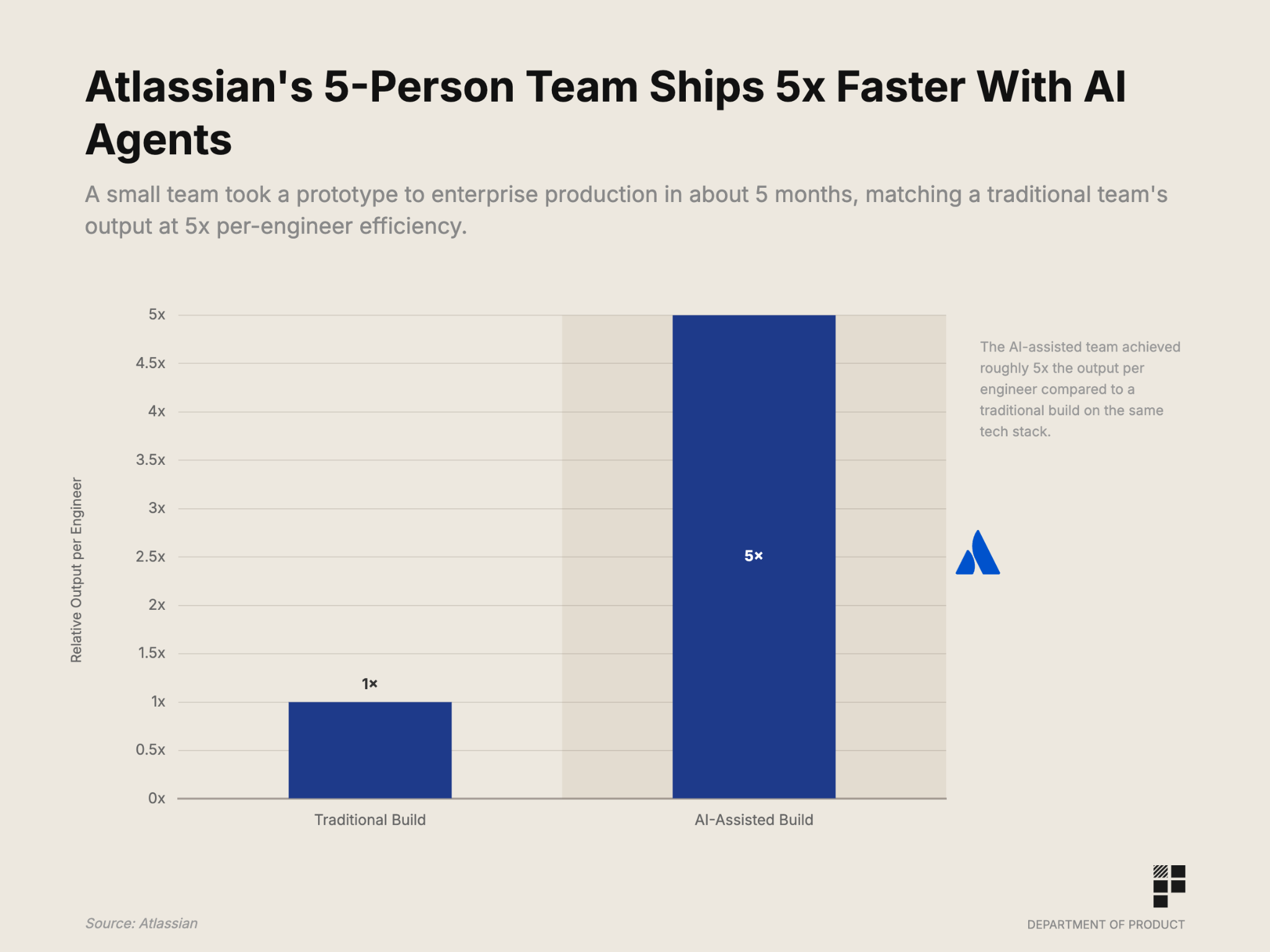
Atlassian documented how they built a weekend prototype into a production system in five months at 5x normal output velocity. But they learned that traditional product ceremonies still matter - even with AI agent team mates. (Atlassian)
New product features and innovation this week
Coinbase built an internal Slack bot where agents autonomously execute micropayments against a marketplace of 10,000+ services to answer employee questions, eliminating approval workflows entirely for small purchases - an early example of agent-to-agent commerce inside a large company that could change how the procurement process works in the future.
You can read more about agentic payments and the x402 payment protocol explained for product teams in this Knowledge Series. More on this topic later.
Google has launched the ability to load purchased ebooks directly into Gemini Notebook for grounded Q&A, summaries, quizzes and audio overviews, launching with 100,000+ books and featured Notebooks from authors like Steven Pinker and Michael Pollan. Users must own a book to access it in a shared notebook, tying Gemini’s value directly to Play Books purchases.
Product-oriented books like the Lean Startup and Thinking in Bets were put front and center of Google’s promo materials, suggesting that product teams are a core user group for the feature. Annie Duke, the author of the classic Thinking in Bets, celebrated the news but some authors may be put off by the idea of users summarising or using their works in ways that hadn’t necessarily been intended. For Google though, it’s a neat way for users to expand Notebook capabilities.

Google has also confirmed it is automatically expanding AI Overview summaries at the top of search results for some queries, pushing the typical list of organic links farther down the page. The change affects the layout and visibility of traditional search results which could impact SEO.
Amplitude added cookie-consent gating to web experiments so tests can run flicker-free while consent decisions are pending, addressing a real compliance gap for GDPR/CCPA-regulated experimentation.
Snapchat’s Lens Studio enabled a live flight-tracking AR experience at Heathrow Airport, where planes land, take off, and park based on real-time public flight data with interactive information cards - a move into data-driven AR beyond entertainment.
Uber introduced live video streaming for parents to monitor teen riders during trips, using the driver’s selfie camera. Both driver and teen are notified when a parent views the stream, and video is deleted after the ride ends. It’s already live in nine markets, with nationwide US rollout expected in coming weeks. Following this week’s ruling against Meta which forces them to pay billions of dollars over a 10 year period for building deliberately addictive features, it’s reasonable to expect to see more teen safety focused features released in the coming months.
Hex launched Generative Chart Controls, a point-and-click panel for styling agent-generated charts without re-prompting, with all changes synced back to underlying code.
Replit has launched intelligent model routing that automatically matches each task to the best model for it, balancing quality, speed, and cost. In testing, Replit says it matched previous output quality at 65% lower cost.
Perspectives and opinions from some of the world’s top product leaders
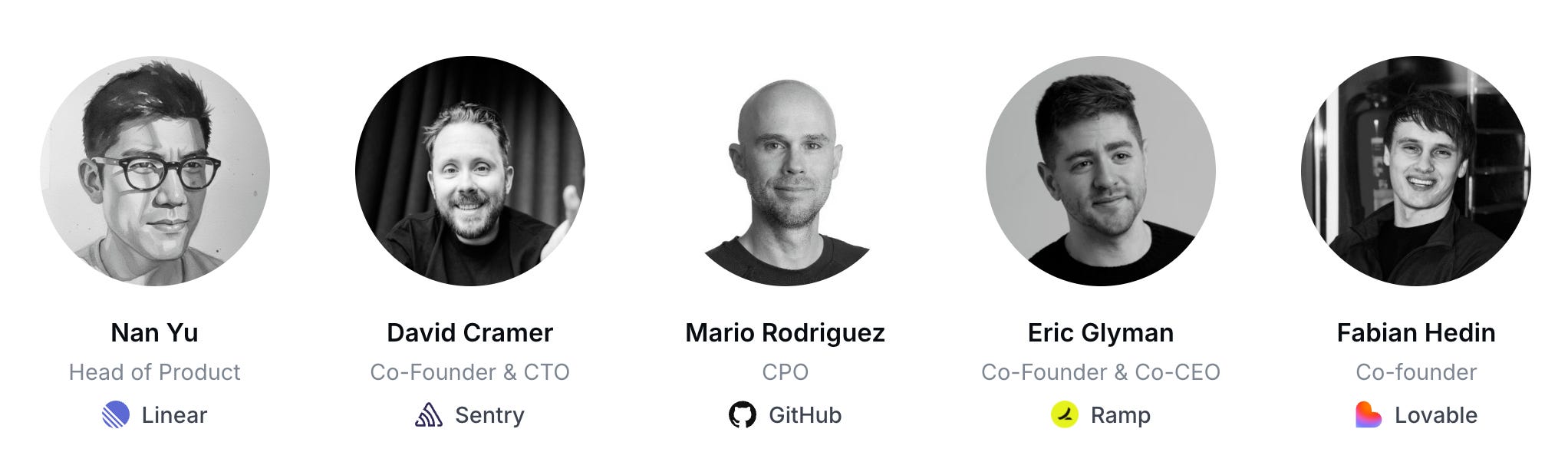
Nan Yu, Head of Product, Linear - rejects the idea that SaaS products should go fully headless to let agents work independently, arguing mature products need both embedded agents and strong MCP integration hooks because the user base is genuinely split between agent-native and integration-first preferences. This feels like a direct challenge to the “headless is the future” argument circulating in product circles but in stressing that both approaches are needed, he still implicitly supports the wider view that product teams need to be thinking about multi-surface UX.
David Cramer, Co-Founder and CTO, Sentry - Cramer says executives across every function need hands-on, sustained experience building with LLMs to make sound decisions, and that outsourcing that understanding to consultants fails the same way it has for every prior technology shift.
GitHub’s CPO, Mario Rodriguez, described a deliberate shift from UX to AX (agent experience) design, citing the Copilot app’s new Azure DevOps support as evidence that integrations are being built machine-first. “Next, we’re turning more integrations from UX into AX. Designed for agents, not just humans. That shift has me fired up” he says.
Eric Glyman, Co-Founder and Co-CEO, Ramp - frames all AI ROI as reducible to one metric (return on spend) and points to Ramp’s Router tool letting customers cut AI costs 40% for the same output by picking the right model per request.
Lovable’s co-founder, Fabian Hedin, argues that SaaS consolidation will reduce direct user interaction with individual tools, but the underlying capabilities remain valuable. He warns vertical SaaS builders to design for AI consumption of their APIs and functionality, not just human users, positioning this as the larger growth opportunity ahead.
📈 Product data to stay informed
New research from Twilio shows a massive 78% of users have tried to bypass AI Agents and speak to a human instead during customer support user journeys:
Ramp’s internal coding agent, Inspect, now handles 75% of merged pull requests at the company in under a year, running “multiplayer by default” with no opt-out.
Meta explored cutting up to 60% of many teams in two waves to go “AI-native,” then reversed the decision after staff resistance and internal evidence emerged that agents weren’t performing as expected.
Atlassian said its 5 person product team ships 5x faster with AI - with some important caveats.
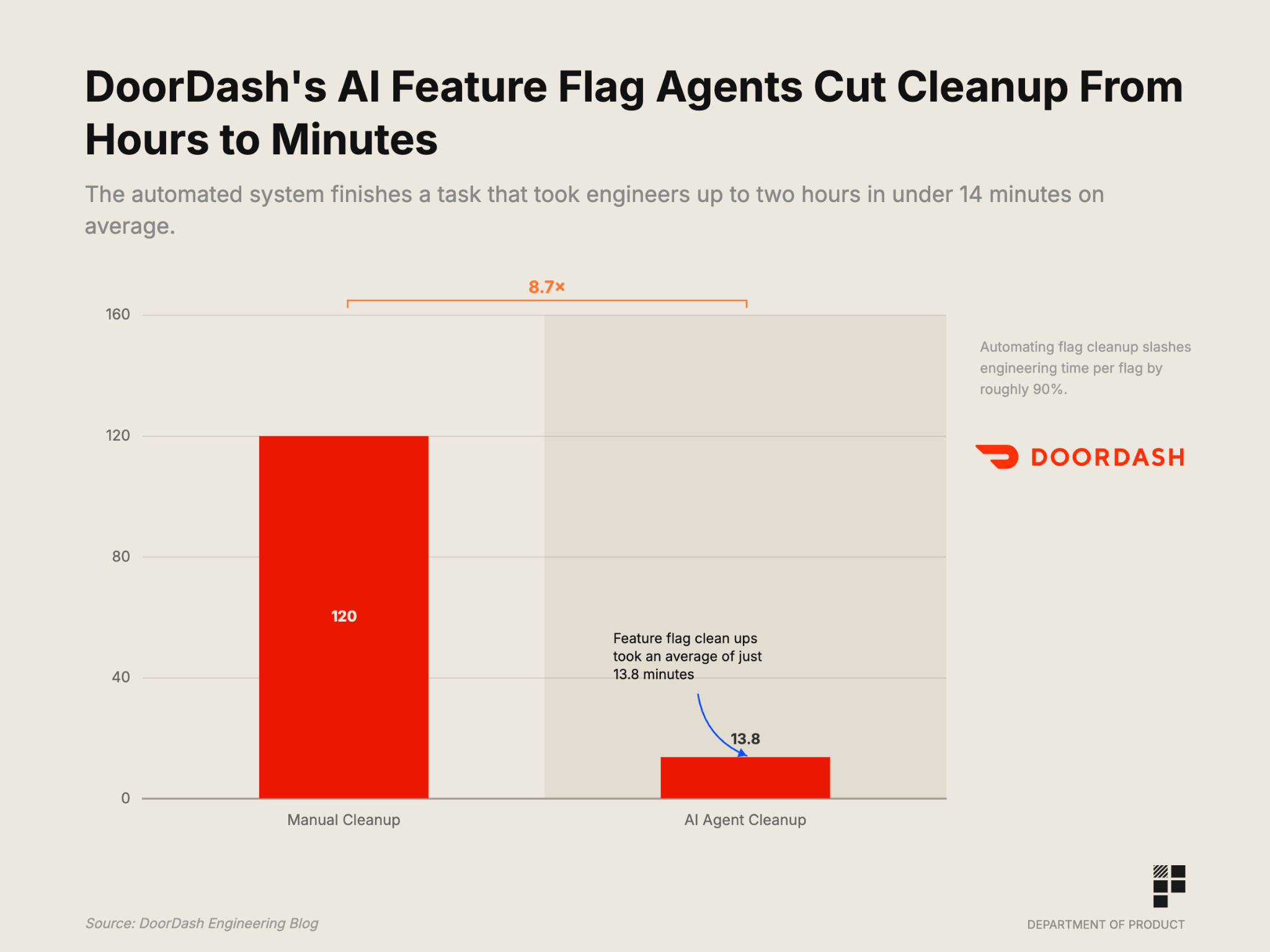
DoorDash built a multi-agent system that turned a 1-2 hour manual task (removing stale feature flags across 60,000+ flags and 623 repositories) into a 13.8-minute, $4.79 automated process with a 90% success rate, deliberately designed to fail safe by prioritizing “completeness over correctness.”
Amazon also released SOP-Bench, an open benchmark of 2,000+ real enterprise procedures across twelve business domains. With eleven frontier models tested, they found that newer models don’t consistently perform better, and no single model-agent combination wins across all procedures, meaning task-specific evaluation before production deployment matters more than general model leaderboards.
LinkedIn crossed 1 million uses of its “seems like AI slop” reporting tool for AI-generated posts, and began surfacing that feedback directly to the creators of flagged posts.
OpenAI has now seen 13+ executive departures in 2026, including its CRO, COO, ethics head, and most recently data center lead Chris Malone, whose responsibilities were split across three executives reporting up through newly-expanded President Greg Brockman.
🔮New emerging trends to watch
1/ Payments and commerce are becoming agent-native
Grok Bot can now pay for things online following a new integration with Stripe. Stripe’s CEO Patrick Collison said “if you haven’t tried Grok Bot, you should. It’s very good”. The new release is part of a wider trend where payments and commerce are becoming agent-native.
Amazon (AWS) launched AgentCore Payments to general availability, integrating with Coinbase and Stripe to let agents pay for APIs, content, data feeds, and even other agents, with built-in spending limits and observability.
Robinhood’s agentic trading feature surpassed 100,000 customer accounts in its early weeks, with users trading millions of dollars daily in equities and options.
Stripe’s Senior Product Manager Jeff Weinstein argues pay-per-use pricing with upgrade paths will become the standard model for agent-accessed services, with Stripe providing the identity and payment infrastructure underneath.
2/ Internal tools are becoming productized
Ramp built Inspect and Router to solve its own engineering and finance cost problems before productizing them, and its co-CEO explicitly frames the pattern as how the roadmap gets set.
Cloudflare built an internal tool called EmDash - a new open source CMS that it describes as the “spiritual successor to WordPress”. The CMS is now more widely available for product teams to use too.
Gusto built a unified, self-service document extraction platform and then productized it into a customer-facing offering.
3/ Pricing is compressing aggressively
OpenAI cut GPT-5.6 Sol API and credit pricing more than 20% for three months. Cohere launched a document processor at $1.50 per 1,000 pages, claiming a 95% discount versus frontier LLMs and hyperscalers.
Vercel is giving away a finance-specialized model (Ling 3.0 Flash Fin, 256K context) free through to September 25th. Glean claims its new Intelligence layer costs $0.58 per query versus $2.98 for Claude Cowork, an 81% reduction.
Ramp’s co-CEO says its model router cuts AI spend 40% for the same output by picking the right model per request and Anthropic has confirmed a permanent 25% discount on all its subscription plans.
4/ Voice and multimodal agents are shifting to a new accelerated adoption phase
SpaceXAI’s Grok Voice is processing over 15,000 inbound Starlink support and sales calls daily, diagnosing hardware issues and fulfilling 3,000+ orders weekly across voice and chat.
Google’s Gemini Live added a Spark integration for multi-step voice-triggered tasks across Docs, Sheets, Drive, and Gmail, plus a Daily Brief and hands-free inbox management.
Stripe has adopted ElevenLabs’ voice agent and creative tools internally for both customer interaction and marketing.
5/ Verification and human-in-the-loop review are emerging as essential parts of AI driven development
Putting humans in the loop is becoming an essential part of agentic workflows for security and other reasons.
Atlassian’s Teamwork Lab published research finding reviewers are 22% less likely to catch flaws in AI-polished drafts than in unpolished text, and identified a five-second intervention that mitigates the effect.
WorkOS documented that attackers now deliberately craft prompts to trigger “approval fatigue,” getting reviewers to rubber-stamp requests without reading them - an adversarial pattern that exploits human attention limits rather than technical gaps.
But, human in the loop checks doesn’t necessarily stop bad code from entering production…
Salesforce documented a case where an AI coding agent misread an ambiguous requirement at the start of implementation. Every downstream decision remained internally consistent, tests passed, and a human reviewer approved the diff, despite the foundational misunderstanding being invisible to all of it.

The Briefing is your curated report on what happened in tech and AI this week - hand crafted for product teams. Paid subscribers get the full DoP Substack including: The Knowledge Series for hands-on AI tutorials and DoP Deep dive reports for in-depth analysis to learn lessons from the world’s top tech companies.
I won't try Grok Bot for moral reasons, mainly because of who and what Elon is. I would love a substack that takes into account the actions of the CEO when making adoption choices.
The approval-fatigue point maps neatly to browser takeover. A person clicking “done” after a login or CAPTCHA isn’t proof that the current gate cleared; the signal can be stale or belong to a different page. I maintain rea-captcha, and ended up requiring fresh page/server evidence before the same session can resume: https://github.com/masakaai/rea-captcha