
Hi product people 👋,
Coming up this week, Claude Code’s creator reveals what he thinks are the five new product team roles emerging based on his experience. Plus, Notion adds HTML embed capabilities to docs to bring PRDs to life, Claude Fable 5 returns and find out why Zapier’s CEO is banning DMs at his company.
Happy Friday!
Rich
Key reads and resources for product teams
Claude Code’s creator on the 5 new Product Team roles that are emerging
With the boundaries between traditional product job roles increasingly blurred, Claude Code’s creator Boris Cherny envisions how tech teams might reorganize. Instead of “engineer” or “designer,” he sees five new, emerging archetypes that could form the basis of the product teams of the future. (X)
New from the Department of Product Substack this week:
How to build the ultimate product dashboard that updates stakeholders in 1 click
How to create the ultimate product dashboard that surfaces your product health, competitor moves, and decision queue - then turns any data slice into tailored Slack messages, emails, or audio updates for your stakeholders in one click.
The new powers of AI Assistants
A new wave of AI Assistants from DoorDash, Pinterest, Shopify, and more are moving beyond answering questions to actually getting stuff done. This deep dive explores 35+ real Assistants, the technologies that power them, and the principles you need to build your own. (Department of Product)
How to make a design system AI can actually use
AI is generating design faster than ever - but most of it is garbage. Jav Whiting from Meta Design explains how “fast but wrong” outputs erode trust and create more rework, not less. In this talk, he walks through Meta’s partnership with Figma to solve the real problem: teaching AI taste through design system context, rigorous testing, and feedback loops. (Figma / Meta)
39 principles for designing human-AI interaction
From setting expectations and showing reasoning to building in guardrails and graceful failure, this framework tackles the design problems that traditional UI patterns never had to solve. (UX Collective)
Notion’s Senior Engineer on why it’s still important for engineers to understand the code agents write
Agents are getting better and better at writing code and verifying their own work, but where does that leave human engineers? Notion’s Geoffrey Litt argues that engineers still need to understand to participate. (X)
How to write OKRs for an AI product
Jeff Gothelf argues teams are repeating a 15-year mistake by treating 95% accuracy as a key result. Instead, write OKRs around human behavior: whether users act on the AI’s output without redoing it, stop fact-checking results, or trust it enough to auto-share. (Blog)
How DoorDash built a one click simulation platform for Support Chatbots
DoorDash built a one-click testing platform that simulates customer support chatbot conversations in minutes instead of waiting hours for live traffic. Chenran Gong and Aditi Bamba detail how this simulation-evaluation loop transforms chatbot development from slow manual testing to fast, measurable feedback cycles. (DoorDash)
How Shopify helps merchants get their products to show up everywhere
Shopify’s Spring ‘26 Edition ships 150+ updates that put merchant products everywhere buyers are. Catalog and the Universal Commerce Protocol handle the full commerce journey from discovery to checkout; Agentic Storefronts Admin shows what’s working; Point of sale and Shop Pay keep checkout fast. Read more about it. (Sponsored by Shopify)
Summer reading lists
Summer holidays inevitably mean one thing for lots of folks: reading all of the books you planned to at the start of the year but never quite found the time for. Here’s a selection of 2026’s curated reading lists that might be of interest:
How companies are managing their AI token spend
With companies scrambling to reduce their AI token costs, the hottest trend right now is token spend management. And a new set of new tactics is emerging. Here’s some of the practical ways companies are reducing their token costs:
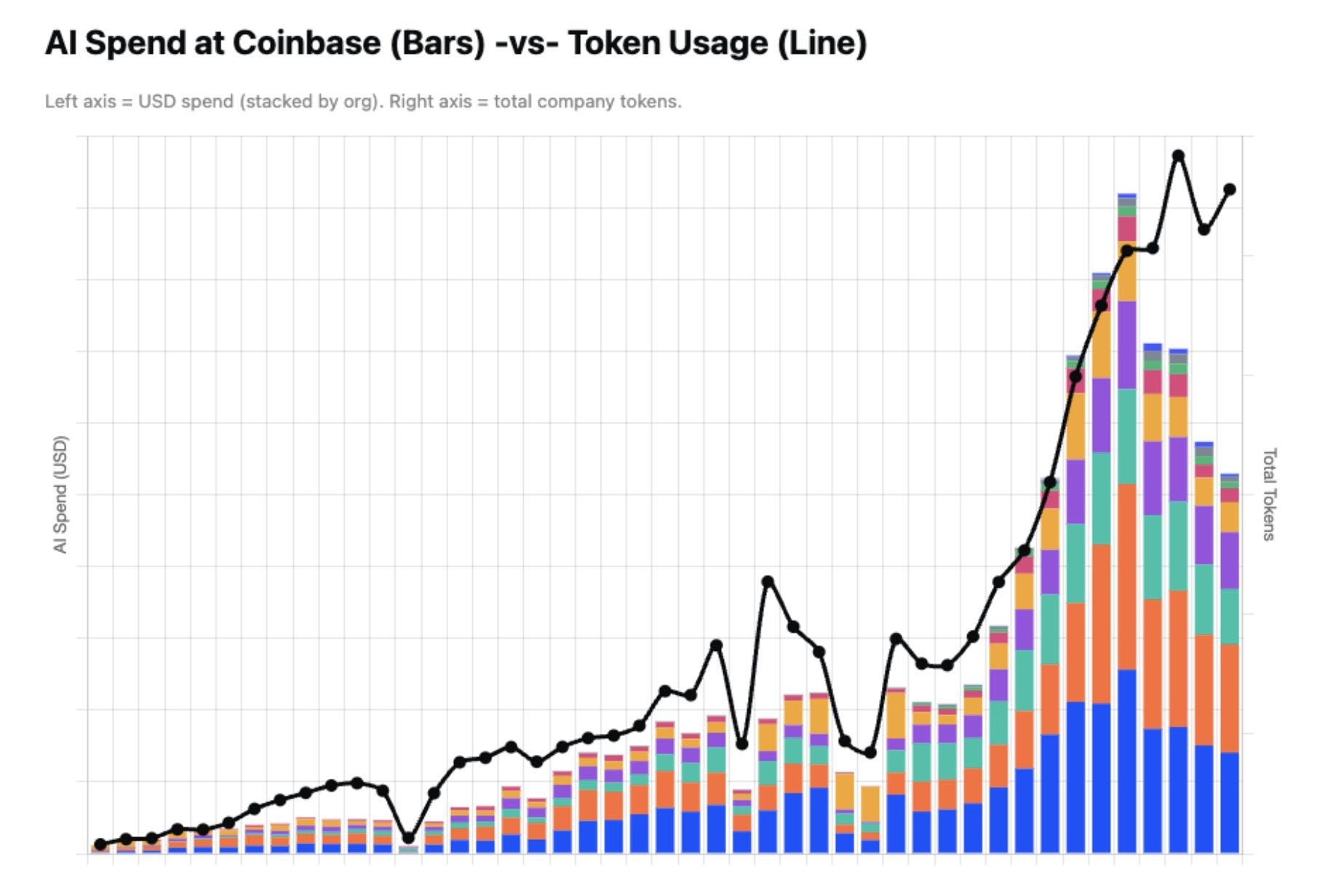
Coinbase - reduces token spend by using cheaper default models, smart routing, aggressive caching, leaner contexts, and clear usage visibility instead of strict caps.
Smartsheet - a dedicated FinOps team owns the AI budget, with automated alerts before employees hit token limits and real-time dashboards by department and manager.
Qualcomm - caps token usage for heavy-consuming teams (notably engineering), uses a “show back” model so departments see the dollar cost tied to their usage, and runs smaller/older models on its own hardware to cut costs further.
Meta – building an internal AI Gateway dashboard to track AI usage and spend in real time, set team and individual token budgets, and send automated alerts on unusual spending spikes, while steering employees toward in-house tools like MetaCode instead of third‑party models.
Uber – imposing hard annual budgets on third‑party AI tools like Anthropic’s APIs after early usage quickly exhausted allocated spend, with closer monitoring of employee consumption to avoid surprise overages.
New product features and innovation this week
Notion has announced support for HTML inside documents which allows creators to embed interactive widgets. If you remember, it was actually one of Anthropic’s lead engineers who said earlier this year that HTML was “unreasonably effective” for a whole bunch of use cases including presentations.
In Notion’s case, the vision here is to allow teams to embed snippets of HTML that bring things like prototypes, explainers and other things to life inside a document.
This matters for product development teams because it collapses the gap between documentation and interaction. Instead of describing a feature flow in text or linking to a separate prototype, you could build lightweight, functional demos right where your specs live. But, given the limitations of HTML it’s still not a fully functional prototype and is best for lightweight, interactive components.
Here’s an example of it in action in a PRD:
Following its initial release, Notion also confirmed that it has MCP support which means you can ask your AI Agents to create interactive widgets inside Notion Docs on demand.
Check out this page created with HTML embeds to get a sense of how they look and feel.
Return of the Fable
A few weeks after it was abruptly yanked off the market, Claude’s Fable 5 is back. Here are some examples of what people have been doing with it this week:
Google’s AI PM shares a template for creating animated videos
Building video games from scratch
Stealing landing page designs from websites
Creating realtime 3D map visualization of Tokyo’s transport system
Using Fable as an orchestrator and Opus as the core model to save tokens on coding
Here’s an example of it cloning a landing page using an open-source alternative to Claude Design called Open Design.
Fable 5 is roughly double the price of other Claude models, so it’s worth spending some time figuring out which use cases are best suited for Fable use. You can use this prompt as a starting point to assess and rank which of your workflows might be suitable candidates.
New mobile apps from Cursor and Meta; are “gizmos” the start of a new type of social content?
Cursor has officially launched its iOS app that lets you manage coding agents on your mobile. The app works in two modes: you can start entirely new cloud-based agents directly from iOS, or remotely control agents already running on your desktop computer.
For product teams, engineers, designs and PMs could use this for things like capturing bugs on screenshots or responding in real time to customer feedback. A new report this week suggests that this is a new trend among some engineers who have taken to recording conversations with customers and then using the transcriptions to feed requirements directly to agents who build the requested features immediately.
Learning more about the unintended consequences of building features without any form of prioritization or product-lens will be fascinating.

Meta, meanwhile, has quietly launched its own new mobile app. It’s called Pocket and it lets users create what it calls “Gizmos” - vibe coded mini apps and games that users can publish to their social feeds. This is a consumer app but as software becomes easier to create, it’s feels as though we’re probably now in the early stages of mini apps becoming the new marketing which could eventually become a major channel for products, too.
Other updates worth knowing about
Speaking of new channels, Square is launching a ChatGPT app and Claude plugin, arguing that these channels represent the next stage of customer discovery. It’s making the integration as simple as possible; they don’t actually have to do anything. Instead, existing merchant feeds are integrated into the new channels. Orders placed via these AI channels come in through Order by Cash App and flow into existing reports - which is a pretty smart choice by their product teams to reduce integration costs.
📈 Product data and trends to stay informed
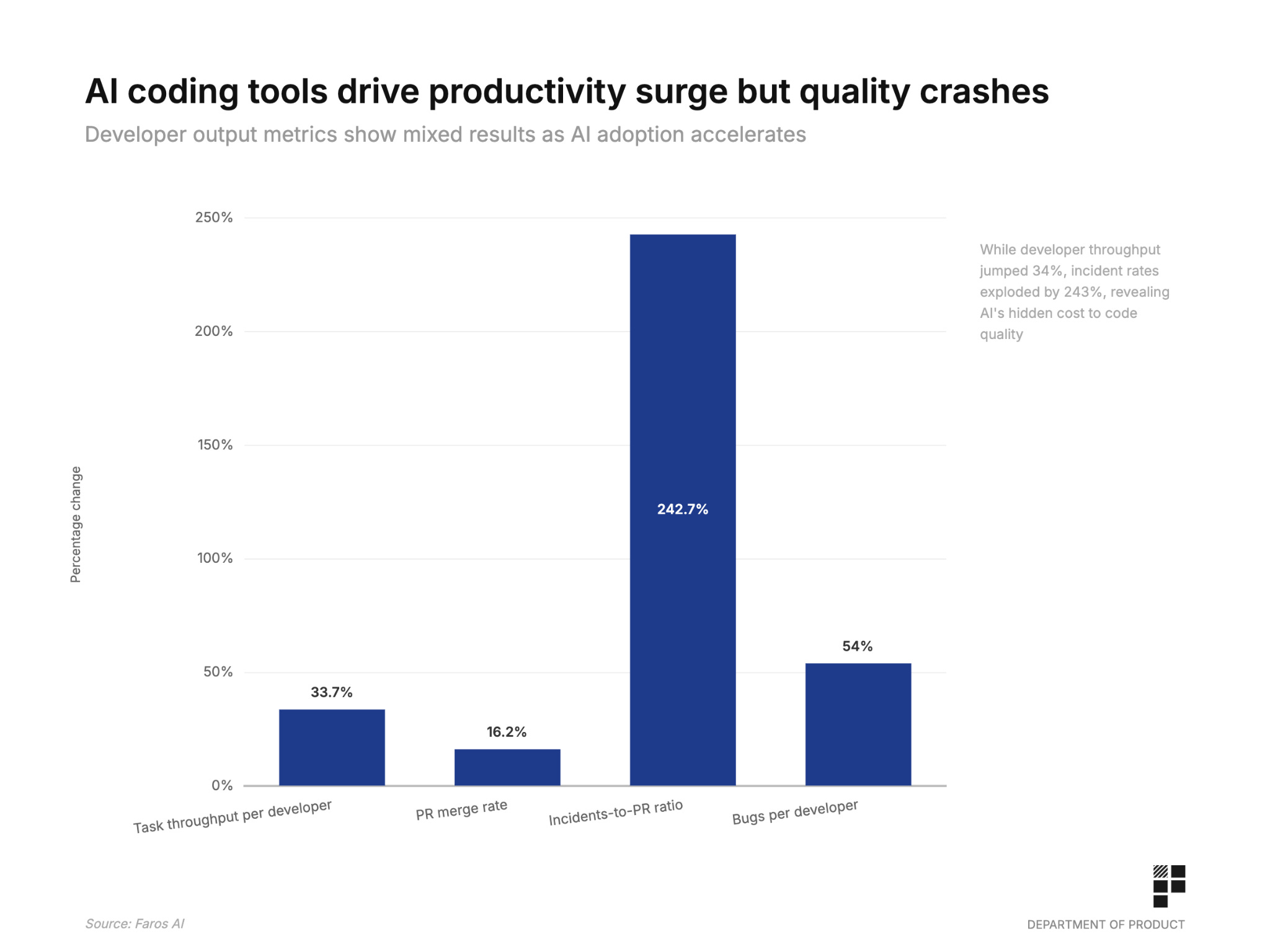
AI has made code generation faster and cheaper, but new data from Venture Beat shows troubling trends - while developer productivity metrics look good on paper, incident rates have jumped 242%, and bugs per developer are up 54%.
On average, users are 2.5x more likely to visit a brand recommended by AI than a competing brand.
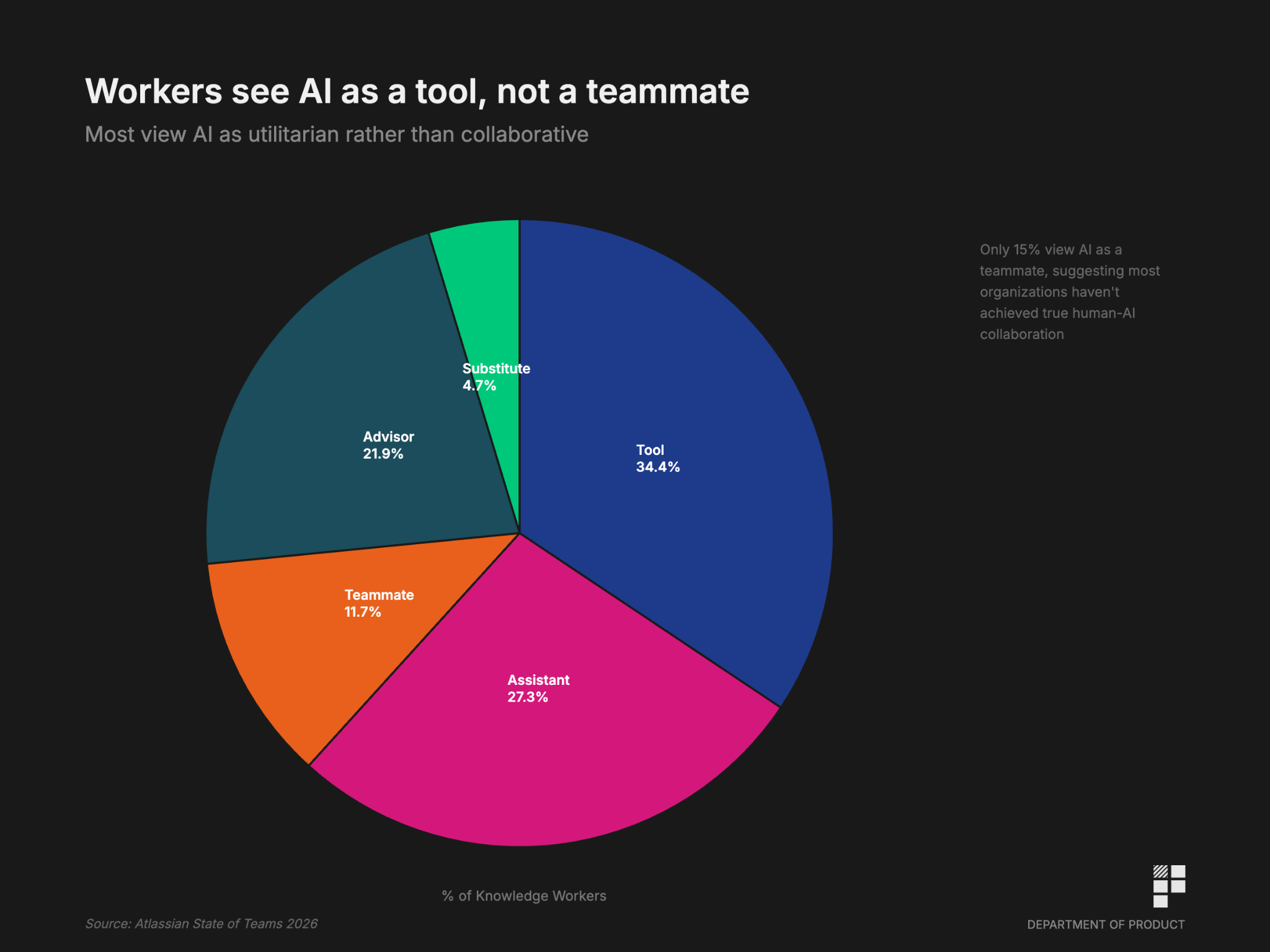
Despite the release of new features like Claude Tag, most workers still view AI as a tool rather than a team mate according to the latest State of Teams report by Atlassian.
MIT and Microsoft published a new report on AI Agent Confidence which looks at the areas that engineers report feeling confident about AI Agents capabilities. The area with the most confidence is report generation.
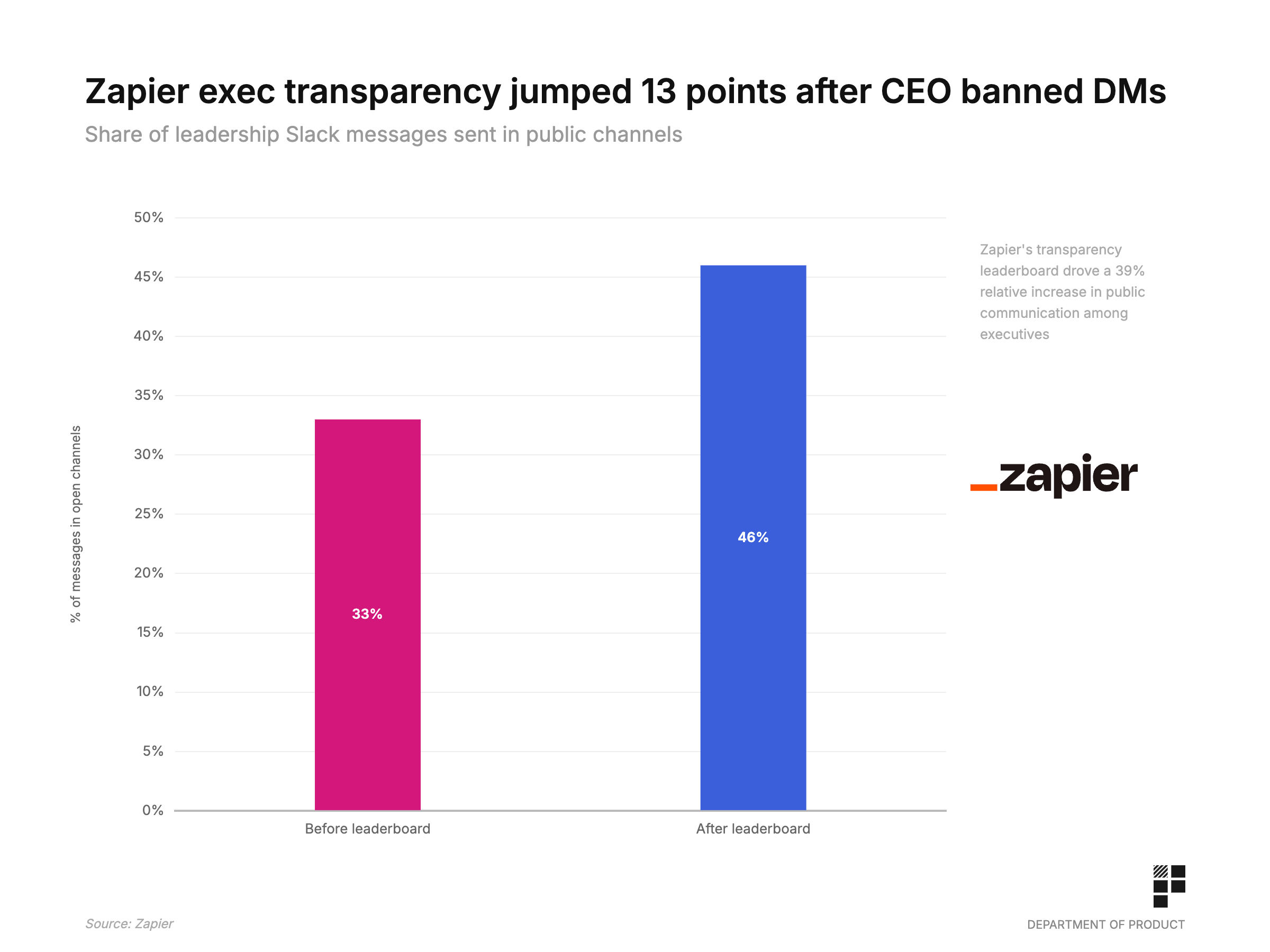
Zapier’s CEO is banning DMs to force all conversations into public channels - and it’s working. Since launching an exec transparency leaderboard tracking what percentage of leadership’s Slack messages happen publicly, the company jumped from 33% to 46% of messages in open channels. The idea is to improve transparency with the ultimate goal of building a shared, collective, company intelligence.
Claude Opus 4.8 tops the leaderboard of a new benchmark called Senior SWE-Bench that focuses on the kinds of tasks that senior engineers work on.

Paid subscribers get the full DoP Substack including: The Knowledge Series for sharpening your tech / AI skills, the AI Prompt and Skills library and DoP Deep dive reports for in-depth analysis to learn lessons from the world’s top tech companies.